
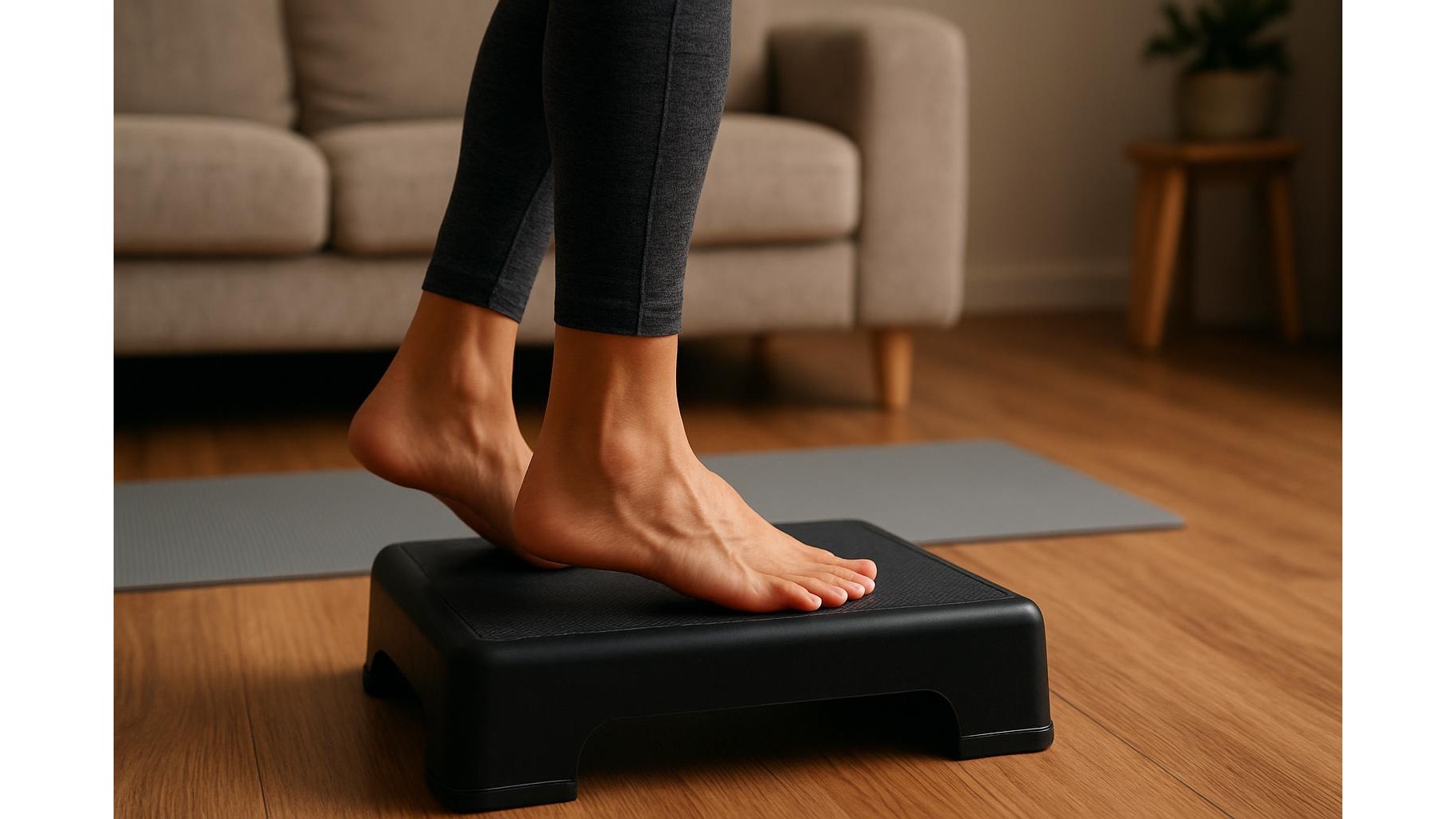
Building strong ankles and powerful calves is essential if you want better balance, safer jumps and fewer injuries in your home workouts. You do not need a full gym to achieve this: with a handful of simple bodyweight exercises and basic home equipment, you can create an efficient routine that supports everything from daily walking to explosive jump training.
Why ankle and calf strength matters at home
Your ankle joints and calf muscles are the first line of defence every time your foot hits the ground. Strong calves and stable ankles improve joint alignment, reduce the load on your knees and help you land more softly from jumps. For anyone who trains at home – whether you follow HIIT videos, plyometric circuits or simple step workouts – this means better performance and lower injury risk. A focused routine also boosts proprioception, your body’s sense of position, which is crucial for staying balanced on uneven floors, rugs or makeshift platforms common in home gyms.
Bodyweight warm-up drills for mobile ankles
Start every session with 5–8 minutes of mobility drills to warm the ankles and prepare the calves. Begin with ankle circles, drawing slow circles with your toes in both directions while seated or standing, then move into ankle pumps, flexing and pointing the foot to wake up the lower leg muscles. Follow with dynamic calf stretches: place your hands on a wall, step one leg back and rhythmically bend and straighten the front knee so the rear calf gently loads and unloads. Finally, add marching on the spot, lifting the heels deliberately with each step. These simple moves increase blood flow, lubricate the joint and make the following strength work feel smoother and safer.
Calf-raise variations to build strength and power
The cornerstone of any at-home ankle and calf routine is the calf raise. Start with double-leg calf raises on the floor, rising onto your toes for two seconds, pausing for one, then lowering slowly for three. Progress to single-leg calf raises while holding on to a wall or chair for balance. To increase the challenge, perform them off a step so your heel can drop below the level of your toes, creating a larger range of motion and extra strength at the bottom of the movement. Aim for 3 sets of 10–15 reps, focusing on full control rather than bouncing. Over time, these variations build stronger gastrocnemius and soleus muscles, support better jump height and make landings more controlled.
Balance and stability drills for safer landings
Improving balance is just as important as building muscle. Begin with simple single-leg stands, holding for 20–30 seconds per side while you keep your hips level and your core engaged. Progress by closing your eyes or turning your head left and right to challenge your proprioception. You can also add mini single-leg deadlifts, hinging forward slightly at the hips while one leg extends behind you, then returning to standing. Another effective drill is the heel-to-toe walk along a straight line, as if walking a balance beam – this trains ankle control and mid-foot stability. These exercises teach your ankles to make tiny, rapid adjustments, which translates into safer, more stable jump landings in your home workouts.
Plyometric prep: low-impact jumps and hops
Once you have a base of strength and stability, you can add low-impact plyometric drills to prepare for higher jumps. Start with ankle hops: small, rhythmic bounces using only the ankles while keeping the knees slightly bent and relaxed. Focus on landing softly and quietly, with the heels kissing the floor rather than slamming down. Next, incorporate line jumps – place a tape line on the floor and jump side to side or forward and back, landing with knees tracking over toes. Keep the sets short (10–20 seconds) to prioritise technique over fatigue. These drills condition the lower leg to absorb and release force efficiently, improving explosiveness while reinforcing safe landing mechanics.
By combining mobility, strength, balance and low-level plyometrics, this simple at-home routine gives your ankles and calves the attention they deserve. Practised 2–3 times per week, it can enhance your balance, improve your jump performance and reduce the risk of common home-workout injuries such as sprains and calf strains. Start with the easiest progressions, move forward gradually and stay consistent: your landings will feel lighter, your feet more stable and every session in your home gym will feel both safer and more effective.









