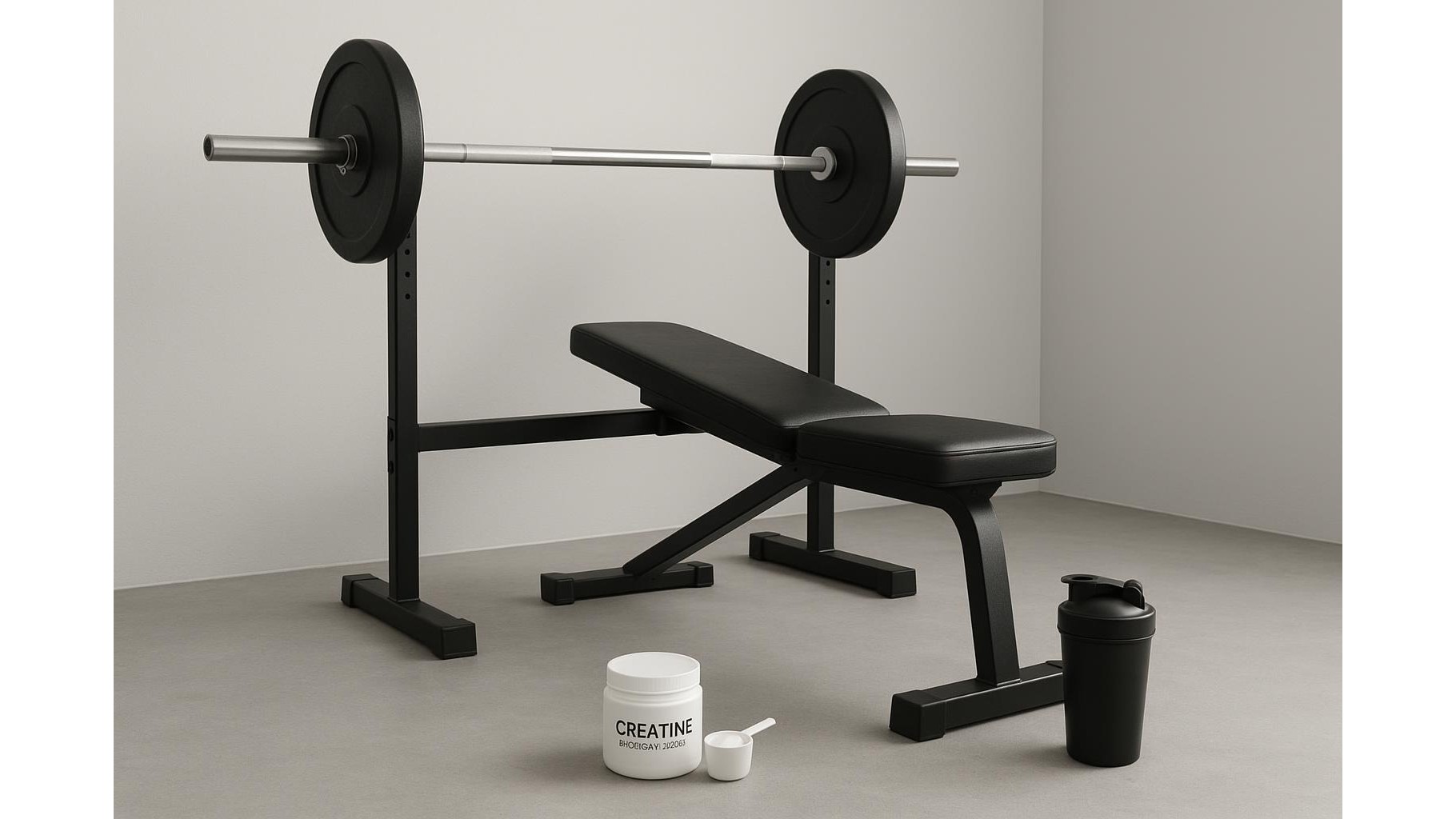
If you train in a home gym, it is easy to get lost in supplements. One of the few that is consistently backed by research is creatine monohydrate. Used correctly, it can make your home strength training more effective without adding complexity, strange protocols or expensive stacks. This guide focuses on simple, evidence-based ways to use creatine so you can get stronger, support muscle growth and keep your routine straightforward.
What creatine actually does for home lifters
Creatine is a substance naturally stored in your muscles where it helps regenerate ATP, the main energy source for short, intense efforts like heavy squats, presses or deadlifts. When you supplement with creatine monohydrate, your muscles store more creatine, which lets you do a bit more work: an extra rep, a little more weight, or the same workload with less fatigue. Over months of progressive overload in your home gym, this translates to noticeable gains in strength and lean mass. It does not replace a solid training program or nutrition, but it can make both more productive.
How to dose creatine without overthinking it
The simplest, effective protocol for most people is to take 3–5 g of creatine monohydrate once per day. You do not need a complicated loading phase; muscle stores fill over time. If you want quicker saturation you can take around 20 g per day split into four doses for 5–7 days, then move to 3–5 g daily, but this is optional. For home training, the main priority is consistency: pick a daily dose you can remember and stick to it for weeks and months. Whether you train full body three times per week or follow an upper/lower split in your garage, the benefits come from long-term use, not from cycling on and off or chasing perfect micro-adjustments.
Timing, mixing and what to take creatine with
For creatine timing, the research is clear: the exact time of day is far less important than taking it regularly. You can take it in the morning with breakfast, pre-workout, post-workout, or with your last meal. Many home lifters find it convenient to mix their creatine into a post-workout shake or a daily drink they already consume. Creatine dissolves reasonably well in warm water, juice or shakes; just stir and drink. Taking it with a meal that contains carbohydrates and protein may slightly support uptake, but the effect is small. Do not worry about fasted vs fed or exact minutes around your home session – consistency beats precision.
Side effects, safety and who should be cautious
Creatine monohydrate is one of the most-studied sports supplements and is considered safe for healthy adults at recommended doses. The most common side effect is a small increase in body weight (usually 1–3 kg) due to increased intramuscular water, not fat gain. Some people may experience mild stomach discomfort if they take large single doses; this is usually solved by sticking to 3–5 g per day and taking it with food. Because creatine is processed through the kidneys, anyone with pre-existing kidney disease or other serious health conditions should talk to a doctor before using it. Also remember to stay well hydrated, especially if your home gym is in a hot garage or attic.
Popular myths about creatine you can ignore
There are many myths that make creatine seem complicated or risky. It does not behave like a steroid, it does not damage healthy kidneys, and it does not automatically cause bloating or hair loss in most users. You also do not need fancy “buffered” or “liquid” forms – plain creatine monohydrate powder is the version studied in most trials and is usually the best value. Cycling on and off creatine is not required for safety or effectiveness. For home lifters focused on strength training, the best approach is boring and consistent: same dose, same product, taken daily alongside a sensible training plan and protein-rich diet.
Fitting creatine into a simple home training routine
To get the most from creatine, pair it with a structured home workout program based on compound lifts (like squats, presses, rows and deadlifts), progressive overload and adequate recovery. Think long term: track your lifts, add small amounts of weight or repetitions over time, and keep your daily creatine habit as part of your basic routine like brushing your teeth. You do not need an elaborate stack or multiple supplements – for most people, creatine, sufficient protein and good sleep will deliver far more than chasing exotic powders. Keep your setup and your supplementation minimal, so you can focus your energy on what actually moves the needle: consistent training.
Creatine is not magic, but for home strength training it is one of the few supplements that consistently delivers small, reliable advantages. By using creatine monohydrate in a simple, regular way, staying hydrated and following a solid training plan, you can increase your strength, support muscle growth and make better use of every session in your home gym without overcomplicating your routine.