Designing a ceiling‑mounted pull-up solution when you cannot drill into walls is absolutely possible with the right equipment and a bit of planning. Whether you are a renter worried about your deposit or a homeowner with fragile plasterboard, you can still enjoy vertical training, pull-ups and hanging core work without destroying your walls. In this guide we will look at the main types of ceiling pull-up bars, how to mount them safely, and what alternative suspension setups you can use to keep your training consistent and your landlord happy.
Understanding your ceiling and load limits
Before buying any ceiling-mounted pull-up bar, you need to understand what is above your head. Most UK homes have either concrete ceilings (often in flats) or timber joists with plasterboard attached. Concrete can usually take heavy anchors if you are allowed to drill; timber joists can support bodyweight if you hit the joist directly, not the plasterboard. If you are not allowed to drill at all, you will need a no-drill solution such as a free‑standing power tower, a door frame pull-up bar or a weight‑loaded suspension frame. Measure your ceiling height and available floor space carefully so you can choose a product that lets you hang freely without your feet touching the ground.
Ceiling-mounted bars when you can drill (but not into walls)
If drilling into walls is forbidden but you are allowed to use the ceiling (for example into concrete or exposed beams), a fixed ceiling pull-up bar can be the most stable option. Look for models with a wide mounting plate and multiple fixing points to spread the load. A typical design features two parallel steel arms with a crossbar and included heavy‑duty expansion bolts. When installing, locate solid structure (concrete or joists), mark the holes accurately, and use the supplied fixings or upgraded anchor bolts rated above your bodyweight. Always test the bar with a gradual load: start by hanging with bent arms, then progress to full hang and only later to dynamic movements like kipping. This approach minimises the risk of damage and ensures your home gym ceiling setup is safe for daily use.
No-drill alternatives: power towers and freestanding rigs
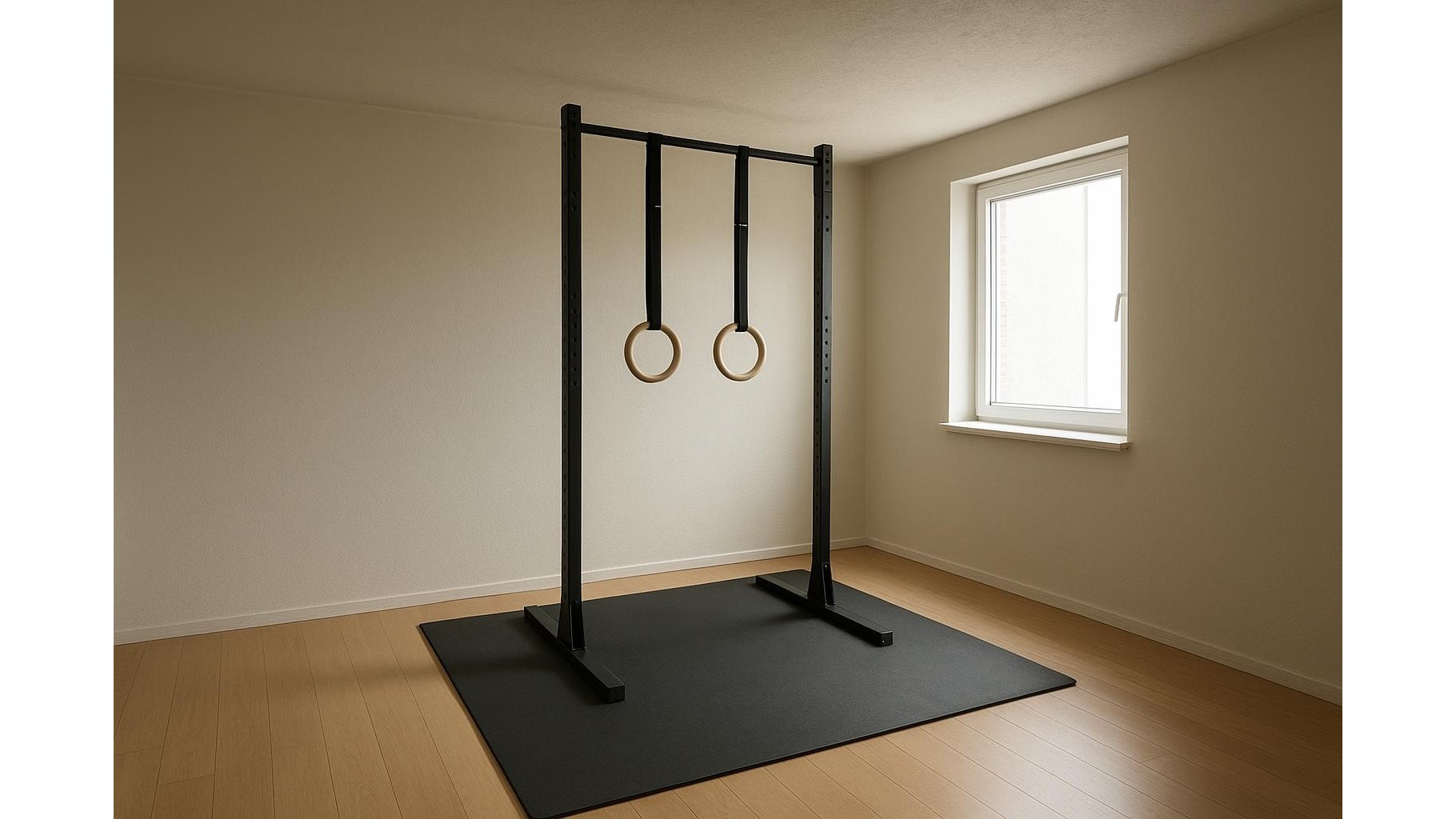
If you cannot drill into any surface, your best option is often a freestanding pull-up station. A compact power tower combines a pull-up bar, dip bars and sometimes a back pad for leg raises, all supported by a floor frame. Because the load goes straight into the floor, you avoid stressing walls or ceilings entirely. When choosing a tower, pay attention to the footprint, maximum user weight and adjustable height, and make sure the base is long enough that it will not tip during kipping or leg swings. For very low ceilings, a shorter multi‑grip stand can be paired with gymnastic rings or suspension trainers to give you high‑quality pulling work without needing a bar fixed overhead.
Using suspension trainers and rings from existing structures
When you cannot add any new holes, think creatively about existing structures. Many athletes use a doorway, exposed beams, or a sturdy loft hatch frame as an anchor point for suspension trainers or gymnastic rings. A well‑designed suspension trainer can clip around a beam or loop over a door using a wide anchor strap that spreads the load and protects the surface. Rings allow pull-ups, rows, support holds and core work while being quick to remove after your session, leaving no trace. Always inspect the structure you are anchoring to: avoid weak trim, hollow plaster mouldings or decorative rails. Add a thin rubber mat or towel between strap and surface to reduce marks, and keep movements controlled rather than ballistic to limit peak forces on the anchor.
Floor-to-ceiling tension and modular frame solutions
A more specialised option for renters is a floor‑to‑ceiling tension frame, similar to a photography backdrop stand or a tension pull-up rack. These systems use vertical posts that press between the floor and ceiling, often with rubber feet and a locking mechanism, to create a rigid structure without any drilling. A crossbar then provides your pull-up grip or attachment point for rings and suspension trainers. When choosing this type of solution, check that the manufacturer specifies a safe working load suitable for dynamic pull-ups, not just light stretching. Ensure your floor is level and your ceiling surface is strong enough to distribute pressure (avoid loose tiles or crumbling plaster). As with all no‑drill rigs, recheck tightness periodically, especially if you move or adjust the frame between rooms.
Planning your overall vertical training setup
Designing a flexible home pull-up station is about more than the bar itself. Think about how you will integrate assistance bands, core exercises and accessory pulling work like rows and face pulls. A ceiling bar or freestanding tower can double as an anchor for resistance bands, while rings and suspension trainers let you adjust difficulty simply by changing body angle. Leave enough clearance in front and behind the bar so you can safely perform leg raises, toes‑to‑bar variations and kipping swings if your ceiling height allows. Finally, protect your floor with a training mat to reduce noise and cushion any drops. With the right combination of ceiling‑mounted hardware, freestanding structures and smart accessories, you can build a robust vertical training space in any home—no wall drilling required.
In summary, even with strict rules about drilling into walls, you can still create a safe, effective ceiling‑mounted pull-up solution at home. By understanding your ceiling type, selecting between fixed bars, power towers, suspension trainers, rings or tension frames, and planning the overall layout of your training area, you will unlock consistent pull-up and vertical training without damaging your property or risking your deposit.