Dialling in your heart rate zones at home is one of the easiest ways to make your home gym sessions more effective. Instead of guessing how hard you should work, a simple step test plus a basic fitness tracker or smartwatch can help you personalise your training so every cardio interval and strength circuit matches your current fitness level.
Why personalised heart rate zones matter
Most apps and treadmills estimate heart rate zones from age-based formulas, but these can be wildly off for real people. If your zones are set too low, your workouts feel easy and progress stalls; too high, and every session becomes a grind. By running a quick step test at home, you get a practical snapshot of how your heart responds to effort. This lets you set more accurate zones for fat-burning cardio, zone 2 endurance, and high-intensity intervals, so your time in the home gym delivers better results with less guesswork.
What you need for a home step test
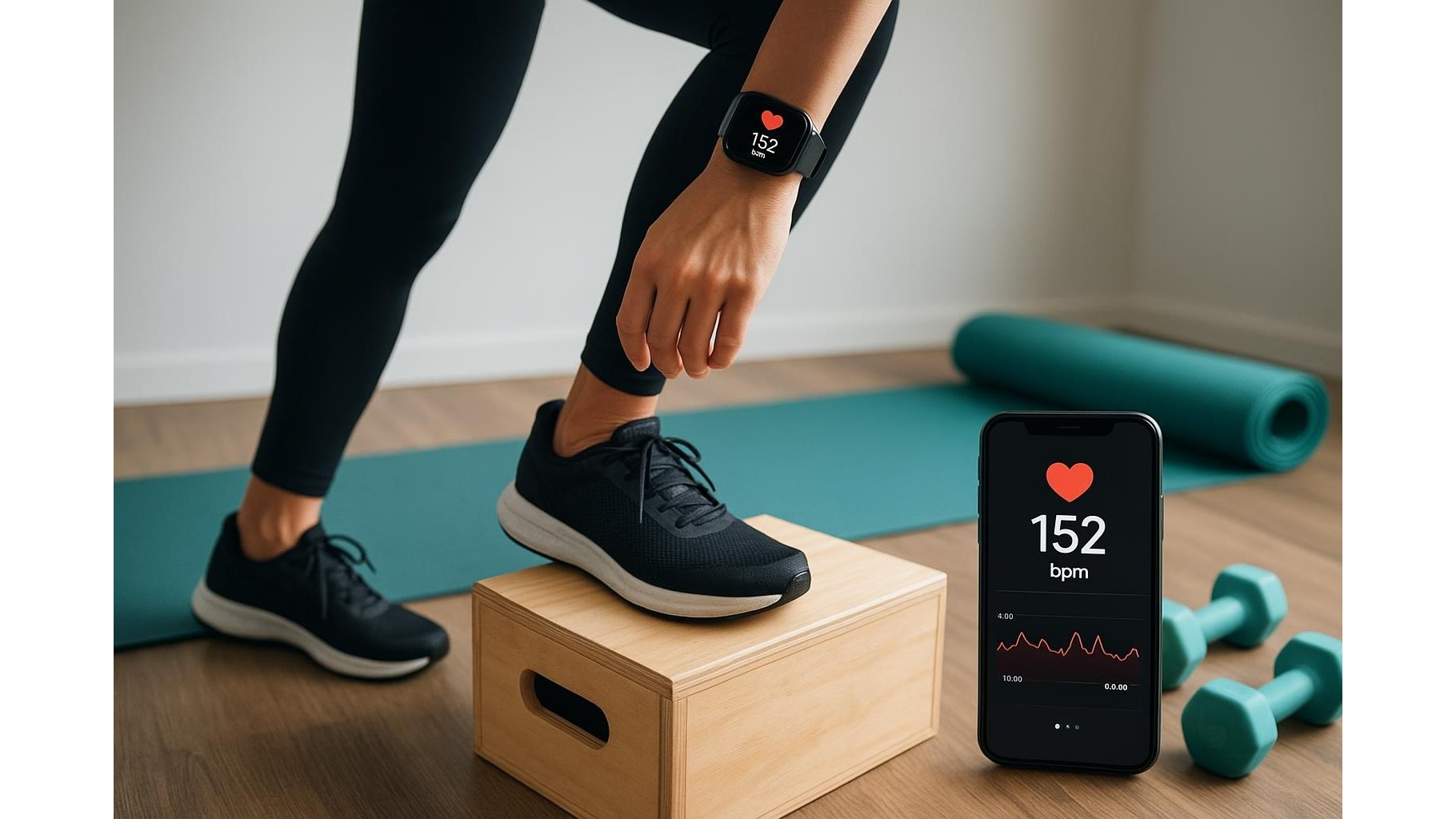
To calibrate your heart rate zones at home, you only need a few simple items. First, choose a stable step or low box around 20–30 cm high that can support your weight safely. Second, use a smartwatch or fitness app that continuously tracks heart rate and lets you review readings over time; even entry-level wearables can log these data reliably enough for home testing. Finally, have a timer or stopwatch and a notepad (or note app) ready to record your heart rate values at the end of each stage. Clear a safe space around the step so you can move without tripping on equipment.
How to perform a basic at‑home step test
Begin with a light warm-up of 3–5 minutes: easy marching on the spot or gentle cycling if you have a bike. Start your heart rate tracker, then step up and down at a comfortable, consistent pace for three minutes, aiming for a rhythm you can maintain. At the end of the stage, stop and quickly note your heart rate. After one to two minutes of easy walking, repeat another three-minute block at a slightly faster pace. Most people will complete 3–4 stages, each one a little harder, until breathing becomes noticeably heavy but still controlled. The highest steady heart rate you reach during the last full stage will be your working estimate of maximal heart rate for setting zones.
Turning step test data into heart rate zones
Once you have an estimated max heart rate from the step test, you can create practical training zones. A common system uses percentages of max: Zone 1 (50–60%) for warm-ups and active recovery, Zone 2 (60–70%) for long, easy home cardio like treadmill walking or indoor cycling, Zone 3 (70–80%) for tempo work and circuit strength sessions, and Zone 4–5 (80–95%) for short HIIT intervals. Most fitness watches let you enter a custom max heart rate so they automatically colour-code and log time spent in each zone. If your device allows, adjust these ranges manually based on how each zone feels: zones should feel sustainable or challenging in a way that matches their description, not like all-out sprints every time.
Using your calibrated zones in home workouts
With personalised heart rate zones set, you can structure your home workouts more intelligently. For fat-loss focused sessions, spend more time in Zone 2 with brisk walking, stepping workouts or light kettlebell flows, watching your heart rate stay mostly in that range. For strength and conditioning, alternate resistance exercises with short cardio bursts that push you into Zone 3 and briefly into Zone 4. During recovery days, deliberately keep your heart rate in Zone 1–2 to promote blood flow without adding fatigue. Over the weeks, you should notice you can do more work—more reps, faster pace—while staying in the same heart rate zones, a clear sign of improving fitness.
When and how to re-test your heart rate zones
Your heart rate response will change as you get fitter, so repeat the step test every 6–8 weeks. If the final stages begin to feel easier or your heart rate no longer climbs as high at a given pace, your estimated max heart rate and zones may need adjusting slightly. Re-test under similar conditions: same step height, similar time of day, and no hard training the day before. Keep notes from each test so you can compare trends, and always factor in how you feel—unusual fatigue, poor sleep or illness can temporarily skew your numbers. Used consistently, this simple home protocol keeps your heart rate zones aligned with your real fitness level, making every home gym session more targeted and efficient.
By combining a straightforward home step test with continuous tracking from your smartwatch or fitness app, you turn vague effort levels into accurate, personalised heart rate zones. This lets you match intensity to your goals, whether that is fat loss, endurance or conditioning for strength training, and ensures your time in the home gym delivers steady, measurable progress.