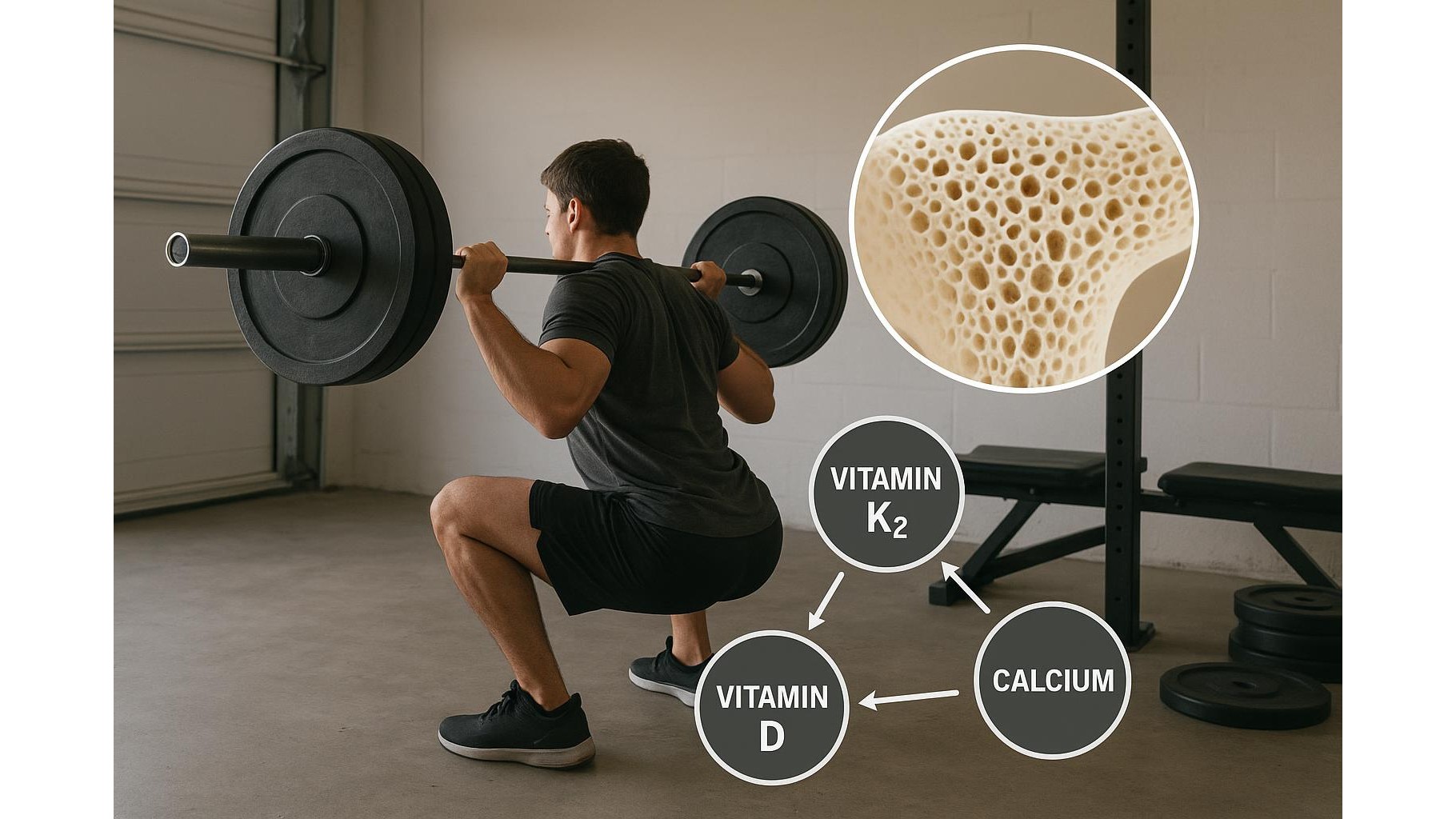
Home lifters think a lot about protein, creatine and progressive overload, but often overlook micronutrients that quietly support long‑term performance. One of the most interesting in 2026 is vitamin K2. This fat‑soluble vitamin works together with vitamin D and calcium to support bone density and may also help keep arteries flexible and healthy. Understanding how K2 works, where to get it and whether a supplement makes sense can help you build a stronger skeleton to match your stronger lifts.
What vitamin K2 actually does in your body
Vitamin K2 is part of the wider vitamin K family, but it plays a particularly important role in bone health and cardiovascular health. K2 activates proteins such as osteocalcin, which helps bind calcium into bone, and matrix Gla protein (MGP), which helps prevent calcium being deposited in soft tissues like arteries. For home lifters, this means K2 supports the dual goal of getting calcium into the right place (your bones) and keeping it out of the wrong place (your blood vessels). Research suggests that adequate K2 intake is linked with better bone mineral density and a lower risk of fractures over time, especially when combined with vitamin D and resistance training.
Food sources of vitamin K2 for home lifters
Unlike vitamin K1, which is common in leafy greens, vitamin K2 is mainly found in fermented foods and animal products. Top sources include natto (fermented soybeans, extremely rich in MK‑7), certain aged cheeses, egg yolks and liver from pasture‑raised animals. For many home lifters following a typical Western diet, daily K2 intake can be relatively low, especially if dairy intake is modest or ultra‑processed. Planning a few K2‑rich foods into your weekly meal prep – for example, adding a portion of aged cheese, incorporating eggs several times per week or experimenting with small amounts of natto – can help support bone density naturally. Remember that K2 is fat‑soluble, so pairing these foods with some dietary fat helps absorption.
Supplement types, doses and safety in 2026
When diet alone does not provide much vitamin K2, some home lifters consider K2 supplements. The two main forms are MK‑4 and MK‑7. MK‑4 has a shorter half‑life and typically requires higher, more frequent doses, while MK‑7 is longer‑lasting and often taken once daily in microgram amounts. Many products combine vitamin D3 and K2 to support coordinated calcium metabolism. Typical supplemental intakes for generally healthy adults range from about 45–200 mcg of MK‑7 per day, though exact needs vary. For most people, K2 is considered safe at these levels, but anyone on anticoagulant medication (especially vitamin K antagonists) or with medical conditions affecting clotting must speak with a healthcare professional before supplementing.
Who might benefit most from focusing on K2
Not everyone needs to rush into a vitamin K2 supplement, but some home lifters may benefit from paying closer attention. This includes older lifters concerned about osteopenia or osteoporosis, people who rarely eat dairy, eggs or fermented foods, and those who train hard but have low body weight or a history of low energy availability. Women lifting through perimenopause and menopause, when bone loss can accelerate, may also want to ensure strong K2, calcium and vitamin D status alongside structured resistance training. For these groups, optimising K2 intake can be part of a broader strategy that includes strength work, adequate protein, sufficient calories and regular movement outside of formal workouts.
How to integrate vitamin K2 into a home‑training lifestyle
For most home lifters, the smartest approach is to make food‑first changes and then decide if a supplement fills remaining gaps. Build a weekly menu that includes some K2‑rich foods, ensure regular vitamin D (from sun exposure where appropriate or supplements if advised) and aim for a balanced intake of calcium from dairy or fortified alternatives. Combine this with a progressive strength plan that loads the spine and hips – think squats, deadlift variations and loaded carries – to signal your body to invest calcium into bone. If, after reviewing your habits or blood work with a professional, K2 intake still looks low, a well‑dosed K2 or D3+K2 product may be useful. Over time, this integrated strategy can support stronger bones, healthier arteries and more resilient lifting well into the future.
In summary, vitamin K2 is a quiet but important ally for home lifters who care about long‑term bone strength and heart health. By understanding how it works with calcium and vitamin D, including targeted food sources and, if appropriate, adding a thoughtful supplement, you can create a training and nutrition environment that protects your skeleton as you add plates to the bar. Instead of chasing quick fixes, think of K2 as part of a long‑range plan: consistent lifting, smart recovery and micronutrient support that keeps you strong and steady for years of home workouts.