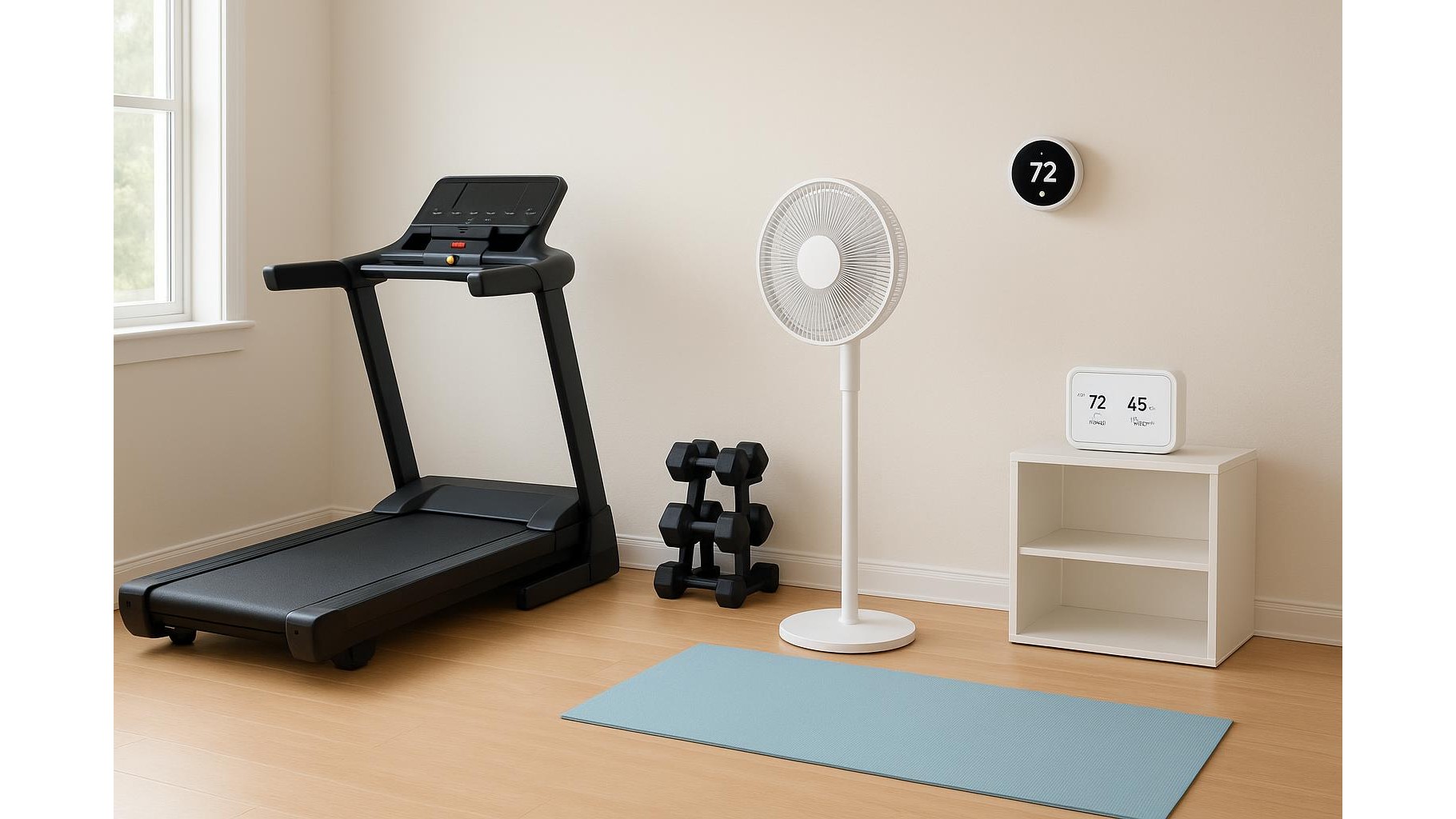
Creating a comfortable, safe home gym environment is not only about having the right weights or treadmill. Temperature, humidity and air quality strongly influence how hard you can train, how you feel during workouts and how well you recover. By combining a smart thermostat, a connected fan and a reliable air quality monitor, you can turn any room into a smarter training space that keeps you cooler, helps you breathe easier and supports better performance.
Why climate control matters in a home gym
When you train in a poorly controlled room, your core temperature rises faster, your heart rate spikes and you fatigue earlier. A space that is too hot, too cold or stuffy can also increase the risk of dizziness and dehydration. Research shows that moderate temperatures and good ventilation improve perceived exertion and comfort, meaning you can train longer and more consistently. For home gyms, this often means keeping the room cool before the session, allowing enough airflow during high-intensity intervals, and avoiding excessive humidity buildup from sweat and breathing. Smart devices make this process automatic instead of relying on guesswork or opening a window at random times.
Using a smart thermostat to pre‑condition your workout space
A smart thermostat lets you schedule and remotely adjust the temperature of your home gym so it is ready before you start training. Look for a model that supports programmable schedules, app control and energy reports. With these features, you can create routines like cooling the room to 18–20°C shortly before strength training or keeping it slightly warmer for mobility and yoga sessions. Integration with voice assistants also allows quick changes mid‑workout without touching your phone. The key is consistency: by keeping your gym at a predictable temperature, your warm‑up becomes more effective, your sweat rate is more manageable and you avoid extreme swings between sessions, which is particularly important if you train early in the morning or late at night.
Smart fans for targeted cooling and air movement
Even with a thermostat, you still need air movement to feel comfortable during intense sets and cardio. A smart pedestal or tower fan with adjustable speeds and oscillation helps create a constant breeze that aids sweat evaporation and cooling. Ideally, place the fan to blow across your body rather than directly into your face, which can dry your eyes and feel harsh during long sessions. Using app or remote control, you can increase airflow for intervals and reduce it during rest or stretching. Combining a fan with your thermostat allows you to keep the room slightly warmer overall while still feeling cool, which can save energy. For small spaces without dedicated HVAC, a powerful fan often makes the biggest difference in perceived comfort and helps disperse warm, humid air away from your training zone.
Monitoring CO2, particles and humidity with an air quality sensor
A dedicated air quality monitor tracks metrics like CO2, PM2.5 particles and humidity so you know when your home gym needs fresh air. As you breathe heavily in a closed room, CO2 levels can climb and make you feel sluggish or give you a mild headache. High humidity from sweat and respiration also makes the air feel heavier and may contribute to mould over time. A good monitor sends alerts when thresholds are exceeded, prompting you to open a window, switch on an extractor fan or take a short break. Keeping humidity roughly between 40–60% and CO2 as low as possible will help you feel sharper, recover between sets and avoid that stale, suffocating feeling many people associate with small indoor gyms.
Creating simple automations for a smarter home gym
The real power of smart thermostats, fans and air quality sensors emerges when you link them with basic automations. For example, you can set your thermostat to cool the room to your target temperature 20–30 minutes before your usual workout time, then lower fan speed and slightly raise the temperature afterward to save energy. If your air quality monitor supports integrations, you can trigger a fan or a window actuator when CO2 or humidity pass specific thresholds. Even without complex setups, simple habits such as checking the sensor at the start and end of a session and adjusting the fan or opening a window based on its readings will quickly teach you what conditions feel best. Over time, your home gym becomes a finely tuned environment that supports consistent, high‑quality training.
Optimising your home gym environment with a smart thermostat, connected fan and reliable air quality monitor is one of the most effective upgrades you can make, even before buying new equipment. By controlling temperature, humidity and ventilation, you reduce fatigue, improve comfort and create a safer space for regular workouts. Start with small changes—pre‑cool the room, use targeted airflow and track basic air quality metrics—then refine your setup as you learn how your body responds. A smarter climate can turn any spare room into a training space you actually look forward to using.