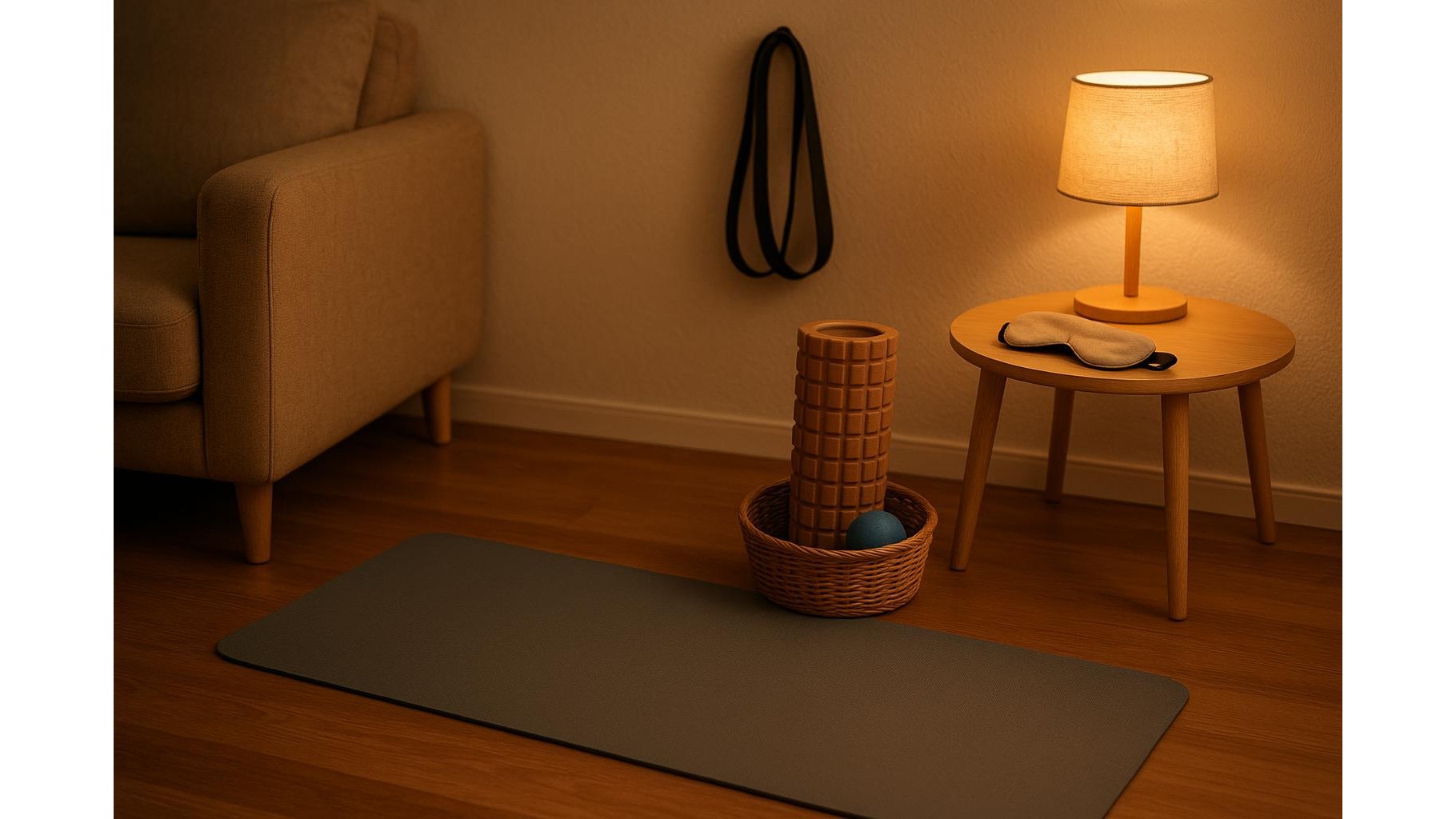
Creating a simple at-home recovery station does not require a full physio clinic or expensive gadgets. With a few smart, budget-friendly tools, you can build a dedicated corner that helps you care for your joints, muscles and sleep quality. The key is choosing items you will actually reach for after workouts or long days sitting at a desk, and organising them so recovery feels as easy and automatic as grabbing your gym shoes.
A supportive base: yoga mat for stretching and mobility
Every effective recovery corner starts with a comfortable surface. A simple yoga mat gives you a clean, cushioned space for mobility work, stretching and core stability exercises. Look for a mat with enough thickness to protect your knees and spine on hard floors, but not so soft that you lose balance in standing stretches. A non-slip texture helps you hold positions safely when you are tired post-workout. Keeping your mat permanently rolled out in your chosen corner is a visual reminder to spend five to ten minutes on recovery instead of collapsing straight onto the sofa.
Foam roller: the backbone of your recovery station
A foam roller is one of the most versatile and cost-effective tools for at-home myofascial release. It helps reduce muscle tightness in the quads, hamstrings, calves and upper back, and can ease post-workout soreness when used consistently. Choose a medium-density roller if you are new to rolling; very firm or textured models can feel too intense and end up abandoned. Aim for slow, controlled passes along the muscle, pausing on tender spots and breathing deeply. Just five minutes of rolling while watching TV can dramatically improve how your legs feel the next morning and support better movement quality in your next training session.
Massage balls for targeted trigger point work
Where a foam roller covers large muscle groups, a small massage ball shines at targeting stubborn trigger points in the glutes, hips, feet and shoulders. A firm rubber or lacrosse-style ball lets you apply focused pressure by leaning against a wall or the floor. This is especially helpful if you sit a lot and struggle with upper-back knots or tight hip rotators. Keep one in your recovery basket and another near your work area so you can roll under your feet during calls. Short, frequent sessions often work better than rare, intense ones, making it more realistic to build a daily recovery habit.
Simple mobility tools to support joints
To really support joint health, add one or two small mobility tools to your station. A light resistance band can assist with shoulder warm-ups, hip activation and gentle rehab-style exercises that keep your joints moving through healthy ranges. An inexpensive knee support cushion or folded towel can make positions like lunges or half-kneeling rotations much more comfortable, encouraging you to practise them regularly. Rather than buying a dozen gadgets, focus on two or three tools you understand how to use and can pair with simple daily routines, such as a five-minute band sequence before bed or while waiting for your coffee to brew.
Sleep-focused add-ons to complete your recovery corner
Recovery is not just about muscles; sleep quality is where most of the real repair happens. To connect your recovery corner with your nighttime routine, consider adding a soft sleep mask and a small box for earplugs or a lavender sachet. Using a mask signals to your brain that it is time to wind down, especially if your bedroom is not completely dark. You can also keep a notebook nearby to jot down training notes or pre-sleep thoughts, clearing mental clutter that might keep you awake. Treat this corner as your pre-bed ritual space: a few minutes of stretching on the mat, a quick roll with the foam roller, then mask on and lights out.
By combining a yoga mat, foam roller, massage ball, minimal mobility tools and simple sleep-focused add-ons, you can build a practical at-home recovery station that fits into any room and budget. The real power of this setup is consistency: when your tools are visible, accessible and genuinely comfortable to use, short daily sessions become automatic. Over time, this small corner can translate into fewer aches, smoother training sessions and deeper, more restorative sleep.