
Building strength at home has never been more popular, but many lifters still wonder: “How strong should I actually be?” Having clear, realistic strength standards helps you track progress, train safely and stay motivated across different ages and experience levels. This guide offers practical benchmarks for common home lifts, explains how age and training history affect performance, and shows you how to assess and improve your numbers without leaving your living room.
Why strength standards matter at home
Without gym PR boards or coaching feedback, home lifters can feel lost about their progress. Simple strength benchmarks provide a reference point so you can see whether you are at a beginner, intermediate or advanced level for your size and age. They also encourage balanced development; if your push-up strength is excellent but your squat is weak, your numbers highlight that gap. Remember that standards are guidelines, not judgments: genetics, injury history and training time all influence results. Use them as a compass, not a verdict.
Bodyweight benchmarks by level and age
For most home lifters, bodyweight exercises are the foundation of strength. As a rough guide for healthy adults: a beginner might work towards 10 full push-ups, 15 bodyweight squats and a 20–30 second plank. An intermediate lifter could target 20–30 push-ups, 40–50 squats and a 60–90 second plank. Advanced trainees might aim for 40+ push-ups, 75+ squats and a 2+ minute plank, plus variations like single-leg squats or decline push-ups. After about 40–50 years of age, it’s normal for top-end strength to decline slightly, but consistency can maintain very respectable numbers. Focus on quality reps, good form and pain-free ranges of motion rather than chasing arbitrary records.
Using basic equipment to measure your strength
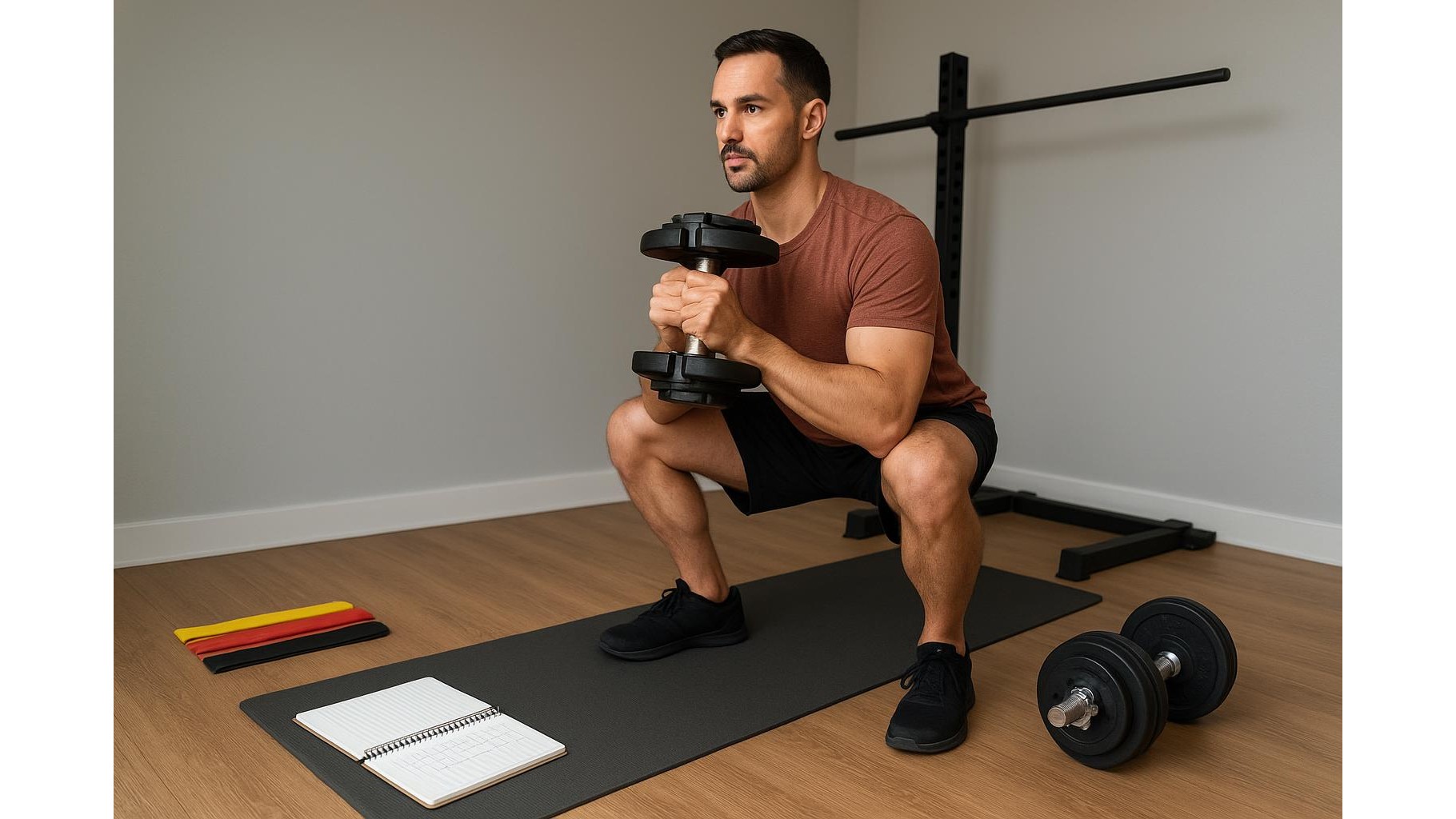
Many home gyms rely on simple tools like adjustable dumbbells, resistance bands and a sturdy bench to expand testing options. With dumbbells, track your 5–10 rep max in movements such as goblet squats, Romanian deadlifts, dumbbell rows and overhead presses. A practical goal for an intermediate lifter is to goblet squat a load close to half their bodyweight for controlled reps, and row dumbbells approaching one-third of bodyweight in each hand. Bands let you test pull strength with banded rows and assisted pull-ups if you have a doorway bar. Keep a training log so you can see incremental increases over weeks and months; small jumps in load or reps are strong evidence that your at-home strength standards are steadily rising.
How age and training history shape expectations
Age and training age (how long you have trained) strongly affect what “good” looks like. A 25-year-old with a decade of sports behind them will naturally outperform someone starting at 45 after years of sedentary work. Instead of comparing yourself to internet outliers, compare yourself to your own baseline from 3, 6 and 12 months ago. For older lifters, important standards include standing up from the floor without using hands, carrying shopping bags for several minutes and holding a single-leg balance. These functional benchmarks directly translate to independence and injury resilience. Prioritise joint-friendly technique, longer warm-ups and more recovery while still challenging your muscles with progressive overload.
Safe progression and realistic goal setting
To move from beginner to intermediate and beyond, apply progressive overload but keep safety front and centre. Increase total weekly volume by about 5–10% at a time, and avoid max-effort testing when you are tired or stressed. Set clear, time-bound goals such as “add 5 perfect push-ups in 8 weeks” or “raise my goblet squat from 10 kg to 20 kg for 10 reps in three months.” Break them into smaller milestones you can tick off every couple of weeks. If a joint feels sharp pain, regress the movement or adjust the range instead of forcing the rep. Sustainable strength comes from consistent, manageable training loads rather than heroic single sessions.
Ultimately, at-home strength standards are tools to guide your training, not rigid rules. Use benchmarks for push, pull, squat and core strength to gauge where you are today, updating them as your age and circumstances change. Focus on improving your own numbers gradually, keeping technique strict and recovery adequate. With a simple mix of bodyweight work and basic equipment, you can build strength that not only looks good on paper but also makes everyday life easier, safer and more enjoyable.









