Home workouts generate a surprising amount of training data: heart rate, calories, sets, reps, sleep, VO2 max and more. Without a plan, you risk losing years of progress the moment you change smartphone, switch app or upgrade your tracker. This guide walks you through how to backup, sync and export home workout data so that your history is safe, portable and ready to analyse over the long term.
Why your home workout data is worth protecting
Your home workout logs are more than numbers: they show how your strength, endurance and consistency have improved over time. Long‑term data helps you spot plateaus, understand how life events affected your training, and fine‑tune your programs. If your only copy lives inside one phone, app or device account, a reset, lost password or shut‑down service can wipe everything. Treat your data like you treat your equipment: you wouldn’t leave your barbell out in the rain, so don’t leave your fitness progress at the mercy of a single app.
Use app ecosystems and exports, not just screenshots
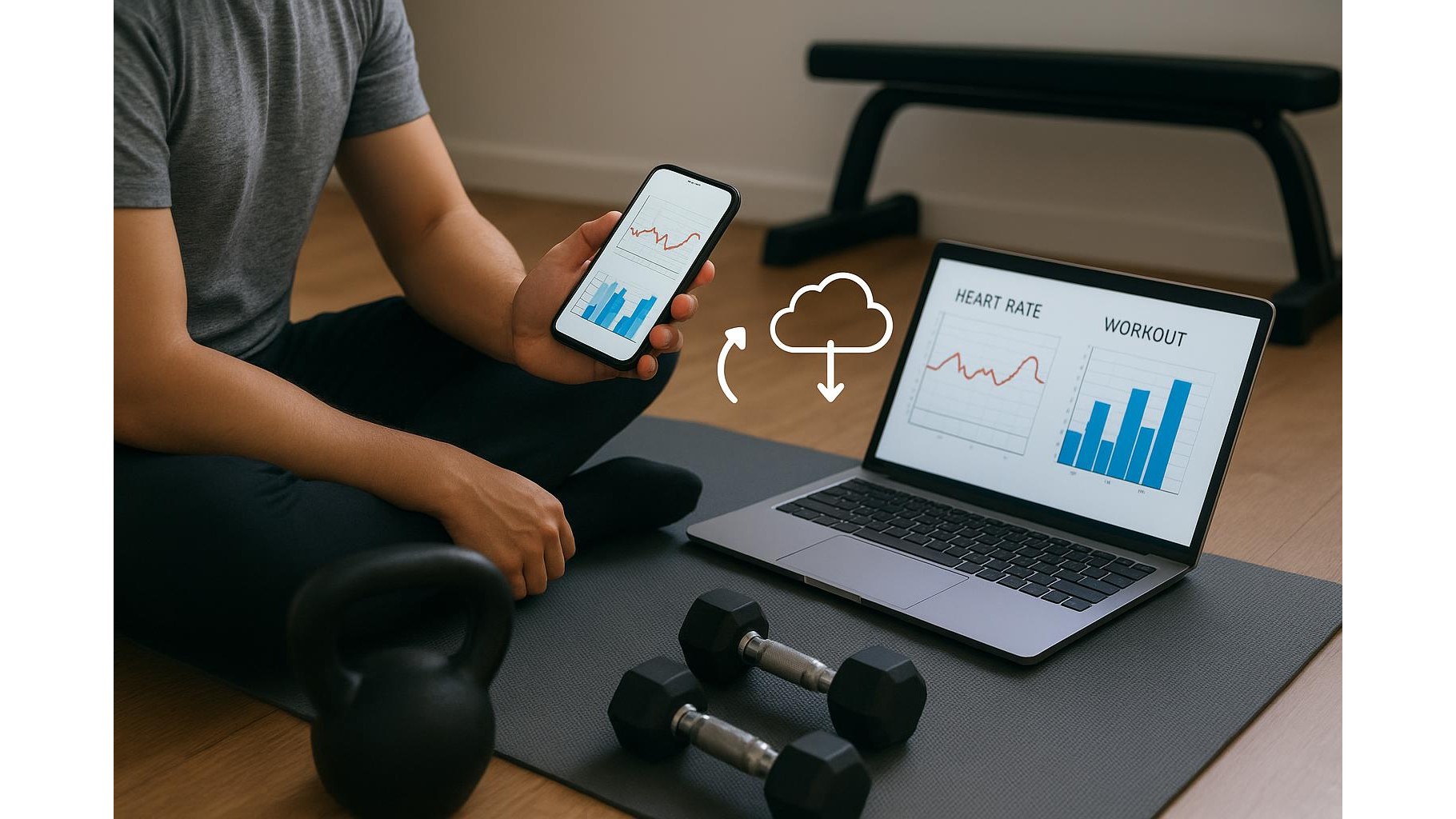
Most major platforms – Apple Health, Google Fit, Garmin, Fitbit, Polar and others – can act as a central hub for home training data. Enable syncing from your workout apps (for example, your HIIT timer, strength log or yoga app) into a main health platform so that your stats are aggregated in one place. Then, at least once a month, use the platform’s export feature to download your data as a file (often CSV or JSON) and store it in cloud storage and on an external drive. Avoid relying on screenshots or PDFs as your only archive: they are hard to search, analyse or import elsewhere, while structured exports keep your workout history portable.
Choose devices and apps that support open data
When buying new gear for your home gym tracking setup, prioritise devices and apps that allow data export and sync. Before committing, check if the app can sync with Apple Health or Google Fit, and if it has an option to export workouts. Look for formats like CSV, GPX or TCX for runs and rides, or spreadsheets for strength logs. If a product locks your data into its own cloud with no export, think twice: you’re investing time and effort in numbers you might never retrieve. Open, well‑documented data options are as important as battery life or screen quality when you’re choosing tools to track your home fitness.
Build a simple backup routine that you’ll actually follow
A robust backup strategy for home workouts doesn’t need to be complicated. Create a recurring monthly reminder to (1) export data from your main health platform or workout app, (2) save the file to a labelled folder in your cloud drive, and (3) copy that folder occasionally to an external SSD or USB drive. Use clear names like “Workouts_2026_Q1.csv” so you can find data quickly later. If you log strength training in a spreadsheet, include it in the same routine. The key is consistency: a simple checklist you follow every month is better than an elaborate system you never maintain.
Keep privacy, security and sharing under control
Backing up home workout data also means protecting your privacy and security. Use strong, unique passwords and enable two‑factor authentication on your main fitness and cloud accounts. Avoid posting raw exports publicly, since they can contain sensitive details like location, weight or sleep patterns. If you want to share progress with a coach or training partner, create a trimmed version of your data – for example, a filtered spreadsheet – so you only reveal what’s needed. Regularly review which apps have permission to read and write your health data, and revoke access for tools you no longer use to keep your fitness ecosystem clean and safe.
Future‑proof your progress across devices and platforms
Technology, phones and apps will change, but your years of home workout progress should not disappear with them. By centralising data in a major health platform, choosing apps that support exports, and following a simple monthly backup routine, you can move from one device or service to another without losing your history. Treat your training data like a long‑term project: something you’ll want to revisit, analyse and learn from for years. A little attention now ensures that all those early‑morning sessions, late‑night lifts and living‑room circuits remain part of a continuous, reliable story of your fitness journey.