Building a smart home gym means choosing equipment that is both space–saving and versatile. Compact adjustable kettlebells are perfect for this: they replace multiple fixed bells, support full–body training and allow you to progress over time without filling your living room with iron. In this guide we’ll look at how to choose the right model, which weight ranges make sense, and what to check in terms of handle design, locking mechanisms and long‑term strength progression.
Understand weight ranges for real‑world training
The first step is matching the adjustable kettlebell weight range to your current level and future goals. Beginners often do well starting around 4–6 kg for overhead work and 8–10 kg for swings, while intermediate lifters quickly move into the 12–20 kg range for most compound moves. A good compact bell should cover at least 5–6 steps of progression, so you can keep adding load without buying a new bell every few months. For example, many popular models offer increments from about 3–4 kg up to 18–20 kg, making them suitable for both conditioning and basic strength work like goblet squats, rows and presses.
Prioritise handle design and comfort
Handle shape and finish are crucial on a compact adjustable kettlebell because all your power transfers through the grip. Look for a bell with a smooth but not slippery coating, enough width for two‑handed swings and a gentle curve that sits comfortably in the rack position. Sharp edges or seams will quickly become a problem during longer sessions of cleans, snatches and presses. If you have smaller hands, choose a slightly thinner handle diameter to avoid over‑gripping and early fatigue; if your hands are larger, ensure the handle doesn’t force your fingers into a cramped position. A well‑designed handle allows you to move explosively while protecting your wrists and forearms.
Check locking mechanisms and plate stability
The heart of any adjustable kettlebell is its locking mechanism. You want a system that is simple, fast to adjust and absolutely secure once locked. Some bells use an internal dial that picks up internal plates, others rely on pins or clips. Whichever design you prefer, test (or research) how stable the plates feel during dynamic moves like swings and snatches. Excessive rattling is not only annoying; it can also shift the centre of mass in unpredictable ways. Clear weight markings on the mechanism are also helpful so you can make quick changes in circuits without guessing the load. For a progressive home gym setup, reliability matters more than flashy features.
Balance compact size with kettlebell feel
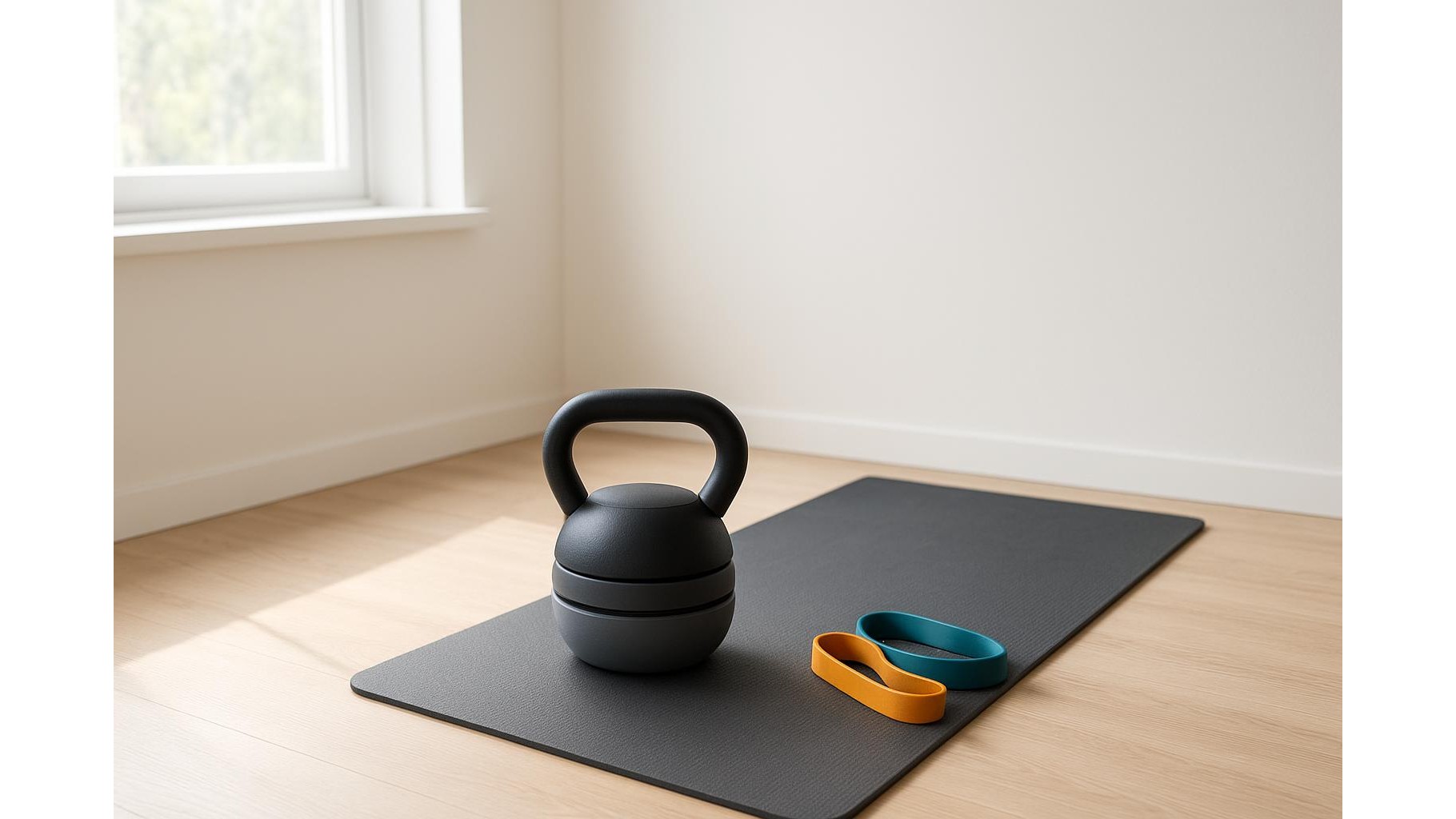
One of the main reasons to choose compact adjustable kettlebells is to save space, but the bell still needs to behave like a traditional kettlebell. Extremely bulky designs may hold many plates, yet feel more like a dumbbell in motion, which changes the training effect. Ideally, the bell’s profile should remain relatively tight even at higher weights, so it tracks naturally between your legs during swings and rests comfortably on your forearm. If you live in a small flat or train in a corner of your living room, a compact footprint means you can store the bell easily under a bench or in a closet, while still enjoying authentic kettlebell movement patterns.
Match the kettlebell to your training plan
To get the most from a progressive home gym setup, think about how you train week to week. If you love high‑rep conditioning, choose an adjustable bell where the lighter settings feel well balanced and easy to cycle quickly. If your focus is strength and hypertrophy, prioritise models that reach at least 20 kg or more, with sensible jumps between settings so you can apply progressive overload. Plan to use the kettlebell for swings, Turkish get‑ups, presses, rows and squats: the more exercises you cover, the more value you get from a single compact tool. Over time, you can pair it with adjustable dumbbells or resistance bands to build a complete, efficient home gym.
In summary, the best compact adjustable kettlebell for your home gym is the one that balances a useful weight range, comfortable handle design, trustworthy locking system and genuinely compact size while still feeling like a classic bell. Choose a model that supports your current strength but also leaves headroom for future gains, and integrate it into a structured training plan. With one well‑chosen adjustable kettlebell, you can turn a small space into a highly effective progressive training environment.