As hormone levels fluctuate in perimenopause and menopause, many women notice slower recovery, stiffer joints, disrupted sleep and higher stress. If you prefer to train at home, you can still build an effective recovery routine that respects these changes. By combining targeted sleep hygiene, stress management, gentler joint care and smart training adjustments, you can continue to gain strength, support bone health and feel energised after your home workouts.
Optimising sleep for hormonal recovery
Restorative sleep is your most powerful recovery tool, yet night sweats, hot flushes and anxiety often disturb it in peri- and menopause. Start by building a consistent wind-down routine: dim lights, limit screens for 60 minutes before bed and keep your bedroom cool and dark. A supportive, breathable pillow can help keep your neck in a neutral position and prevent morning stiffness, while natural fibre bedding and a fan support temperature regulation. If you wake frequently, experiment with a short pre-bed relaxation routine: 5–10 minutes of diaphragmatic breathing, gentle stretching or a body-scan meditation. Avoid intense late-night workouts; finish strength or cardio at least three hours before bed, and reserve evenings for light mobility or restorative yoga to promote better overnight muscle repair.
Managing stress and supporting your nervous system
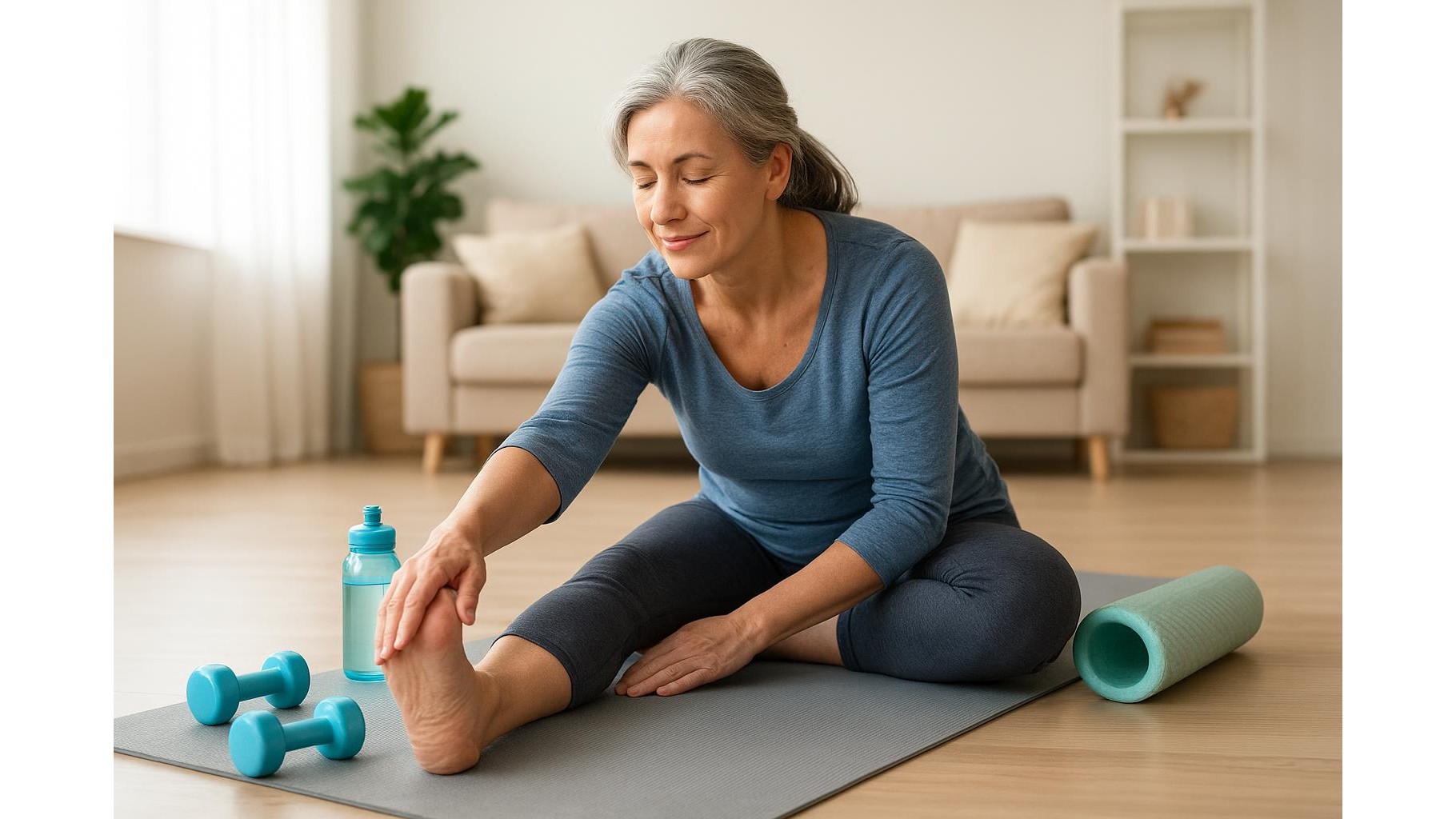
Fluctuating oestrogen can heighten feelings of stress and make your nervous system more reactive, which in turn slows recovery from training. To counter this, schedule short, daily stress-management breaks just as you would schedule workouts. Try 5–10 minutes of box breathing (inhale for 4, hold for 4, exhale for 4, hold for 4), a brief journaling session or a slow walk around the block. At home, create a small “recovery corner” with a yoga mat, cushions and perhaps a soft light where you do gentle mobility, stretching or mindfulness. Keeping caffeine earlier in the day and pairing workouts with calming post-session routines (like stretching plus slow breathing) helps shift you into “rest and digest” mode, so muscles, joints and connective tissue can repair more effectively between sessions.
Joint care, mobility and everyday movement
With declining oestrogen, many women notice more joint stiffness, aches and niggles, especially in the knees, hips and shoulders. Daily low-intensity movement is key. Aim for regular walking and introduce 5–10 minute “movement snacks” throughout the day: gentle hip circles, cat-cow, shoulder rolls and ankle mobility drills. A supportive but not overly soft exercise surface, such as a thick yoga mat, can make floor-based mobility and core work more comfortable, encouraging you to do it consistently. After home strength sessions, spend at least five minutes on dynamic stretches for the muscles you trained, then 1–2 static stretches held for 20–30 seconds. This helps maintain range of motion and may reduce the feeling of morning stiffness. If a joint is irritated, temporarily reduce impact and deep flexion ranges, but keep pain-free movement going to nourish cartilage and surrounding tissues.
Smart training adjustments for changing hormones
Perimenopause and menopause do not mean giving up on strength training or cardio, but you may need to be more strategic. Recovery capacity can fluctuate from week to week, so build flexible home programs. Combine 2–3 days per week of total-body strength work with 2–3 days of low- to moderate-intensity cardio, such as brisk walking or cycling. Use progressive overload cautiously: add sets, reps or resistance slowly and watch how your body feels 24–48 hours after sessions. When you have higher fatigue, swap high-impact intervals for lower-impact options like marching in place, step-ups or gentle circuits. Remember that resistance training is crucial for maintaining bone density and muscle mass through menopause, so prioritise quality of movement, controlled tempo and adequate rest between sets over maximal intensity or volume.
Simple at-home tools to support recovery
You do not need a full gym to support effective recovery at home; a few carefully chosen tools can make a big difference. A comfortable yoga or exercise mat provides cushioning for joints during floor work and stretching, encouraging more frequent mobility sessions. Light to moderate resistance bands or adjustable dumbbells allow you to scale exercises up or down according to how you are feeling that day, reducing the risk of overreaching when energy is low. A basic foam roller or massage ball can be used for gentle self-myofascial release on tight calves, quads and back muscles, especially after strength or walking workouts. Finally, keep a water bottle and perhaps a small notebook in your workout space so you can track sleep quality, mood, training load and soreness; this simple habit helps you spot patterns and adjust your plan proactively.
Recovery during perimenopause and menopause is about listening to your body, respecting hormonal changes and choosing strategies that fit your life at home. By prioritising sleep, managing stress, caring for your joints, adjusting your training plan and using a few supportive tools, you can continue to build strength, protect your bones and feel more resilient. Instead of pushing through constant fatigue, a recovery-focused approach helps you enjoy your home workouts, stay consistent and move into this new life stage with confidence and energy.