If you spend your days at a desk and your evenings in a home gym, your upper back can quickly become the weak link. A stiff thoracic spine limits how well you can press, row and hold a solid rack position, and it can make every session feel tight and cranky. This short, equipment-light routine focuses on freeing up your upper back, opening your chest and restoring shoulder movement so you can lift more comfortably and safely at home.
Why your upper back gets stiff before you even lift
Hours of sitting in a rounded posture – head forward, shoulders shrugged and spine flexed – teach your body that this is its new normal. The mid and upper back lose extension, the chest gets tight and the small stabilising muscles around the shoulder blades go offline. When you grab a barbell or dumbbells, you are now asking a stiff system to move heavy loads. That is when irritation around the shoulder, neck and even lower back can appear. A simple pre-lifting routine that restores thoracic mobility and scapular control helps you undo desk posture before every strength session.
Breathing reset: lying hook-lying drill
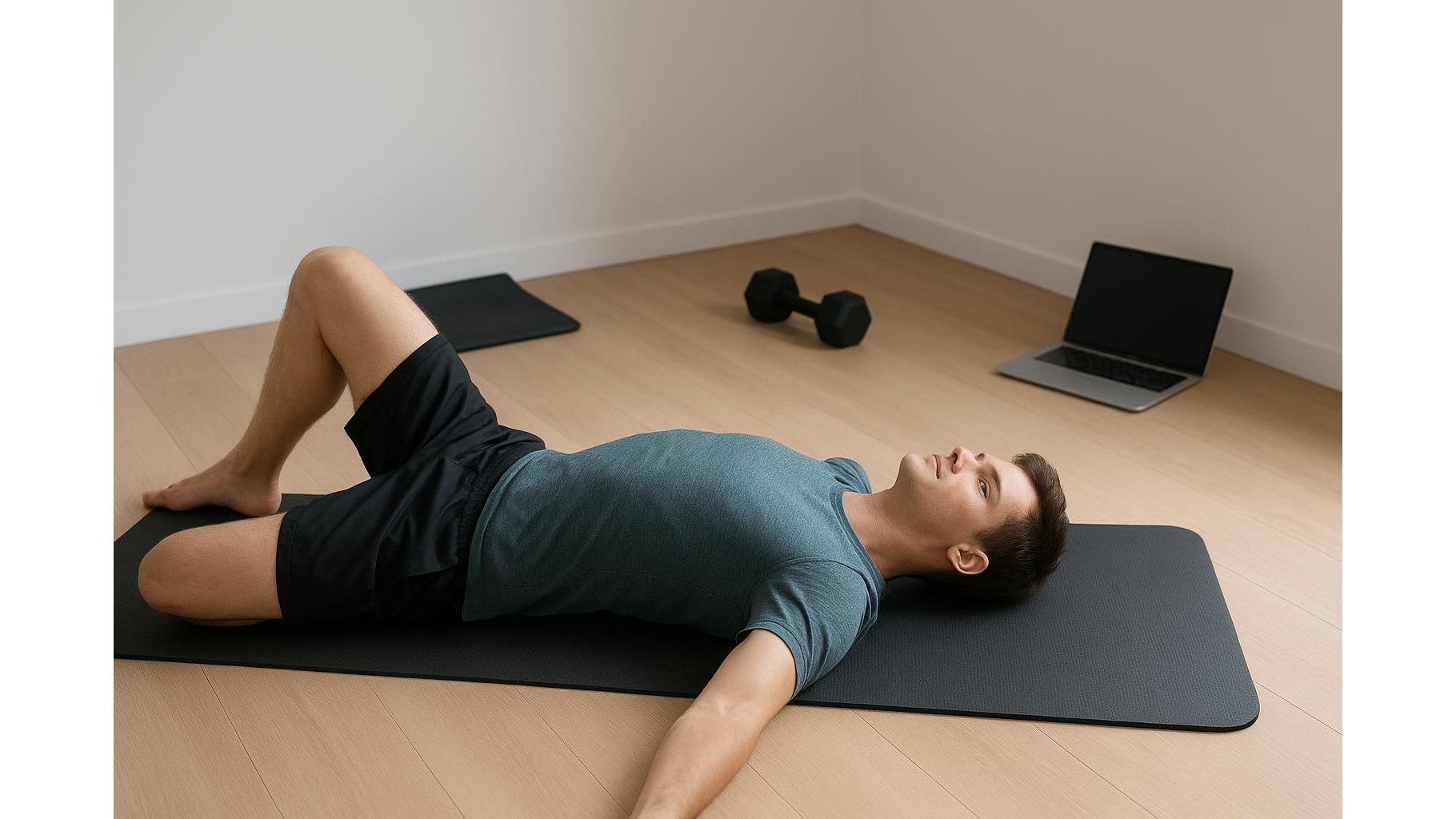
Start by calming your nervous system and gently mobilising the ribs. Lie on your back with knees bent and feet flat, arms relaxed by your sides. Take a slow inhale through the nose, letting air expand into the sides and back of your ribcage rather than just your chest. Exhale fully through the mouth, feeling your ribs move down and your low back melt into the floor. Repeat for 8–10 breaths. This simple drill teaches you to use your diaphragm again, reduces overactivity in the neck and upper traps, and gives the thoracic spine a chance to move with the breath. It is a perfect bridge from work mode into training mode.
Wall-supported thoracic extensions
Next, restore extension in the upper back – crucial for comfortable pressing and overhead work. Kneel facing a wall, place your forearms on the wall at shoulder width and sit your hips back slightly. Gently drop your chest towards the floor while keeping your ribs from flaring dramatically. You should feel a stretch across the lats and a subtle opening in the upper back. Exhale as you sink into the position, inhale as you come out, and move in and out of the stretch for 10–12 controlled repetitions. Avoid forcing range or arching only through the lower back; the goal is smooth, pain-free motion centred in the upper back region.
Open-book rotations for desk-bound torsos
Rotational mobility in the thoracic spine keeps your shoulders and neck happier during rowing and pressing. Lie on your side with hips and knees bent to 90 degrees and arms straight out in front, palms together. Keeping your knees stacked, open the top arm up and across your body, letting your head follow your hand as you rotate your chest towards the ceiling. Pause where you feel a comfortable stretch across the chest and in the mid-back, then return to the start. Perform 8–10 repetitions per side. Focus on slow, smooth breathing to help the tissues relax and avoid pulling into sharp or pinching sensations.
Scapular slides and wall angels
Once your thoracic spine is moving, teach the shoulder blades to glide again. Stand with your back lightly against a wall, feet a step forward, and gently flatten your low ribs so you are not arching. Place your arms in a goalpost position against the wall if possible. Slide your forearms and hands up towards an overhead position, then back down, without letting your ribs flare or shoulders shrug to your ears. Aim for 10–15 repetitions. This drill strengthens the muscles that rotate and stabilise the shoulder blades, supporting better overhead pressing and reducing the tendency to ‘live’ in your upper traps during home workouts.
Integrating the routine into your home lifting sessions
To lock in the benefits, treat this as your non-negotiable warm-up before pressing or rowing days in your home gym. Run through the sequence – breathing reset, wall-supported extensions, open-book rotations and wall angels – in 8–10 minutes. Keep the intensity low and focus on control, not fatigue. Over time you should notice easier overhead positions, more stable rows and less neck and shoulder tightness after sessions. If a drill ever provokes sharp pain, reduce range or skip it and consult a professional. Used consistently, this simple routine acts as ongoing at-home recovery for your stiff upper back, helping you train harder, move better and keep your lifting progress on track.
This short routine gives home lifters a practical way to undo desk posture before each workout, using only bodyweight and a bit of floor space. By pairing targeted thoracic mobility work with gentle activation of the shoulder stabilisers, you create a better platform for every press and row you perform in your home gym.