Long indoor workouts on the treadmill, exercise bike or rower can quickly turn uncomfortable if your shorts start to rub. Chafing happens when fabric, skin and sweat combine to create friction, leading to redness, burning and even sores. Choosing the right pair of low-friction home gym shorts can make the difference between cutting a session short and comfortably finishing your training plan. Here’s how to pick fabrics, seams and fits that keep you moving, not burning.
Choose the right low-friction fabrics
The base of any anti-chafe short is its fabric. For indoor treadmill runs and cycling, look for smooth synthetic blends such as polyester, nylon and elastane. These materials glide over the skin better than rough cotton, wick moisture away and dry quickly, reducing the sticky feeling that often leads to rubbing. Avoid heavy cotton jersey, which absorbs sweat and becomes abrasive during long sessions. For high-sweat workouts like interval running or full-body HIIT, a lightweight, stretchy knit with at least a small percentage of elastane will move with you instead of against you, minimising hotspots on inner thighs and around the waistband.
Pay attention to seams and construction
Even the best fabric can cause chafing if the seams are bulky or badly placed. For home gym use, prioritise shorts with flatlock seams or bonded seams, especially along the inner leg. These lie flat against the skin and reduce the chance of raised stitching rubbing with every stride or pedal stroke. Check where the seams run: a long vertical seam on the inner thigh can quickly become a problem during long treadmill runs, while big labels or rough tags at the back of the waistband can dig in during rowing or core work on the mat. If you are very sensitive, consider seam-minimised designs or compression-style liners that create a smooth, second-skin layer beneath looser outer shorts.
Get the fit and length right for your activity
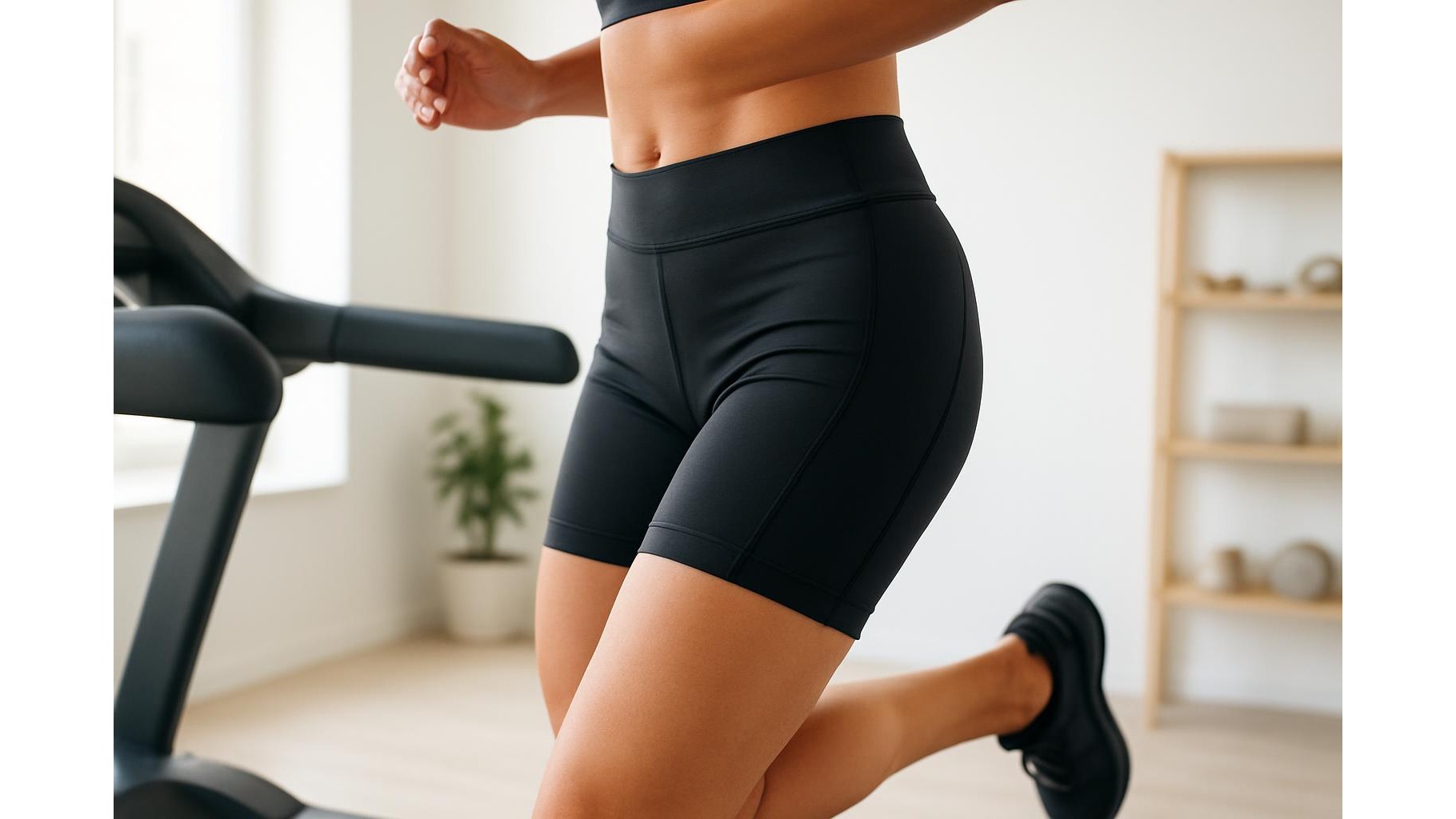
The best low-friction shorts fit closely enough to stay put but not so tight that they dig in. For treadmill and indoor running, many athletes prefer mid-thigh lengths that cover the main chafe zones on the inner thighs while still allowing full stride. Cyclists and users of exercise bikes often benefit from a slightly longer leg that stays anchored while pedalling. For full body workouts with squats, lunges and burpees, look for a secure waistband and enough stretch so the shorts do not ride up. If your main issue is inner-thigh chafing, consider pairing a snug, stretchy liner short with a looser outer layer to get both coverage and comfort.
Moisture management and layering strategies
Managing sweat is crucial to avoiding chafing during long indoor sessions. Even in a climate-controlled home gym, you may sweat more than outdoors because of limited airflow. Look for shorts marketed as moisture-wicking or quick-drying, and avoid heavy, multi-layer fabrics that trap heat. For very long runs or rides, a two-layer system can help: a thin compression or base short against the skin to reduce friction, topped with a light outer short for coverage. Make sure both layers are smooth and that any logos, pockets or drawcords do not overlap in a way that creates pressure points when you sit on a bike saddle or rowing seat.
Extra anti-chafe tactics for home workouts
Even with well-chosen home gym shorts, a few extra habits can keep your skin comfortable. Keep your skin clean and dry before starting, and consider using a dedicated anti-chafe balm or petroleum jelly on known hotspots such as inner thighs, groin and waistband. Replace old shorts when the fabric pills or the seams start to feel rough; worn fibres increase friction dramatically. Rotate between a couple of pairs so the elastic and fabric can recover between sessions. Wash your shorts without fabric softener, which can coat fibres and make them feel tacky against the skin. Finally, be prepared to adjust: what works for a 30-minute ride may not be enough for a 90-minute treadmill run, so take note of any discomfort and refine your gear choices over time.
Choosing the right low-friction home gym shorts is about combining smooth, technical fabrics with smart seam design, appropriate fit and good moisture management. By paying attention to these details and adding simple habits like using anti-chafe balm and replacing worn gear, you can dramatically cut down on irritation during long indoor sessions. The result is more focus on your pace, power and form—and far less on the painful rub that used to end your workouts early.