
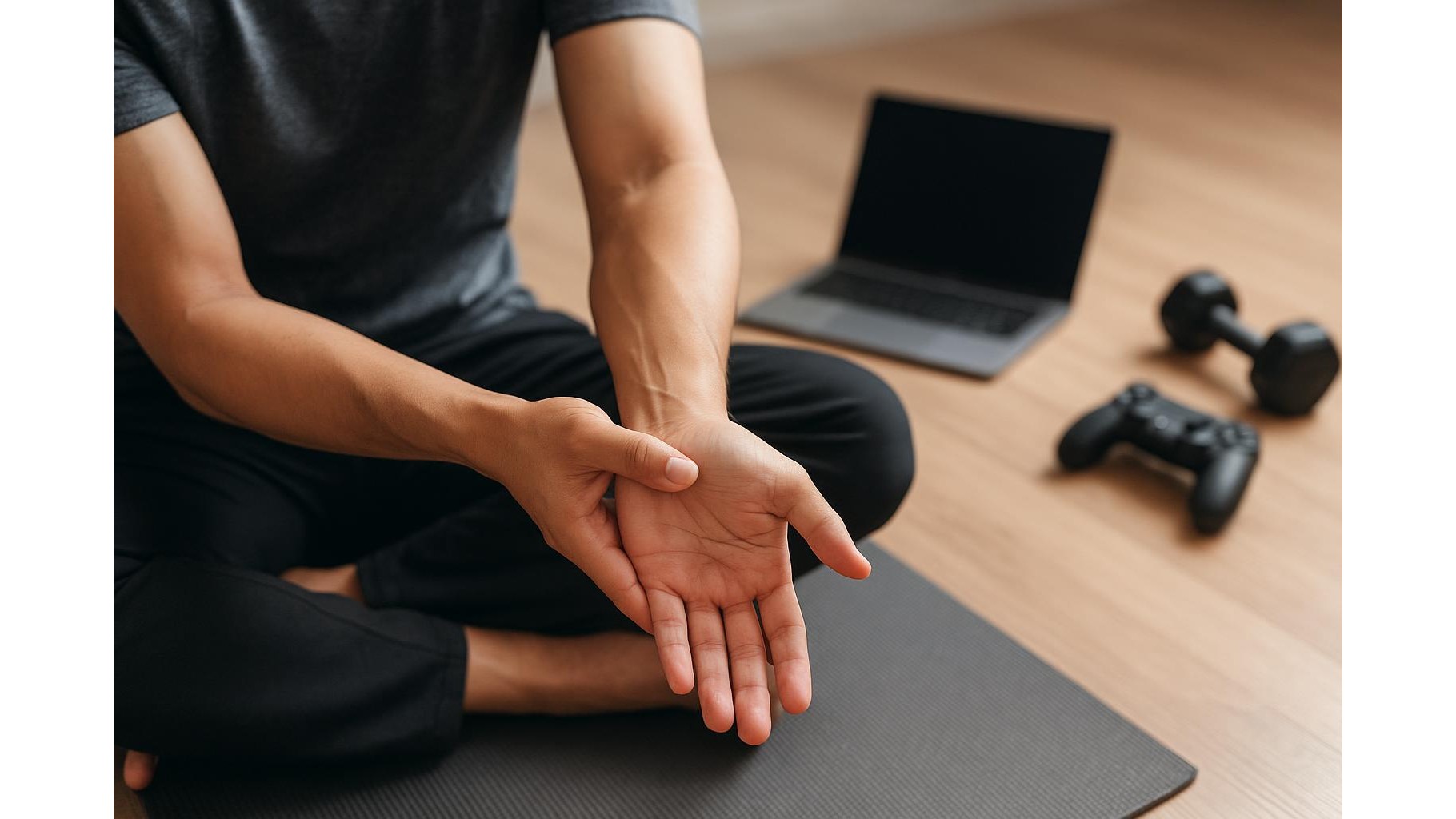
After a long day of typing, scrolling on your phone and squeezing home gym equipment like dumbbells or resistance bands, your hands and fingers work far more than you realise. Yet most people warm up their shoulders and hips and completely ignore their grip. A short, targeted routine of stretches, self-massage and mobility drills can ease tension, reduce stiffness and keep your fingers feeling fast and precise for lifting, gaming and everyday tasks.
Why hand and finger recovery matters
Your hands are built from small joints, fine tendons and delicate muscles that are constantly under low-level stress. Long bouts of keyboard work, gripping dumbbells or holding a game controller lock these tissues into the same positions, which can lead to tight forearms, stiff fingers and even nagging pain around the wrist. Adding five to ten minutes of focused hand recovery after home workouts or gaming sessions helps blood flow, supports joint lubrication and maintains the small stabilising muscles you rely on for a strong, pain-free grip.
Warm up with gentle mobility drills
Start with simple mobility drills to wake up the joints and encourage circulation. Open and close your fists firmly ten times, spreading your fingers as wide as you can on each repetition. Then draw slow circles with your wrists in both directions, keeping elbows still. Next, tap each fingertip to your thumb one by one for thirty to sixty seconds to improve coordination after repetitive tasks like typing or gaming. These mini-movements are low effort, but they signal your body to move fluid and nutrients into the tissues that have been under static load all day.
[p
Easy stretches for overworked fingers and forearms
Once your hands feel warmer, add a few static stretches to ease tension in the fingers and forearms. Extend one arm straight in front of you with the palm facing up, then gently pull the fingers back with the opposite hand until you feel a stretch along the underside of your forearm; hold for twenty to thirty seconds and repeat on the other side. Flip the palm down and lightly draw the fingers toward you to reach the top of the forearm. You can also interlace your fingers and push your palms away from your chest, rounding your upper back to decompress the hands and wrists after long keyboard sessions.
Self-massage techniques you can do anywhere
Self-massage is a powerful tool to relieve tightness in the small muscles of the hands. Use your opposite thumb to apply slow, steady pressure into the base of each finger, then glide along the finger toward the tip, pausing on any tender spots. Gently pinch along the sides of each finger and around the knuckles to break up stubborn tension from gripping weights or controllers. Finish by massaging the fleshy pad at the base of your thumb in small circles; this area often becomes overworked in people who spend hours typing or using a mouse. Keep the pressure firm but comfortable and breathe steadily while you work.
Light strengthening to support a better grip
After loosening up your hands and fingers, adding very light strength work can improve durability. Instead of aggressively squeezing heavy grippers, focus on controlled, high-repetition movements. You can crumple a soft towel in your hand, slowly gathering it toward your palm, then reverse the motion to spread it back out. Rubber bands around your fingers can be used for gentle extension work: open your hand against light resistance to balance the muscles that close your grip. The aim is not to exhaust your hands but to keep these small muscles active and resilient for lifting, typing and gaming.
Building a simple daily hand-care habit
Consistency is more important than complexity when it comes to hand and finger care. Integrate this short routine at the end of your home workout or after you shut down your computer or console for the day. A few minutes of mobility drills, stretching and self-massage will help your hands recover from the combined load of typing, gripping dumbbells, holding resistance bands and using controllers. Over time you are likely to notice less stiffness, a more secure grip and smoother, more comfortable movement in everyday tasks.
By treating your hands and fingers with the same attention you give your bigger muscle groups, you protect your performance and comfort across work, training and play. Building a simple daily habit of hand recovery keeps you lifting, typing and gaming with less tension and more control.









