Turning your living room into a mini gym is one of the easiest ways to help your child fall in love with exercise. This playful, 30-minute parent and child home workout uses only bodyweight moves, zero equipment and plenty of imagination. You’ll warm up with simple games, move through fun paired strength exercises, and finish with calming stretches so everyone ends the session feeling proud, not pressured.
Set up your shared workout space
Before you start, clear a safe area where both of you can lie down and stretch your arms without hitting furniture. A soft rug or a couple of yoga mats make the floor more comfortable for small knees and hands, but they’re not essential. Explain that this is your special family workout time: shoes off, water nearby, and any screens turned off. Let your child choose the music playlist to boost their sense of ownership. Agree a simple rule: you both try your best, but you can stop or change any exercise that feels uncomfortable. This helps children learn to listen to their bodies while still seeing movement as fun.
Warm-up games to get everyone moving
Spend 5–7 minutes warming up with playful, low-pressure activities that gently raise the heart rate. Start with a game of “follow the leader”: the adult marches on the spot, swings arms, then adds heel kicks, side steps and gentle twists while the child copies. Switch roles so your child becomes the leader and invents moves. Add short bursts of light “Animal Tag” around the room: when you shout “frog”, you both hop; “cat”, you crawl; “bird”, you flap arms and tiptoe. Keep movements small and controlled if space is tight. The goal is warm muscles and big smiles, not getting out of breath too quickly. End the warm-up with 30 seconds of deep “balloon breaths” to calm excitement before the main set.
Partner strength moves for the whole body
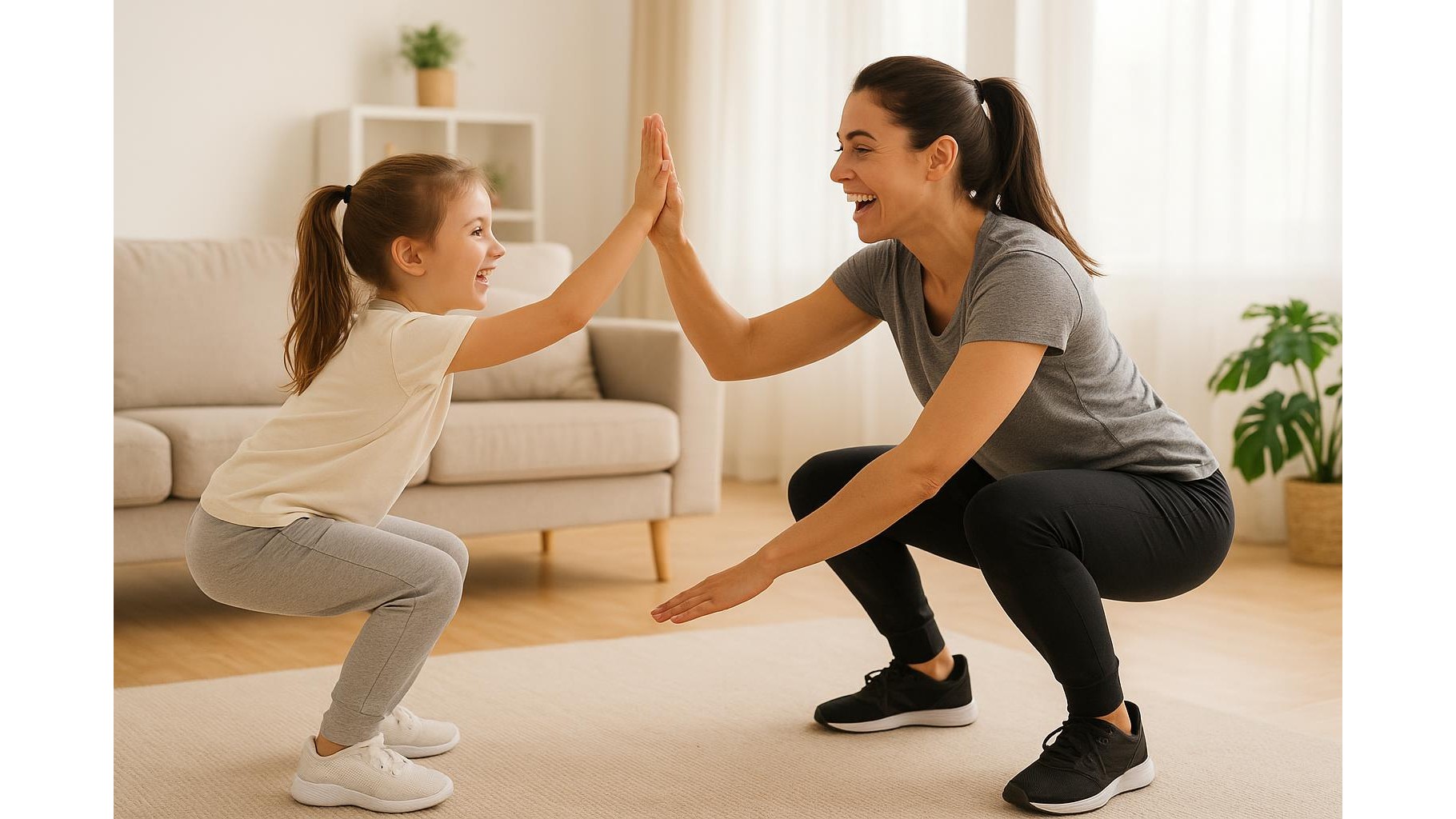
The main section (about 15 minutes) focuses on simple bodyweight strength exercises that challenge both of you without needing equipment. Try 3–4 rounds of 30 seconds work, 30 seconds rest, adjusting times for your child’s age. Begin with “high-five squats”: stand facing each other, feet shoulder width, squat down together and give a high-five at the bottom. Move to “plank and crawler”: the adult holds a strong plank while the child army-crawls under the torso, then around and over (step, don’t jump, for safety). Add “wheelbarrow walks” if wrists and shoulders are happy: the adult holds the child’s ankles while they walk on their hands for a few steps, then swap or shorten the distance. Always prioritise clean, slow movement over speed, and stop at the first sign of fatigue.
Core and balance: playful stability challenges
Next, spend 5–8 minutes on core strength and balance. Lie on your backs, feet touching, and perform “mirror bridges”: squeeze glutes and lift hips together, then lower slowly. Turn over for “high-five planks”: both in a kneeling or full plank, reach out to tap opposite hands without rocking side to side. For younger kids, turn planks into a game of “don’t drop the sand”: imagine a tiny sandbag on their lower back that must not spill. Finish with a “balance statue” game: stand on one leg, arms wide, while the other person tries to make you giggle without touching you. Swap roles and legs. These gentle challenges improve coordination and body awareness while keeping the atmosphere light.
Cool-down stretches and calming connection
Use the final 5–7 minutes to cool down and reinforce that exercise ends with relaxation, not just exhaustion. Start seated, soles of your feet touching your child’s for a gentle “rowing stretch”: hold hands and take turns leaning back to stretch the hamstrings and upper back. Move into “partner cat–cow”: kneel facing each other, place hands on the floor, arch and round your spines together in slow rhythm with your breathing. Finish lying on your backs, one arm up to “high-five the ceiling”, then let the arms relax by your sides. Encourage slow, deep breaths in through the nose and out through the mouth. Ask your child what their favourite part of the workout was to end on a positive note.
Making this routine a weekly ritual
Consistency matters more than perfection. Aim to repeat this 30-minute family bodyweight workout once or twice a week, adapting the games and exercises as your child grows. Some days you might only manage the warm-up and a few partner moves, and that is still a win. Over time, your child will link exercise with connection, play and confidence rather than pressure. You’ll both build strength, mobility and resilience while creating a shared ritual that fits easily into busy evenings. Keep it simple, keep it safe, and remember: the real goal is not just a stronger body, but a stronger parent–child bond.