Structuring home HIIT workouts is far easier when you let simple interval timers and smartwatches handle the clock and the data. Instead of staring at your phone or guessing rest periods, you can lock in consistent work‑to‑rest ratios, track your heart rate, and monitor progress over weeks. In this guide, we’ll see how to use basic timers and watch features to build effective, trackable HIIT sessions at home.
Why timing matters in home HIIT
HIIT only works when your intervals are precise and repeatable. Too much rest and you lose intensity; too little and you burn out after a couple of rounds. A dedicated interval timer or smartwatch keeps your attention on movement, not on counting seconds. Aim for simple structures like 30 seconds work / 30 seconds rest, or 40/20 for more advanced conditioning. Once your timing is automated, you can focus on exercise quality, breathing, and safe technique, turning a chaotic home circuit into a structured training session.
Using a basic interval timer for consistent rounds
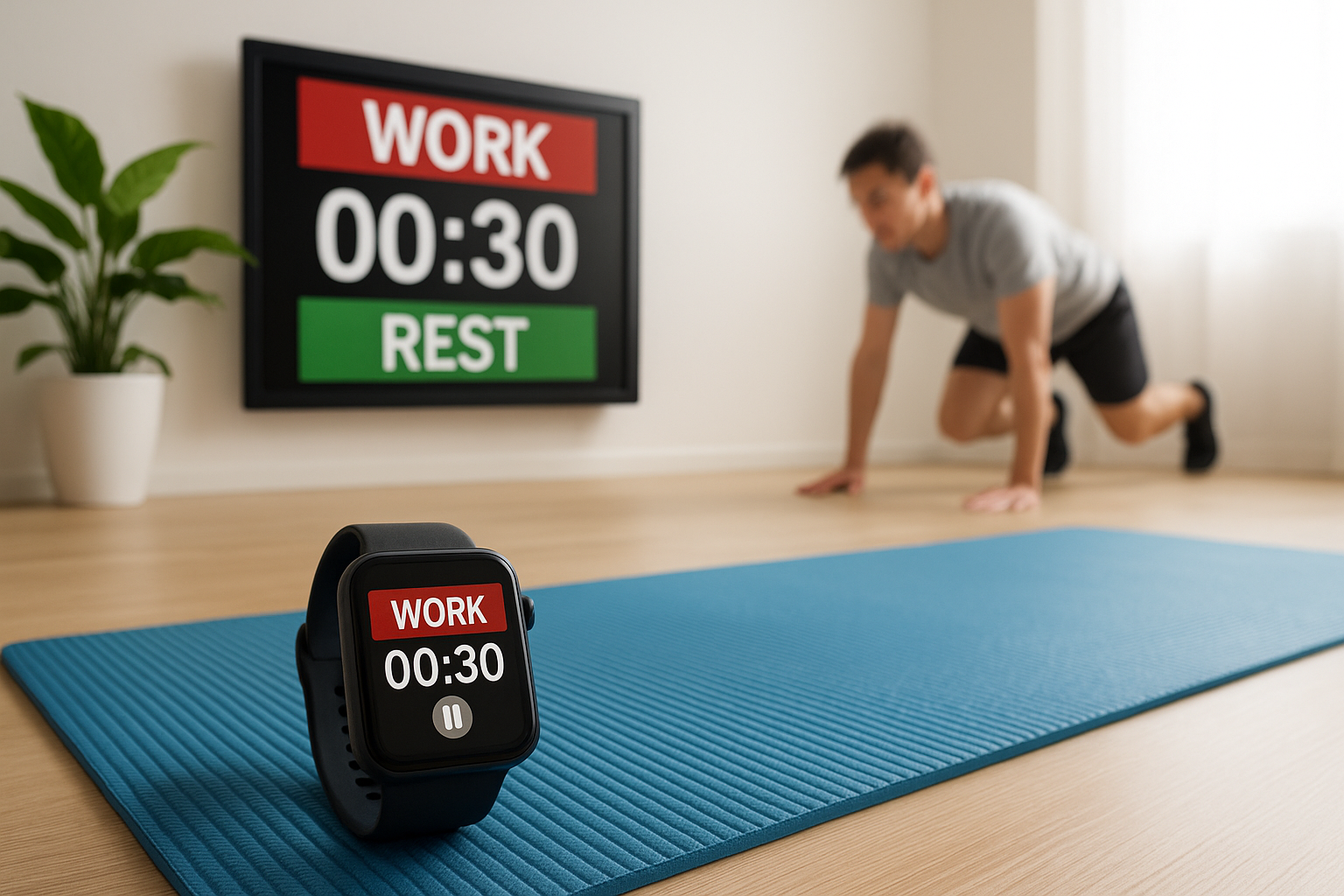
For pure simplicity, a physical interval timer is hard to beat. A typical unit lets you program work time, rest time, and number of rounds with loud beeps and clear colour indicators. Clip it to a rack, place it on a shelf, or keep it on a table in front of your mat. Set up a session such as 10 rounds of 30 seconds on / 30 seconds off, then rotate through body‑weight moves like squats, push‑ups, and mountain climbers. Because the timer runs hands‑free, you never need to touch your phone mid‑set, making your home HIIT feel more like a professional studio workout.
Turning your smartwatch into a HIIT coach
Most modern fitness smartwatches come with built‑in HIIT, interval, or custom workout modes. These allow you to define work intervals, rest intervals, and total sets, then vibrate or beep on each change. Start by choosing a HIIT or interval profile and set your target zone, such as 20 minutes total with 30/30 splits. During the workout, you can glance at live heart rate, calories, and estimated recovery time. This helps you avoid working too hard on early rounds and failing later, or going too easy and never reaching the intended intensity. The result: more predictable, progressive home sessions.
Designing a simple, trackable home HIIT template
Once your timer or watch is ready, create 2–3 reliable HIIT templates you can repeat and tweak over time. For example:
- Full‑body EMOM style: Every minute on the minute, 40 seconds of work, 20 seconds of rest, alternating between squats, push‑ups, and rows.
- Tabata‑inspired: 20 seconds all‑out, 10 seconds rest, 8 rounds on one exercise, then change movement.
- Cardio‑strength mix: 30/30 intervals, alternating a cardio move (burpees, high knees) with a strength move (lunges, planks).
Program these once on your timer or smartwatch and save them as presets. Over weeks, track small changes: more rounds, slightly longer work periods, or improved heart‑rate recovery. That’s how simple tech transforms random home training into a progressive plan.
Tracking progress and recovering smarter
To make your home HIIT sustainable, use your smartwatch data between sessions. Check average and peak heart rate, how quickly your heart rate drops during early rest intervals, and how you feel the next day. If your watch offers training load or recovery metrics, use them to decide when to schedule lighter sessions or mobility work. You can also tag specific workouts, like “leg‑focused HIIT” or “core blast”, and compare performance over time. Combined with a consistent interval structure from your timer, this data helps you avoid overtraining and keep improving week after week.
The beauty of using simple interval timers and smartwatches for home HIIT is that they remove guesswork while keeping your setup minimal. With a few saved routines and automatic intervals, you gain consistent intensity, better tracking, and clearer feedback on progress. Set your timer, strap on your watch, and let the tech handle the timing so you can focus on moving well, pushing hard, and building a powerful home fitness habit.