Building a sustainable home workout wardrobe is one of the easiest ways to cut waste, save money and still enjoy high-performance gear. Instead of throwing away stretched leggings or faded tops, you can repair, repurpose and recycle them, creating a capsule of pieces that truly work for your training. This guide walks you through simple fixes, clever reuse ideas and smarter shopping habits so your home gym clothing supports both your goals and the planet.
Why your home workout clothes deserve a second life
Most fitness clothes are made from synthetic fibres like polyester and nylon, which can take decades to break down in landfill. That old pair of leggings you wear for HIIT carries a much bigger footprint than it seems. Extending the life of each item by just a few months dramatically reduces its environmental impact and cuts the number of new pieces you need to buy. A mindful approach to your home workout wardrobe starts with asking: can I repair this, repurpose it, or recycle it before replacing it? By doing so, you support a more circular approach to sportswear, where garments are used to their full potential instead of being quickly discarded.
Simple repairs for leggings, bras and tops
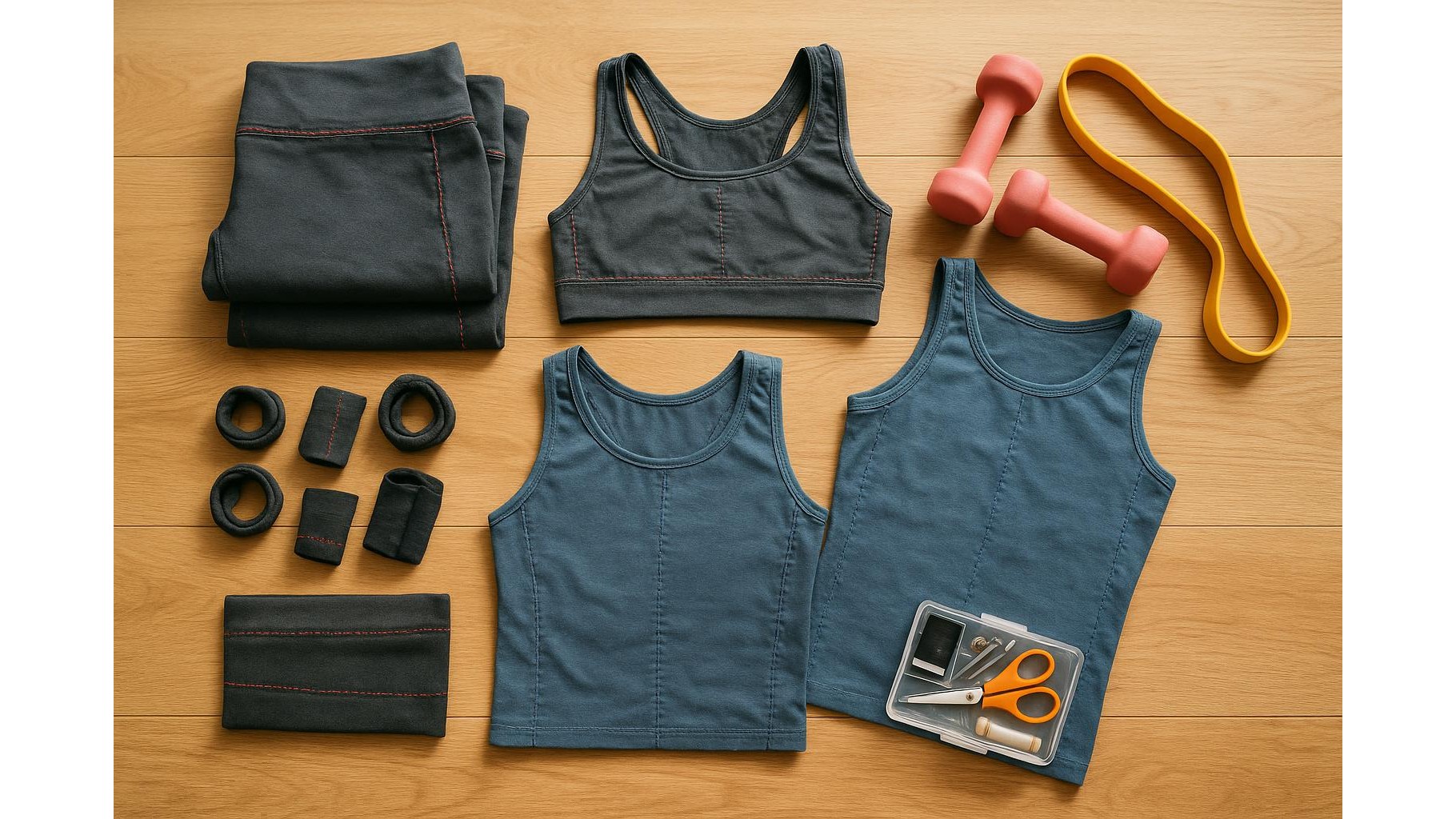
The first step in a sustainable fitness wardrobe is learning a few basic repair skills. Small holes around seams in leggings or sports bras can often be fixed with a simple overcast stitch by hand. If your waistband elastic is twisting, carefully open a small section of the inner seam, untwist the band and secure it with a few stitches before closing the seam again. For minor snags on technical tops, gently pull the loose thread through to the inside with a needle rather than cutting it, which can make the hole worse. Regularly checking high-stress areas like inner thighs, underarms and bra straps lets you catch damage early when it is still easy to mend. A compact sewing kit and a bit of patience can easily add months or even years to your home gym wear.
Creative ways to reuse old fitness clothes
When pieces become too worn for workouts, turn them into useful accessories for your home gym. Old leggings can be cut into strips to create soft sleeves for your resistance bands, protecting them from friction against rough floors or bench edges. Simply wrap a strip around the band at contact points and knot or stitch it. Worn-out tops and sports bras can be transformed into hair ties, headbands or sweatbands by cutting long stretchy loops from the fabric. Very soft, absorbent materials are perfect as reusable cleaning cloths for yoga mats and home gym equipment. By giving each garment a second role, you reduce the need for new accessories and keep textiles in use for longer.
Textile recycling and donation options
Not every item can be repaired or reused indefinitely, but that does not mean it has to go into the bin. Many cities now offer textile recycling points where clean, dry clothing is collected and processed into insulation, cleaning rags or new fibres. Some sportswear brands run take-back schemes, accepting old leggings, tops and trainers in-store or by post. Good-quality pieces that no longer fit you, but are still structurally sound, can be donated to local charities, community gyms or clothing banks. Always wash items first and check the guidelines of each organisation. Prioritising recycling and donation over disposal ensures your home workout clothes stay in circulation as resources rather than becoming waste.
Building an eco-conscious home workout wardrobe
Once you have repaired and repurposed what you own, you can plan a more eco-conscious fitness wardrobe going forward. Focus on a small selection of versatile leggings, tops and bras that mix and match and truly suit your favourite workouts. Look for durable stitching, reinforced seams and high-quality fabric rather than purely chasing trends. When possible, choose brands that use recycled polyester, organic cotton or other lower-impact materials, and that are transparent about their manufacturing. Wash your activewear at lower temperatures, use gentle detergents and avoid tumble drying to protect fibres and reduce microfibre shedding. Buying less but better, and caring for each piece, is the most powerful sustainability strategy you can adopt.
Creating a sustainable home workout wardrobe does not require perfection, just consistent, thoughtful choices. By repairing small issues, finding creative ways to reuse old gear and seeking out recycling and donation options, you extend the life of every garment and reduce your environmental footprint. Pair these habits with more mindful purchasing and care routines, and your home gym clothing will stay functional, comfortable and eco-friendly for far longer, supporting both your training and the planet.