Building a simple DIY wall trigger‑point station is one of the easiest ways to relieve tight muscles after your home workouts. By pairing the stability of a wall with compact massage balls and foam pads, you can safely apply deep pressure to stubborn knots in your back, glutes and shoulders without needing a partner or expensive machines. In this guide we’ll look at how to set up your corner, how to use different tools, and the key safety rules to keep your self‑massage effective and joint‑friendly.
Choosing the right balls and pads for the wall
The core of any wall station is a set of firm massage balls and supportive pads. A classic option is a rubber lacrosse‑style massage ball, usually around 6–6.5 cm in diameter: its dense material gives enough firmness for deep tissue work on the upper back, glutes and calves. Softer foam balls are better for beginners or for sensitive areas like the chest. You can also add flat foam pads or yoga blocks between your body and the wall to widen the contact area and reduce pressure when needed. Aim to have at least one firm ball, one slightly softer ball and a stable pad so you can adapt the intensity to different muscles and recovery days.
How to set up your wall trigger-point corner
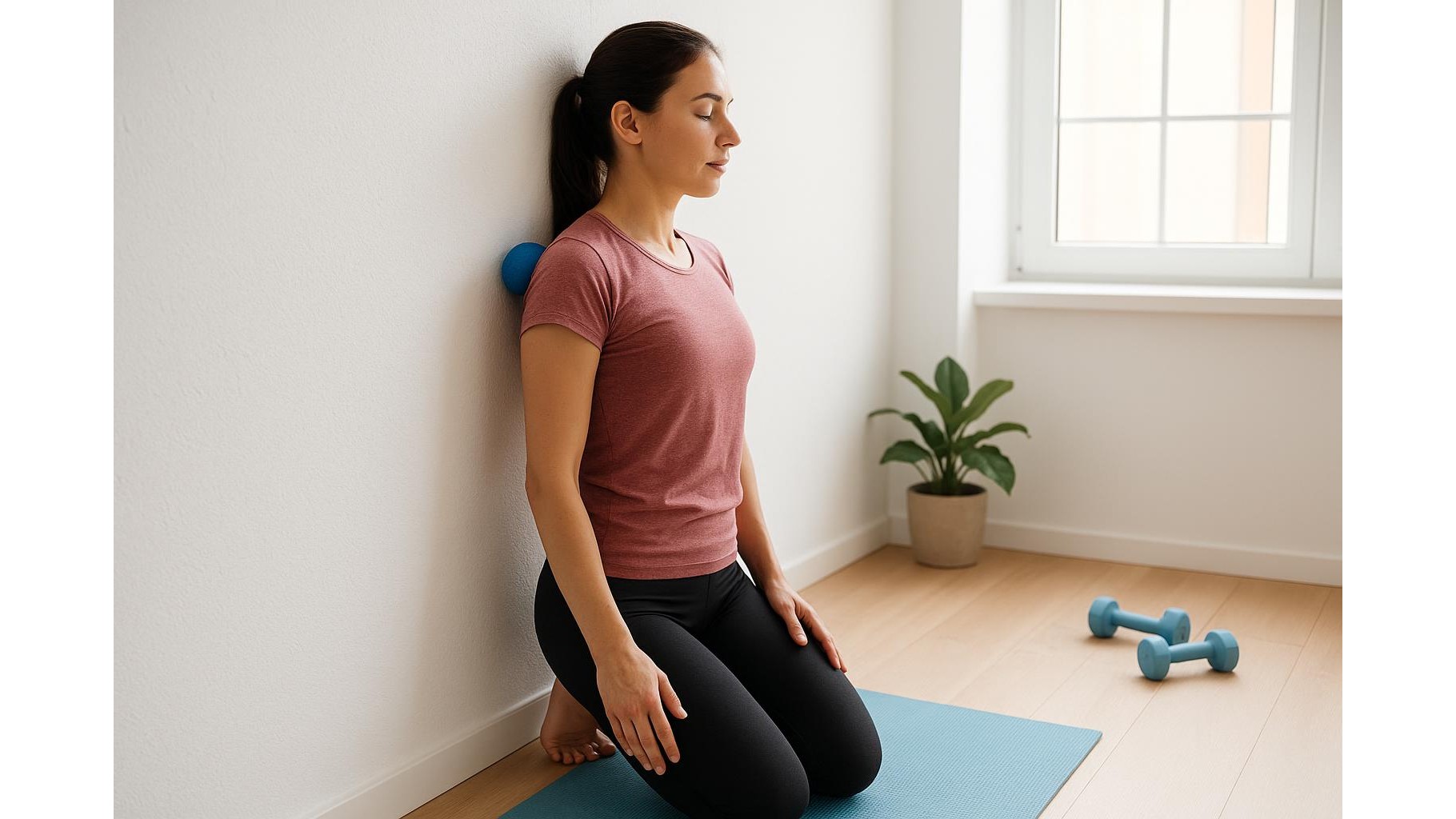
Pick a clear stretch of wall where you can comfortably stand or lean, ideally on a non‑slippery floor surface. Mark a vertical strip from hip height up to just above shoulder level: this will be your primary treatment zone for the upper back and shoulders. To keep balls from slipping, you can use a textured yoga mat or a strip of grippy tape on the wall as a backing. Place your massage ball between your body and the wall, then step forward or back to roll it into position. For more stability, stagger your feet and slightly bend your knees so your legs act as a shock absorber. Keep your head in a neutral position and avoid over‑arching your lower back while you work.
Safe techniques for back and shoulder trigger points
For the upper back, place the ball just beside, not directly on, your spine, roughly at shoulder‑blade level. Gently lean into the wall until you feel a firm but tolerable pressure on the muscle, then make small up‑and‑down or side‑to‑side movements with your body so the ball glides over the tissue. When you find a trigger point—a sharp, tight or “good pain” spot—hold the pressure for 20–40 seconds while you breathe slowly. Avoid rolling directly on bony areas, the spine itself, or the front of the neck. For the shoulders, position the ball behind the shoulder joint, then cross your arm over your chest to stretch the muscle while you roll. If the pain is sharp or tingling, reduce pressure or move to a nearby area.
Glute, hip and leg work for home workout recovery
Many home workouts involve squats, lunges and deadlift variations that load the glutes and hips. To release these areas, stand side‑on to the wall and place the ball in the fleshy part of your glute, away from the hip bone. Gently squat to increase pressure and trace small circles or vertical lines with the ball over tight zones. You can angle your torso slightly forward or back to change which fibres you hit. For the piriformis and deep rotators, bring the ball slightly towards the outer hip, then rotate your pelvis to find tender spots. For the hamstrings and calves, position the ball lower on the wall and lean your leg into it, bending and straightening the knee to create a pin‑and‑stretch effect that complements your post‑workout mobility drills.
Programming and safety tips for consistent results
To make your wall trigger‑point station truly effective, treat it like a mini training block rather than a random add‑on. After intense home sessions, spend 5–10 minutes focusing on two or three key areas: for example, upper back and lats after pull‑ups, or glutes and calves after lower‑body training. Work within a 5–7 out of 10 discomfort level—firm pressure but never unbearable pain—and keep breathing slow and controlled. Avoid direct work on the lower back, ribs and joints, and skip self‑massage if you have acute injury, unexplained swelling or numbness. Combine your wall work with light stretching and hydration, and you’ll quickly notice better mobility, less post‑workout stiffness and a smoother transition into your next training day.
By turning a simple wall into a dedicated trigger‑point station, you can bring targeted, deep tissue self‑massage into your daily home gym routine. With just a couple of firm balls and supportive pads, plus smart positioning and respect for your body’s limits, you’ll be able to release common problem areas in the back, glutes and shoulders in minutes. Experiment with ball height, pressure and body angles, stay consistent from session to session, and your wall corner will become a powerful, low‑cost recovery tool that keeps you lifting, moving and feeling better over the long term.