
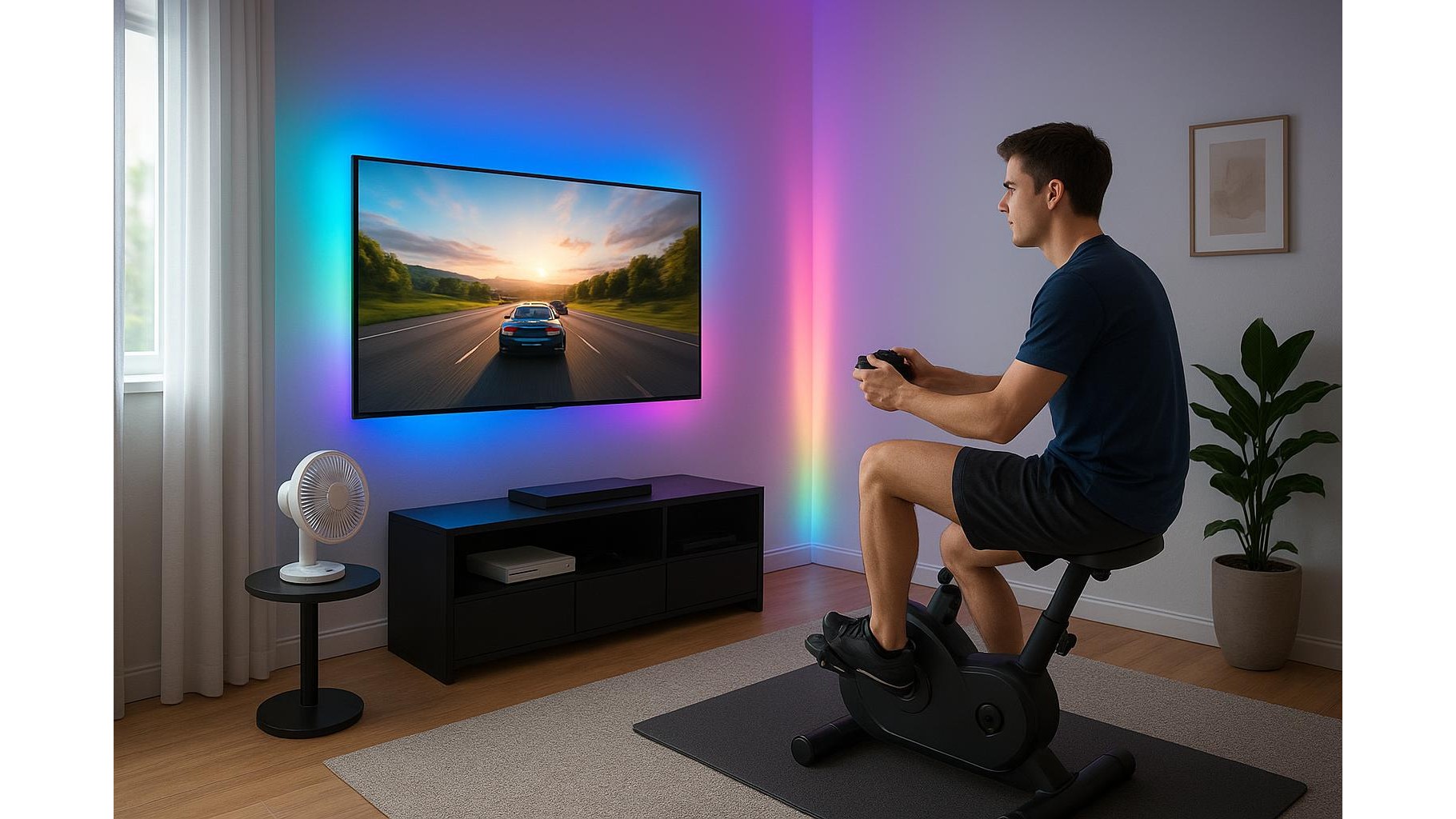
Turning your gaming corner into a mini home gym is one of the easiest ways to fit more cardio into a busy day. The trick is doing it without adding a lot of noise, bad ergonomics or uncomfortable overheating. With a smart setup, you can pedal or step while playing without sacrificing immersion, comfort or your neighbours’ patience.
Choosing the right cardio gear for your gaming corner
For most gamers, a compact exercise bike or a mini stepper works best next to a console. Look for a small footprint, quiet magnetic resistance and adjustable settings. Upright bikes are more stable for long sessions and support your back better than super‑minimal mini bikes that slide around. A stepper, on the other hand, takes up less floor space and lets you keep your usual chair nearby for seated games. Prioritise models with non‑slip feet, a stable frame and easy resistance dials so you can tweak intensity mid‑match without digging through menus.
Positioning: distance, angles and cable management
Once you’ve picked your bike or stepper, positioning it correctly is what keeps your gaming experience comfortable. Place the machine so that your eyes are level with the top third of the screen to avoid neck strain; you may need to raise your TV or monitor slightly if you sit higher on a saddle. Keep a distance that lets you see the HUD clearly without squinting, usually an arm’s length and a half. Use cable clips and Velcro ties to route controller and headset cables along the frame or floor edges so they don’t tangle with pedals. If you use a wired headset, run the cable over one shoulder and behind your back to keep it away from your legs while pedalling or stepping.
Keeping it quiet: noise, vibration and neighbour‑friendly tips
To avoid ruining the fun with noise, treat both the machine and the floor. Prefer models with magnetic resistance rather than friction pads, because they generate less sound and wear. Add a thick equipment mat or even a folded rug under the bike or stepper to cut vibrations, especially if you live in an apartment. Make sure all adjustable parts are tightened regularly: loose pedals and wobbly handles rattle at higher cadence and can break immersion. If your console fan is already loud, consider slightly lowering the in‑game volume and turning on closed‑back headphones; this lets you keep overall sound levels lower while still hearing game audio clearly over the soft hum of your cardio gear.
Ergonomics and overheating: staying comfortable while you play
Good ergonomics make the difference between a productive session and sore knees. On a bike, adjust the saddle height so your knee is slightly bent at the bottom of the pedal stroke; too low and you’ll stress your joints, too high and you’ll rock your hips. Keep resistance moderate: you should be able to hold a conversation, not sprint, so your hands stay steady on the controller. To combat overheating, set up a small desk fan aimed at your torso and keep a water bottle within reach. Wear light, breathable clothing and consider shorter, more intense bouts (for example one match on, one match off) rather than trying to pedal hard for an entire marathon session.
Game choices and workout structure for maximum fun
Not all games pair equally well with cardio. For higher resistance or faster stepping, pick low‑precision titles such as RPG grinding, racing games with assist, turn‑based strategy or casual adventures, where small hand movements are enough. Save competitive shooters or high‑precision platformers for lower resistance intervals, when your heart rate is up but your arms are relaxed. You can structure sessions as intervals: one intense online match pedalling at a higher cadence, then a calmer exploration section at lower effort. Track your total active minutes per day and gradually increase by 5–10 minutes per week. This keeps your motivation high because you associate exercise with game progress rather than with a separate, boring task.
Combining gaming and cardio is an effective way to build healthier habits without sacrificing the hobby you love. By choosing compact, quiet equipment, positioning it smartly, taking care of ergonomics and temperature, and matching game types to your effort level, you can steadily rack up cardio minutes while clearing quests and climbing ranks. Start with a simple setup, tweak it over a few sessions, and you’ll end up with a gaming corner that supports both your K/D ratio and your long‑term fitness.









