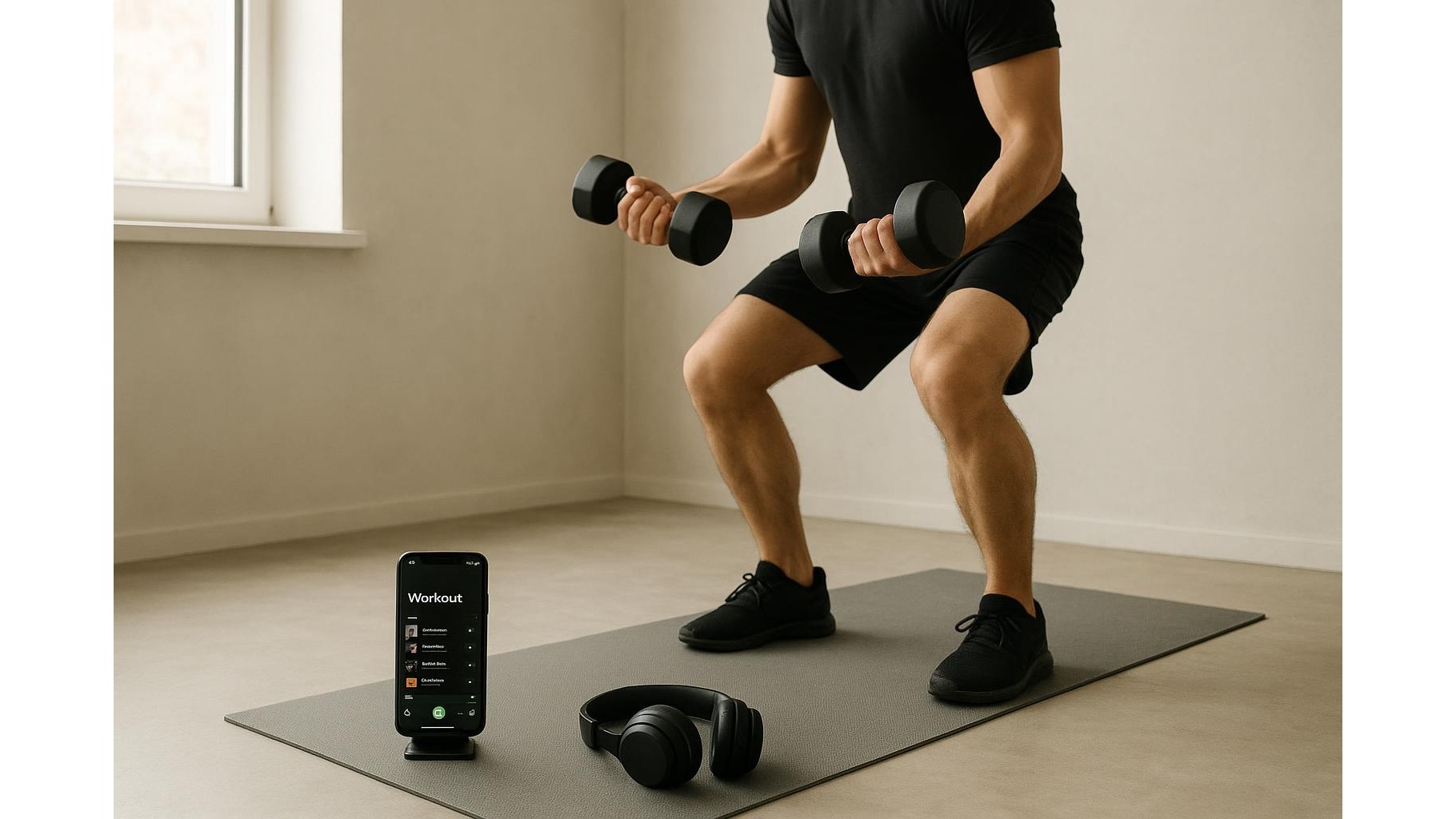
Building the perfect Spotify playlist for focused home workouts is about more than just throwing together your favourite songs. The right structure, tempo and progression can help you warm up properly, stay in the zone through tough strength sets, and push harder during cardio intervals. By learning how to use Spotify’s tools and thinking like a coach, you can turn your music into a powerful training partner in your home gym.
Map your workout phases before you pick songs
Before opening Spotify, define the phases of your home workout. A simple structure could be: 5–10 minutes of warm-up, 20–30 minutes of strength training, 10–20 minutes of cardio intervals, and 5–10 minutes of cool-down. Each phase should have its own musical goal. Warm-up tracks should ease you in and raise your heart rate gently. Strength tracks should keep you focused and steady, with beats that help you maintain rhythm on sets. Cardio tracks should be more intense and driving, helping you push through intervals. The cool-down should gradually lower your energy so your nervous system can relax. Having this timeline clear will make it much easier to build a playlist that supports every minute of your session.
Use tempo (BPM) to match music to movement
The secret weapon for focused workouts with music is tempo, measured in BPM (beats per minute). For warm-ups, aim for 100–120 BPM: this feels like a brisk walk or easy cycling tempo. For controlled strength sets, 120–135 BPM works well, giving enough energy without rushing your form. For cardio intervals like HIIT or fast cycling, go for 140–170 BPM, depending on your fitness and the movement speed. While Spotify does not show BPM on every track natively, many popular workout playlists mention tempo ranges in the title or description (for example “140–160 BPM Running”). You can also search phrases like “130 BPM workout” or “HIIT 150 BPM” to find songs that naturally fit your pace, then save them into your own custom list.
Leverage Spotify playlists, filters and folders
To build your ideal Spotify workout mix, start by exploring existing Spotify workout playlists as raw material. Search terms such as “Focus workout”, “Strength training playlist”, “Warm up gym”, and “HIIT cardio” to discover curated sets. Add your favourite tracks from these into separate playlists: one for warm-up, one for strength, one for cardio, and one for cool-down. Use Spotify search filters like genre, mood (e.g. “intense”, “motivational”, “chill”) and even decades if you respond better to certain eras of music. For better organisation, create a folder named “Home Gym” and keep your main training playlists inside it. Over time, keep refining: remove songs you always skip and add new tracks that consistently help you focus. This turns Spotify into a personalised training tool rather than background noise.
Structure your playlist around sets and intervals
Once you have enough songs, it is time to sequence them. Think in blocks instead of single tracks. For example, choose two songs for warm-up (around 8–10 minutes total), then build 15–30 minutes of strength music at a slightly higher tempo, followed by 10–20 minutes of high-energy tracks for cardio intervals. If you train in timed blocks—like 45 seconds on, 15 seconds off—try to align track changes with block changes, so a new song signals a fresh effort. For interval training, you can alternate slightly slower and faster songs to mimic work and recovery. You can even use particularly powerful choruses as mental cues to push harder during key sets. By giving every track a purpose, you reduce distractions and stay immersed in the session from start to finish.
Adjust volume, sound environment and routine
Even the best playlist will not deliver if your sound environment is poor. In a home gym, make sure your speaker or headphones give you clear, punchy sound without needing maximum volume, which can cause fatigue. Keep your music loud enough to energise you but not so loud that you lose awareness of your breathing or technique. Consider having two versions of your playlist: one more intense for days when you need extra motivation, and a slightly calmer one for technical or recovery sessions. Stick with the same playlists for a few weeks so your brain starts to associate certain songs with specific exercises or phases; this familiarity can deepen focus and make it easier to “switch on” training mode as soon as the first track starts.
By thinking strategically about tempo, phases of your session and Spotify’s organisation tools, you can create a personalised workout playlist that supports every rep and interval of your home training. A well-designed mix helps you warm up smoothly, stay concentrated through demanding strength sets, and attack cardio intervals with confidence—turning music from mere background entertainment into a key part of your fitness routine.