Strong calves and lower legs support walking, running, jumping and everyday balance. This focused 30-minute dumbbell workout combines standing and seated calf raises with slow tempo work and simple balance practice. You will need a pair of dumbbells, a sturdy chair and, if available, a step or thick book. Choose a load that lets you move smoothly; the goal is controlled effort, not bouncing or rushing through repetitions.
Warm up and set your pace
Spend the first four minutes preparing your ankles and calves. March in place for one minute, then perform gentle ankle circles and controlled heel-to-toe rocks. Finish with 10 easy bodyweight calf raises, pausing briefly at the top. For each weighted repetition, lower your heels under control and rise as high as you comfortably can. Keep your knees aligned over your toes and your weight spread across the base of the big toe, little toe and heel. Use a wall or chair for support whenever needed.
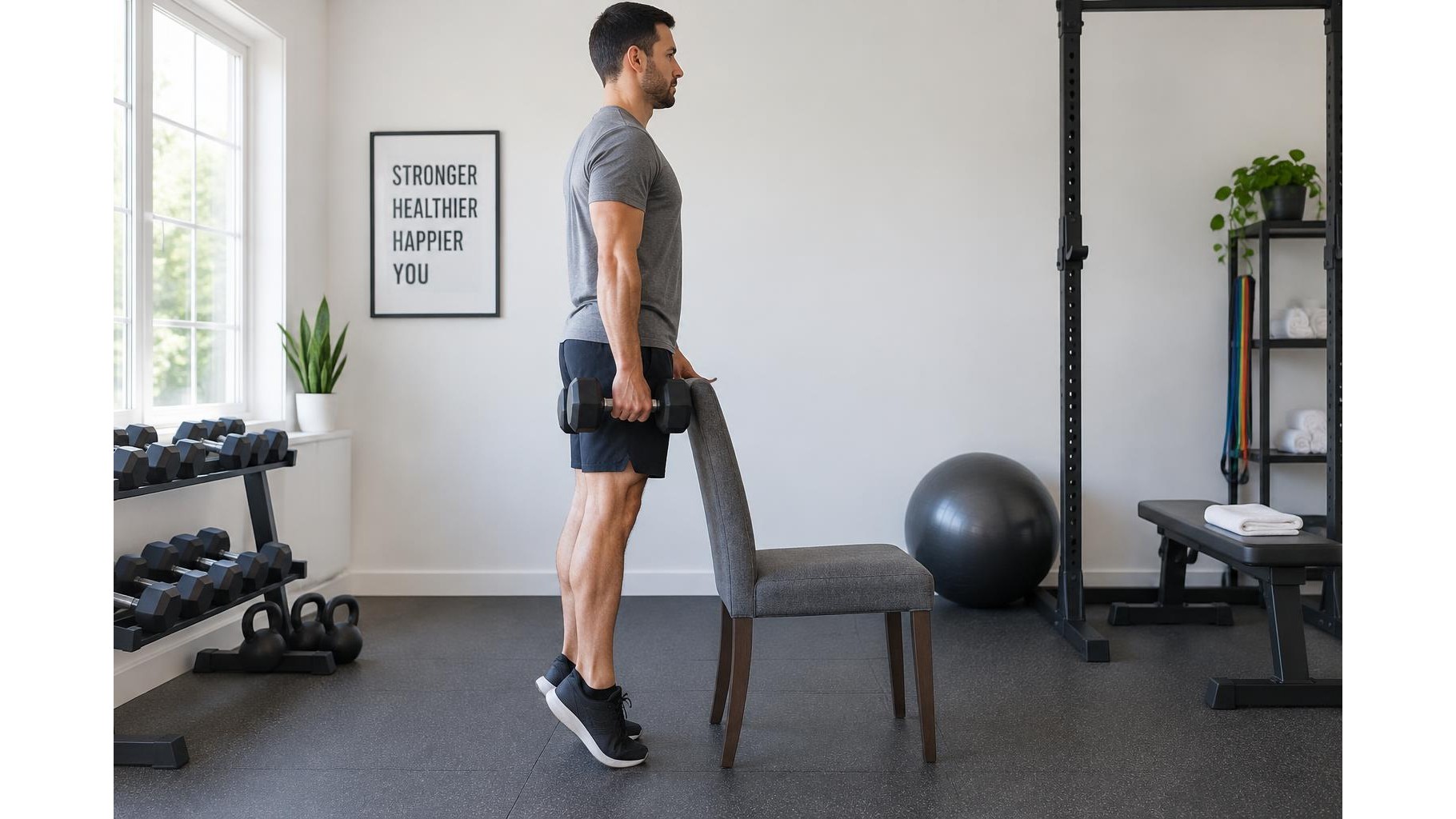
Standing dumbbell calf raises
Hold one or two dumbbells at your sides and stand tall with feet about hip-width apart. Complete three sets of 12–15 repetitions, resting for 45–60 seconds between sets. Take two seconds to rise, hold the top position for one second, then lower for three seconds. Keep your legs straight but not locked, and avoid letting your ankles roll outward. If balance is challenging, use one hand to steady yourself and hold a single dumbbell in the other. Beginners can start with bodyweight only.
Seated raises for a different challenge
Sit near the front of a sturdy chair with knees bent and feet flat. Rest a dumbbell horizontally across your thighs, just above the knees, and hold it securely with both hands. Raise your heels as high as possible, pause, then lower slowly. Perform three sets of 15–20 repetitions with 45 seconds of rest. The bent-knee position changes the emphasis of the exercise and complements standing raises. Use a lighter weight if the dumbbell presses uncomfortably into your legs; a folded towel can add padding.
Tempo work and single-leg control
For the next five minutes, perform two sets of eight slow calf raises per side. Stand beside a wall, shift your weight onto one foot and use fingertip support. Rise over two seconds, hold for two, and lower over four. Keep your hips level and your standing knee softly unlocked. If a single-leg version feels too difficult, keep both feet on the floor and shift only some of your weight onto one side. Stop if you feel sharp pain, rather than the ordinary muscular effort of training.
Balance practice and cooldown
Finish with three rounds of 20–30 seconds balancing on each leg, resting as needed. Stand near a stable support and keep your gaze on one fixed point. To make the drill easier, keep your fingertips on the wall or tap the free foot down whenever necessary. Then walk gently around the room for a minute and stretch each calf with hands against a wall, holding 20–30 seconds without bouncing. The session should feel challenging but controlled, with enough energy left to maintain good technique throughout.
Repeat this routine once or twice a week, leaving at least a day between focused calf sessions. When every set feels steady, add a few repetitions or use a slightly heavier dumbbell—not both at once. Consistent controlled calf training, sensible rest and gradual progression can help build strength and improve lower-leg control at home.