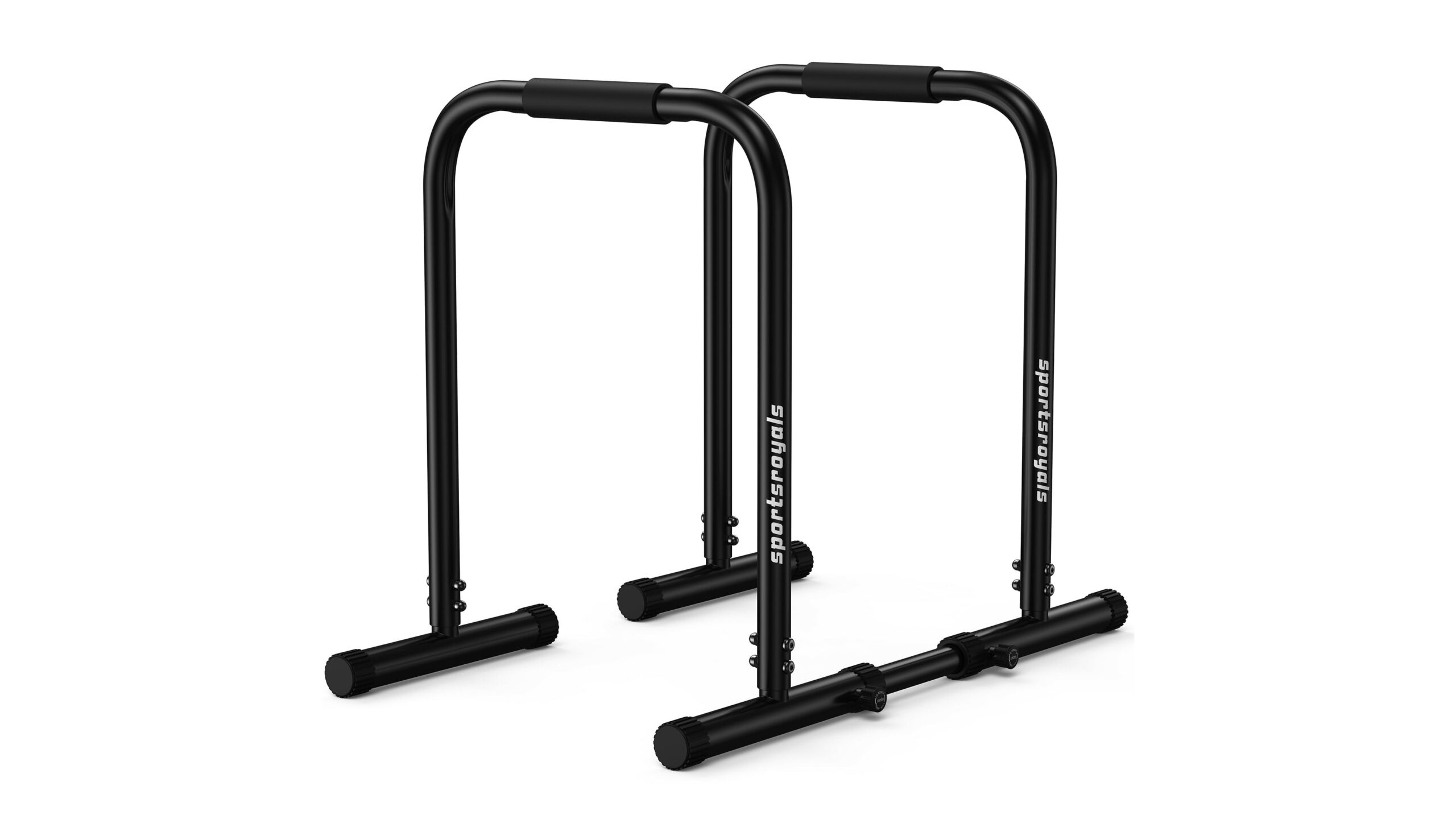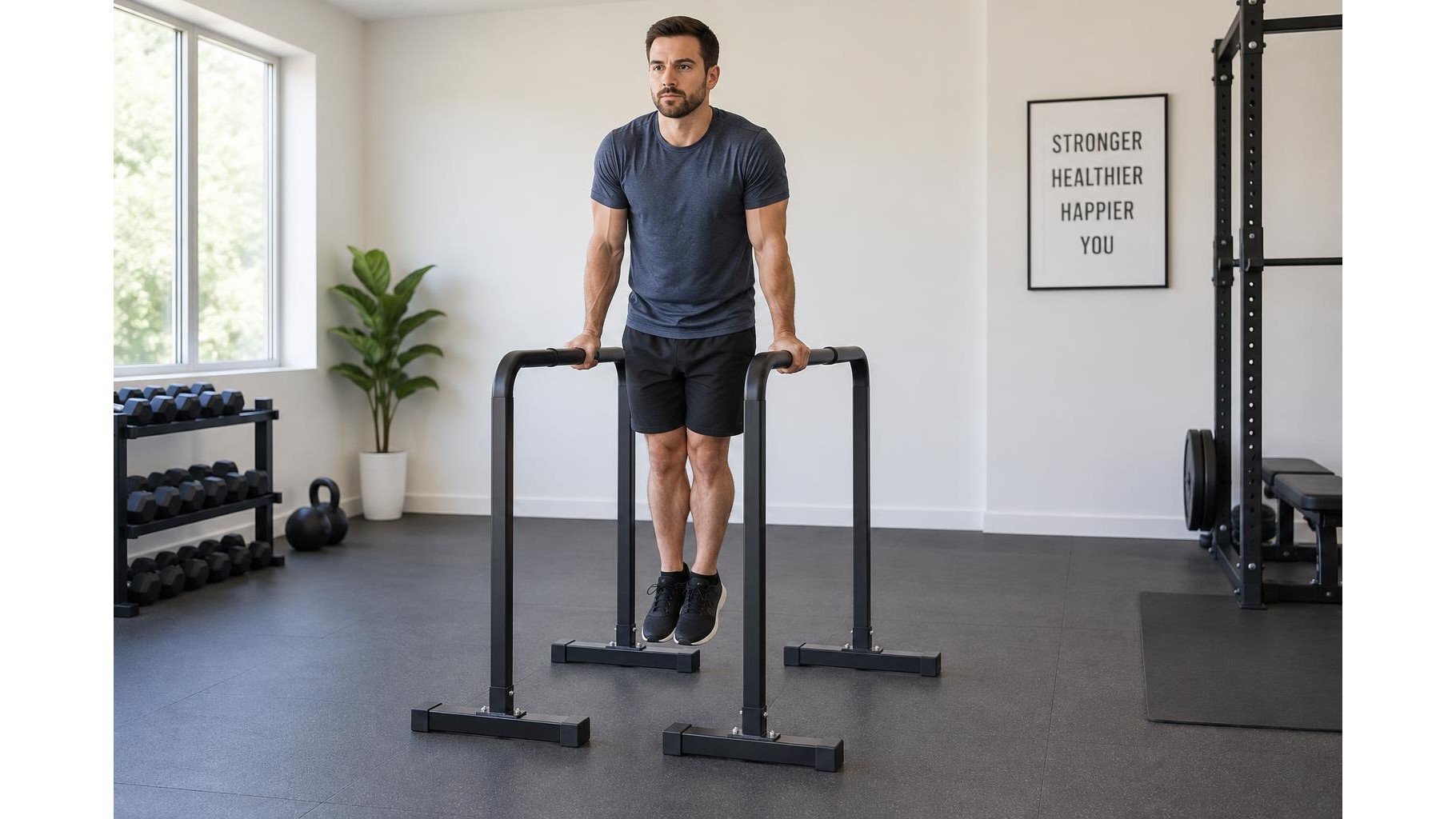
Parallel bars offer a compact way to train upper-body strength and trunk control at home. This 30-minute workout moves from a focused warm-up to support holds, dip progressions and core work. Choose variations that let you move smoothly and stop each set before your form breaks down. You will need stable bars and enough clear space to step on and off safely.
Warm up and prepare your shoulders
Spend five minutes warming up with easy arm circles, wrist rotations, shoulder shrugs and controlled plank shoulder taps. Finish with two brief sets of scapular push-ups on the floor, keeping your elbows straight as your shoulder blades move apart and together. If wrist pressure feels uncomfortable, use a raised surface for the push-ups or reduce the range. Check that the bars do not wobble before loading them, and keep your first efforts relaxed.
Build a steady support hold
Step or press up into a top support, with your elbows straight, shoulders gently pushed down and chest lifted. Keep your gaze forward and legs still; avoid shrugging or letting your shoulders roll forward. Hold for 3 sets of 10–20 seconds, resting 45–60 seconds between sets. For an easier option, keep your feet lightly on the floor or use a low platform to assist. To make it harder, extend the hold to 30 seconds or add a controlled knee tuck without swinging.
Choose a dip variation you can control
Complete 3 sets of 5–8 parallel-bar dips, resting 75–90 seconds. Start from support, bend your elbows and lower only as far as you can maintain stable shoulders and a comfortable range; press back up without bouncing. Keep your elbows tracking behind you rather than flaring widely. If full dips are too challenging, use foot assistance from a box or perform slow negative dips, lowering for three seconds before stepping down. If they feel easy, add a pause near the bottom or use a slower lowering phase.
Train core control without swinging
For 3 rounds, perform 8–10 tucked knee raises from support, followed by a 15–25-second hollow hold on the floor. Rest about 45 seconds between rounds. Keep your ribs tucked and pelvis steady as you lift your knees; lower them smoothly instead of letting your body swing. Make the raises easier by bending your knees more or doing lying reverse crunches. Progress by extending your legs gradually, or use straight-leg raises only if you can keep the movement controlled.
Finish with quality, not fatigue
Use the remaining time to repeat a short support hold and dip set only if your technique is still crisp. Otherwise, cool down with gentle chest, triceps and forearm stretches, breathing slowly. Keep at least one or two good repetitions in reserve rather than forcing a failed rep. If you feel sharp pain, stop the exercise and choose a more comfortable option next time. Record your hold times and clean repetitions so you can progress gradually.
This session balances support strength, dip practice and core control in about 30 minutes. Begin with assisted variations when needed, rest as prescribed and progress one small step at a time. Consistent, controlled practice is more useful than rushing toward harder skills before your shoulders and technique are ready.