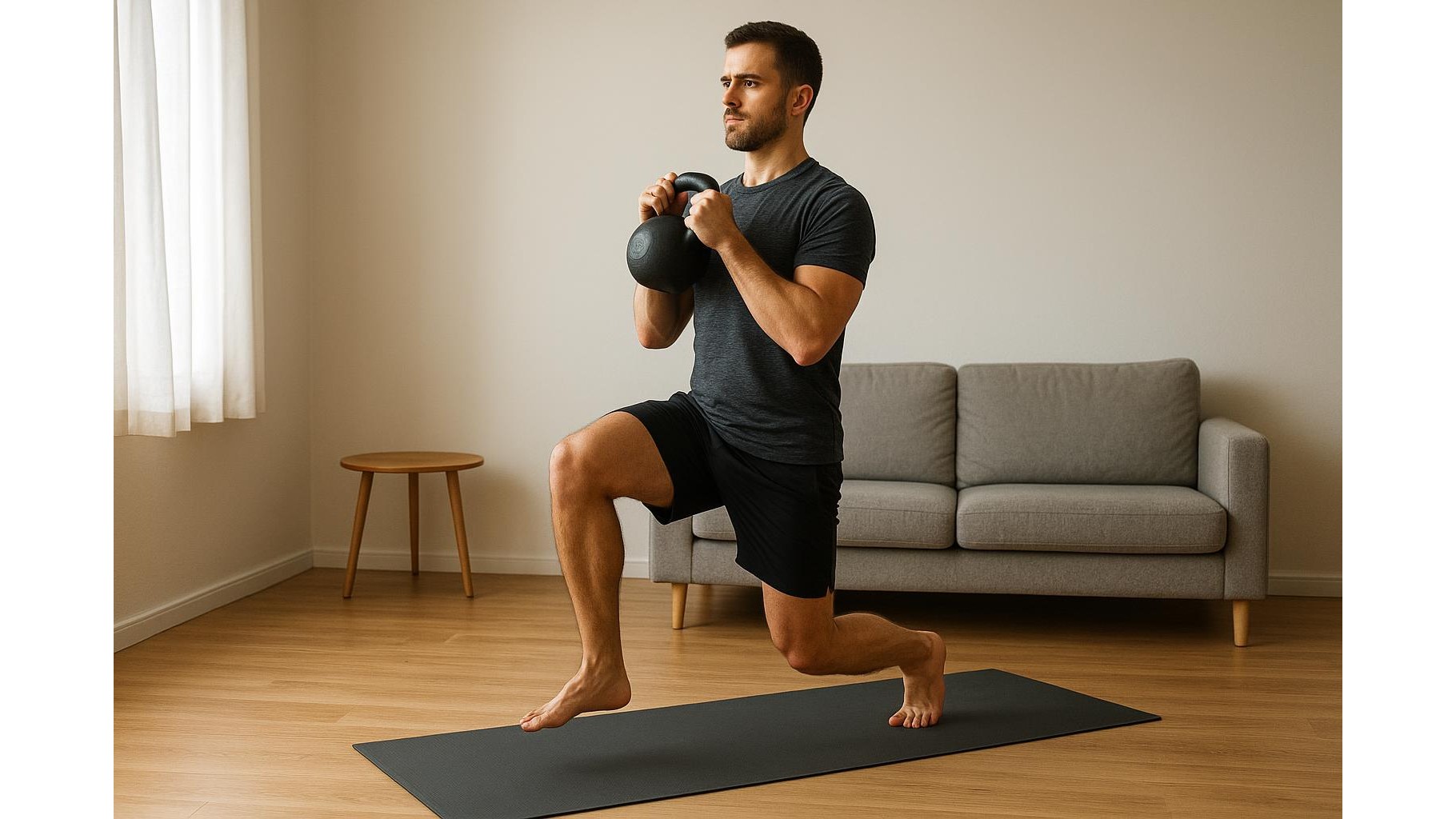
If you already train at home and want to upgrade your sessions with a time‑efficient challenge, a 20-minute kettlebell core finisher is one of the smartest ways to go. With just a single bell, a small patch of floor and a clear structure, you can build serious rotational strength, anti-rotation stability and a rock‑solid midline at the end of any workout. Below you’ll find a simple, scalable protocol plus how to choose the right kettlebell for your space and goals.
Why a kettlebell core finisher works at home
A well‑designed kettlebell core finisher lets you train the three big functions of the trunk: resisting movement, creating rotation and transferring power between upper and lower body. When you plug 20 focused minutes at the end of your strength or conditioning session, your heart rate is already elevated, so your core has to stabilise under realistic fatigue. This makes every rep a lesson in bracing, hip hinge mechanics and safe spinal alignment, without needing big equipment. A single compact kettlebell is easy to store, quiet on floors and perfect for home use.
The 20-minute kettlebell core finisher structure
Set a 20‑minute timer and cycle continuously through these four exercises: 1) Half‑kneeling kettlebell halo x 8 reps each way; 2) Suitcase deadlift x 8 reps per side; 3) Russian twist x 12–16 total reps; 4) Front rack march x 30–40 seconds. Rest 20–30 seconds between moves only if your form starts to slip. This layout hits anti‑flexion, lateral stability, rotation and anti‑rotation in one condensed block. Aim to move smoothly rather than chasing speed; your goal is a stable, quiet torso with the kettlebell acting as a small but relentless disruption.
Technique tips to maximise core gains
To get the most from your home kettlebell workout, focus on tension and breathing. For halos, imagine drawing a tight circle around your head while your ribs stay stacked over your pelvis. In the suitcase deadlift, keep the bell close to your shin and think “crush the handle” to light up your lats and obliques. During Russian twists, move your ribcage and shoulders, not just your hands, and exhale as you rotate. The front rack march should feel like walking through wet concrete: slow, controlled steps with a proud chest. A lighter bell done with intent will beat a heavy bell swung sloppily every time.
Choosing the right kettlebell for a small home space
For most people training at home, one medium bell is enough to start this routine. Many lifters do well with a 6–8 kg kettlebell if they’re new to resistance training, while stronger or more experienced athletes may prefer 10–12 kg. A vinyl‑coated cast iron kettlebell is often ideal indoors, because the coating is more forgiving on hard floors and quieter on contact. Look for a bell with a smooth handle that allows a secure, two‑handed grip but isn’t so thick that your forearms fatigue before your core. Flat bases are essential for safe floor‑based moves like rows and loaded planks.
How to progress and regress your core finisher
If you’re just starting out, reduce the finisher to 10–12 minutes and trim each set by a couple of reps. You can also keep your feet on the floor during Russian twists or perform front rack holds in place instead of marching. To progress, increase the bell weight, extend the finisher to the full 20 minutes, or add a fifth move such as a kettlebell dead bug for extra anti‑extension work. Another option is to shorten rest periods so your core works under higher fatigue. The key principle is consistency: repeating this 20-minute kettlebell core finisher 2–3 times per week will steadily build resilience.
Used at the end of your regular strength, conditioning or cardio sessions, this structured 20-minute kettlebell core finisher can dramatically improve your trunk stability with minimal extra time and equipment. By targeting rotation, anti‑rotation and overall midline control, you lay a stronger foundation for every lift, run and sport you practice. Grab a single kettlebell, clear a small patch of floor, and let those final 20 minutes turn your home workout into a full‑body performance upgrade.