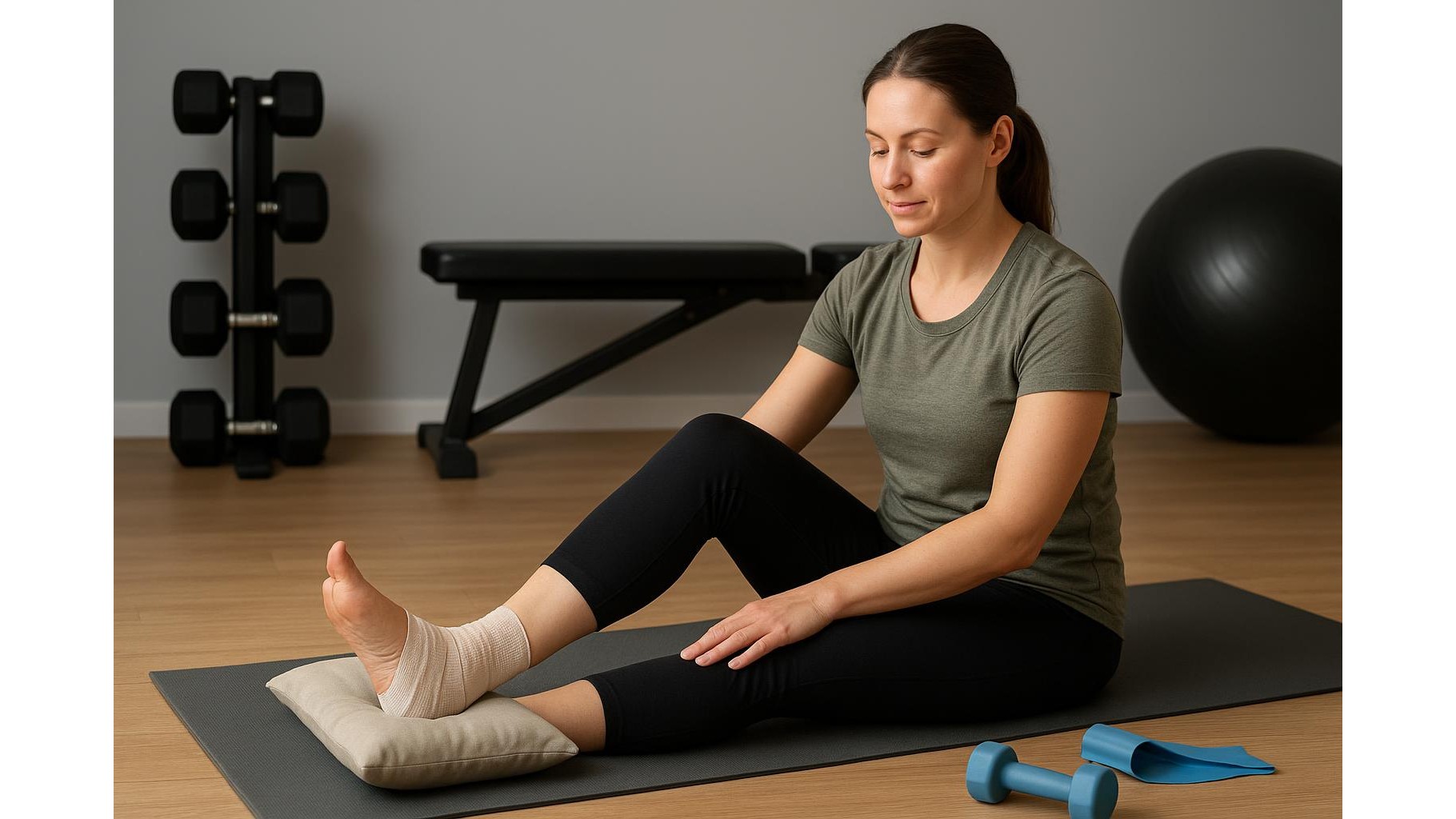
A minor ankle sprain at home can feel frustrating, especially if you love training or simply need to stay active for everyday life. The good news is that most mild sprains recover well with smart, home-friendly care that balances rest, elevation and gentle movement. This guide walks you through a safe recovery plan so you can keep moving without making the injury worse, and understand when it is better to pause or adapt your usual workouts.
Understanding a minor ankle sprain
A minor ankle sprain usually means the ligaments around your ankle have been stretched, not fully torn. Typical signs include mild to moderate pain, some swelling, and a bit of stiffness, but you can still put a little weight on the foot. In the first 24–48 hours, your main goals are to control swelling and avoid painful movements. Think of it as creating a calm environment for healing. Avoid forcing full range of motion or high-impact activities. Instead, focus on gentle walking indoors if tolerated and keep the ankle supported when you move around your home gym or daily environment.
Home care: rest, elevation and cold
In the early phase you want relative rest, not total immobility. That means avoiding running, jumping and heavy lower-body lifting, but still doing pain-free movements. Several times a day, elevate the ankle on pillows so it sits above heart level, which helps fluid drain and reduces swelling. Apply a cold pack wrapped in a thin towel for 10–15 minutes, especially after you have been on your feet. Do not place ice directly on the skin or leave it on for too long, as this can irritate tissue. Combine this with short walk breaks at home: a few minutes of gentle steps on flat, non-slippery surfaces to keep circulation and prevent stiffness.
Safe mobility to keep the ankle moving
Once pain has slightly eased (often after 24–72 hours for a minor sprain), start light mobility work. The aim is to maintain ankle movement without increasing pain or swelling. Sitting on a chair, slowly trace the alphabet in the air with your toes; this gently moves the ankle in multiple directions. You can also perform controlled ankle circles and flexing the foot up and down, stopping before any sharp pain. Do 2–3 short sessions per day instead of one long session. If swelling or pain noticeably increases later in the day, you likely did too much; scale back the next session. This gradual, pain-aware approach helps ligaments heal while preserving range of motion.
Strength exercises you can usually keep
With a mild sprain, you can often continue many upper-body and core exercises, and some lower-body work that does not stress the injured ankle. Seated dumbbell presses, rows, bench work and floor-based core exercises (such as dead bugs, side planks and glute bridges) are usually safe if you are stable and not loading the injured side. For the legs, try hip thrusts, lying hamstring curls with a band, or single-leg extensions on a bench while keeping the ankle relaxed. Avoid exercises that involve standing on unstable surfaces, heavy calf raises or deep lunges on the injured side. The rule: if the ankle has to balance hard, twist, or absorb impact, skip it until walking feels almost normal again.
Progressing back to walking and training
As pain and swelling reduce, gradually increase your weight-bearing time. Start with short indoor walks and add a few minutes each day if there is no flare-up afterward. When you can walk briskly for 15–20 minutes on flat ground without a limp or delayed pain, you can test simple bodyweight exercises like mini-squats and gentle heel raises holding a chair. Keep reps low at first and assess how the ankle feels later that day and the next morning. Mild, short-lived discomfort is normal; sharp pain, increasing swelling or a return of limping is a sign to step back. If you do not see steady improvement within a week, or if walking is very painful, consult a health professional to rule out a more serious injury.
Recovering from a minor ankle sprain at home is about respecting the injury while staying as active as safely possible. Start with rest, elevation and cold to calm things down, then add gentle mobility and low-stress strength exercises to keep the rest of your body engaged. Progress your walking and training gradually, paying attention to how the ankle responds over 24 hours. With this balanced approach, most people can protect healing ligaments, maintain fitness, and return to normal activity with confidence.