If your shoulders feel tight and achy from a mix of endless scrolling, laptop sessions and ambitious home workouts, you are not alone. Modern life encourages rounded, slumped posture while many home training plans overload the shoulders with push-ups and overhead moves. The good news: a blend of mobility work, gentle strengthening exercises, smart tools and simple lifestyle tweaks can quickly reduce pain and help you keep training safely in your home gym.
Reset your shoulder posture during screen time
Poor posture is one of the biggest drivers of shoulder discomfort when you spend hours on phones and laptops. Aim to keep ears stacked over shoulders, ribs over hips, and screens at eye level. Short “reset breaks” every 30–40 minutes are more effective than one long stretch session. Try standing up, rolling your shoulders back and down, and performing 10–15 gentle arm circles. A wearable aid like the Schiara Posture Corrector for Men and Women can help you learn what upright alignment feels like. This lightweight, adjustable brace gently pulls the shoulders back, encourages a more open chest and trains your body to avoid the hunched, rounded position that compresses the shoulder joints.
Gentle mobility drills to undo tech-neck and desk shoulders
Before you reach for heavy weights, restore shoulder mobility and upper-back movement. Focus on low-load, high-frequency drills: doorway chest stretches, thoracic spine rotations on the floor, and slow shoulder CARs (controlled articular rotations). Perform these once or twice per day for 5–10 minutes, especially after long bouts of typing or gaming. Add deep breathing to each stretch to help the surrounding muscles relax. Consistency matters more than intensity: the aim is to gently open tight chest muscles, improve scapular glide and give irritated tissues a chance to calm down without provoking more inflammation.
Strengthen the rotator cuff and upper back with bands
Weak rotator cuff and upper-back muscles make your shoulders less resilient to both screen time and overhead training. A simple set of resistance bands like the GIEMIT Resistance Bands Set is perfect for home rehab-style workouts. This kit includes four TPE elastic bands from light to extra-heavy, so you can start gently and progress as your strength improves. Use the lighter band for external rotations, scapular retractions and face pulls to build endurance in the small stabilising muscles. As discomfort eases, move up to medium resistance for rows and band pull-aparts. Bands provide smooth tension and are joint-friendly, making them ideal when your shoulders are sore but you still want to train safely.
Use massage tools for recovery, not punishment
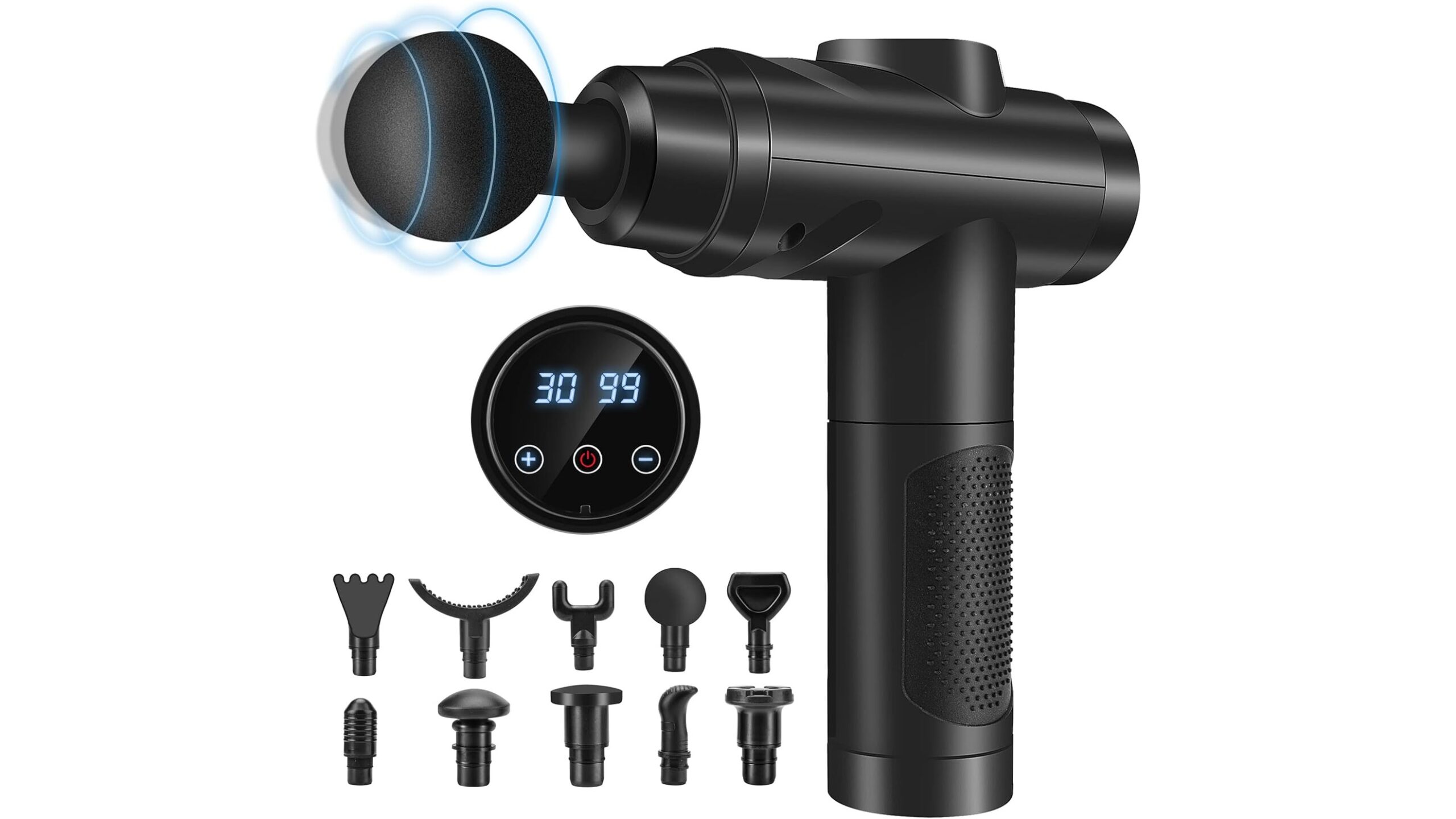
Self-massage can reduce muscle tension around the neck, upper back and shoulders when used thoughtfully. A percussion device like the Zerolia Massage Gun Deep Tissue offers 30 adjustable speeds and 10 interchangeable heads to target different muscle groups. Start with a low setting and spend 1–2 minutes per area on the upper traps, rear delts and between the shoulder blades, avoiding direct pressure on bones or the actual shoulder joint. The quiet motor and long battery life make it easy to use while relaxing on the sofa. Remember: the goal is gentle relief and improved blood flow, not bruising or numbness. If an area feels more painful afterward, dial down the intensity or shorten your sessions.
Balance your home workouts and daily habits
Many home programs overload the front of the body with push-ups, presses and burpees, while daily smart device overuse keeps you locked in a rounded position. To protect your shoulders, shift toward a 2:1 ratio of pulling to pushing exercises: for every set of push-ups or overhead presses, add two sets of rows, band pull-aparts or reverse flys. Limit back-to-back overhead days and avoid training through sharp pain. Outside of workouts, keep your phone at eye level, support your forearms when typing, and schedule “movement snacks” throughout the day: a short walk, a few band rows, or some wall slides. Small, repeated choices have a bigger impact than occasional intense sessions.
Recovering from sore shoulders linked to technology use and home workouts does not require a full training hiatus—just smarter strategy. Combine posture awareness, daily mobility drills, targeted band strengthening and sensible use of tools like a massage gun or posture corrector. Over a few weeks, you should notice less stiffness, better range of motion and more comfortable training sessions. Treat your shoulders as long-term partners in your fitness journey, and they will reward you with strength and stability for every rep and every swipe.