Designing a home gym in a tight space often means compromising on bulky equipment, but a wall-mounted foldable squat rack lets you lift heavy while keeping floors clear when you are done. These racks hinge or pivot back to the wall, turning a small spare room, garage or corridor into a versatile training area. This guide explains what to look for in terms of safety, folding mechanisms, installation basics and the key accessories that make a compact rack genuinely useful.
Understanding wall-mounted foldable squat racks
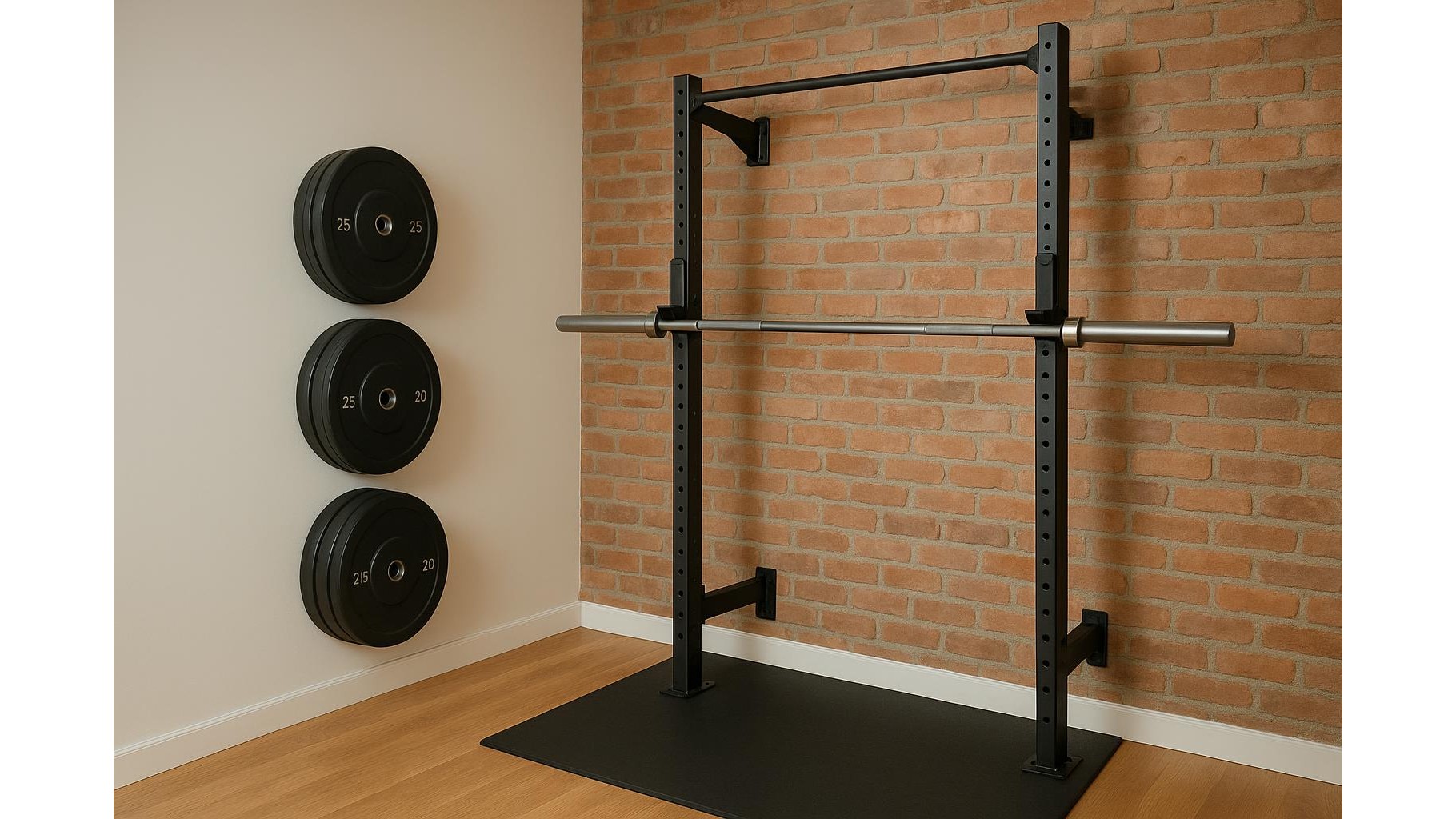
A wall-mounted foldable squat rack is a steel frame fixed directly to a solid wall, with uprights that can be folded flat when not in use. Compared with freestanding power racks, they save valuable floor area and create a cleaner look in multipurpose rooms. When choosing, check the steel gauge and weight capacity: many compact wall racks safely handle typical home loads, but you still want solid uprights, robust crossmembers and quality J-cups. Look for full-height uprights that allow both squats and overhead presses, and make sure the working footprint when open fits your barbell width plus some side clearance.
Key safety and stability features to prioritise
Safety should come first when training in a small home gym. Prioritise racks with secure wall brackets, multiple fixing points and clear mounting instructions. Even in compact models, adjustable safety spotter arms or straps are essential for bench pressing and squatting alone. Check that the rack locks positively in the open position with robust pins or latches so the uprights cannot shift mid-set. Non-slip J-cups with UHMW or similar lining protect your bar and help keep it stable. If you plan to add pull-ups, verify that the rack is rated for dynamic loads and that your wall and fixings are suitable to handle them.
Folding mechanisms and space-saving design
The folding system is what makes these racks ideal for tight home spaces. Common designs include hinge-and-pin systems that let each upright swing inwards, and pivoting uprights that fold vertically. Before buying, measure your room carefully: you need enough ceiling height to stand the rack and enough wall width for the uprights to fold flat. Aim for models that sit just a few inches off the wall when folded so you can park a car, store bikes or use the room for other activities. Simple, tool-free folding with removable pins is preferable, especially if you plan to open and close the rack several times per week.
Installation basics for UK homes
Proper installation is critical with wall-mounted racks, particularly in older or small UK homes. Most manufacturers recommend fixing only into solid brick, block or concrete walls rather than plasterboard alone. Use the correct anchor bolts for your wall type and follow the spacing instructions for the crossmembers. If you are not confident drilling into masonry or locating studs behind plasterboard, consider hiring a professional installer; a misaligned or poorly fixed rack can compromise both safety and performance. Allow extra room at the sides and front for barbell loading and safe movement, and plan where you will place rubber flooring to protect both the floor and the rack.
Essential accessories for a compact wall rack
To make the most of a compact wall-mounted rack, invest in a few essential home gym accessories. Quality J-cups, robust spotter arms and a stable flat or adjustable bench turn the rack into a complete strength station. Add a pull-up bar attachment if your rack does not include one, and consider wall-mounted plate storage to keep discs off the floor and free up space. Simple extras such as barbell holders, resistance band pegs and a landmine attachment can significantly expand your exercise options without crowding your room. Prioritise accessories that mount cleanly to the rack or wall and preserve the ability to fold the uprights away fully.
Choosing the right compact wall-mounted foldable squat rack starts with a clear picture of your space, lifting needs and wall construction. Focus on safety, a reliable folding mechanism, correct installation and a handful of smart accessories to create a versatile, space-efficient training area. With a well-chosen rack securely mounted, even the smallest home gym can support serious strength progress while still leaving room for everyday living.