If you spend hours at a desk and then jump straight into intense evening training, your hip flexors and lower back are working overtime. Tight hips can steal power from your squats and deadlifts, irritate your lower back, and even mess with your running stride. This 15-minute at-home recovery routine combines stretching, light activation drills and breathing work so you can release tension after sitting all day and unlock better performance in your night workouts.
Set up your space for hip-friendly recovery
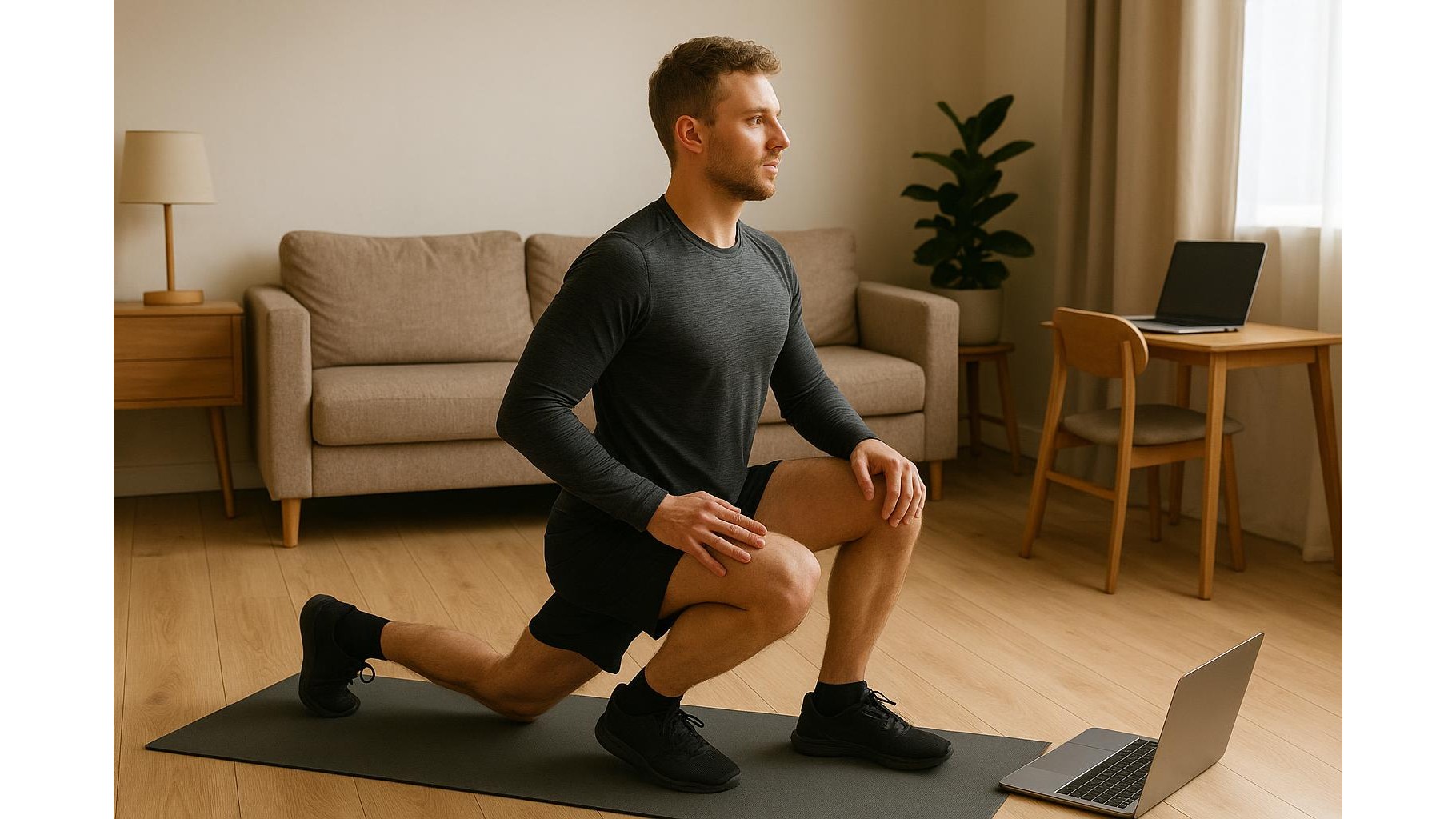
Before you start, create a simple home recovery corner so the routine is easy to repeat every evening. A supportive surface reduces pressure on your knees and spine, so training on a cushioned yoga mat is ideal. A thick mat helps you commit to daily mobility work because it feels comfortable and stable under your hips in lunges and hip flexor stretches. Keep a folded towel or small cushion nearby to pad sensitive knees during half-kneeling drills, plus a water bottle to stay hydrated. Dim lights, silence notifications and give yourself 15 distraction-free minutes: treating this as a focused protocol, not an afterthought, is what turns basic stretching into a powerful recovery routine that protects your hips and back long term.
Breathing reset to switch out of “desk posture”
Start with two to three minutes of diaphragmatic breathing to undo the shallow chest breathing that comes from hunching over a laptop. Lie on your back with knees bent and feet flat, one hand on your chest and one on your belly. Inhale slowly through your nose for four seconds, letting your lower ribs and belly expand into your hands, then exhale gently through pursed lips for six seconds. Aim for 8–10 breaths. This simple drill shifts you towards a parasympathetic state, reduces unnecessary tension in the hip flexors and lower back, and gives your spine a neutral starting position. Focus on widening your ribs instead of arching your lower back, so your pelvis stays stacked and ready for more targeted hip work.
Key stretches to open tight hip flexors
The cornerstone of this routine is the classic half-kneeling hip flexor stretch. From a half-kneeling position, front knee over ankle and back knee cushioned, gently tuck your tailbone under and squeeze the back glute. You should feel a deep stretch along the front of the back hip, not in your lower back. Hold for 30–45 seconds, breathing slowly, then switch sides and repeat twice. Follow with a psoas-focused stretch: elevate your back foot on a low step or sofa behind you in a “couch stretch” position, keep your torso tall and glute engaged, and again hold for 20–30 seconds per side. These stretches reverse the hip flexion of sitting, restore extension, and reduce the tugging sensation at the front of the hips that often flares up during squats, lunges or running intervals.
Light activation drills for glutes and core
Stretching alone is not enough; you also need activation drills so your body actually uses the range of motion you have gained. After your hip flexor stretches, move into 1–2 sets of 10–12 glute bridges, focusing on driving through your heels and finishing with a strong squeeze in the glutes, not the lower back. Then, add a set of side-lying clamshells or banded lateral steps if you have a mini-band, to wake up the hip stabilisers that support your pelvis when you run or lift. Finish with a 30–45 second dead bug or hollow hold variation to connect your core with your hip position. This combination teaches your body to switch from overactive hip flexors to powerful glutes and a braced core, improving both posture and evening training performance.
Lower-back relief and how to fit it into your evenings
To unload the lower back, add a gentle 90/90 hip switch or seated piriformis stretch after your activation work, holding each side for 20–30 seconds. Follow with 1–2 minutes of relaxed rocking in a child’s-pose position, focusing on long, slow exhales to let your spine settle. The full routine—breathing, stretching, activation and lower-back relief—fits into 15 minutes and can be done before a home workout as a warm-up or after training as a cool-down. Make it a fixed part of your evening schedule, ideally right after shutting down your computer or just before your session. By consistently addressing tight hip flexors and supporting muscles, you will move more freely, reduce post-session soreness and protect your back, even if you spend most of your day sitting.
Done nightly, this focused 15-minute protocol becomes a powerful buffer between your long days at the desk and your intense evening workouts. Combining breathing work, targeted hip flexor stretches, glute and core activation drills, plus a short lower-back reset, you create a simple at-home system that keeps your hips mobile and your spine supported. Over time you will notice deeper squats, smoother runs and less nagging tension at the front of your hips and in your lower back—proof that a small, consistent recovery routine can transform how you feel and perform every night you train.