A long day at a desk or a demanding workout can leave the upper back feeling tight and reluctant to move. This gentle thoracic mobility routine uses supported positions, easy rotations and relaxed breathing to encourage comfortable movement without forcing a stretch. It takes around five to eight minutes and is intended for general stiffness, not to diagnose or treat an injury.
Settle in and check your comfort
Choose a quiet space and a firm, comfortable surface. Move slowly, and keep every motion within a comfortable range of motion: mild tension is fine, but sharp pain, pinching or increasing symptoms are not. Take a few unhurried breaths, letting your shoulders soften as you breathe out. If you are recovering from an injury, have a known spinal condition, or are unsure whether movement is suitable, ask a healthcare professional first.
Begin with supported breathing
Lie on your back with knees bent and feet resting on the floor. Place your hands around your lower ribs. Breathe in gently through your nose and feel the ribs widen; breathe out slowly and let them settle. Repeat for five to six breaths without lifting or straining your shoulders. This quiet start helps you notice how your back feels before adding movement. Keep the breath easy rather than taking the deepest breath possible.
Try a small open-book rotation
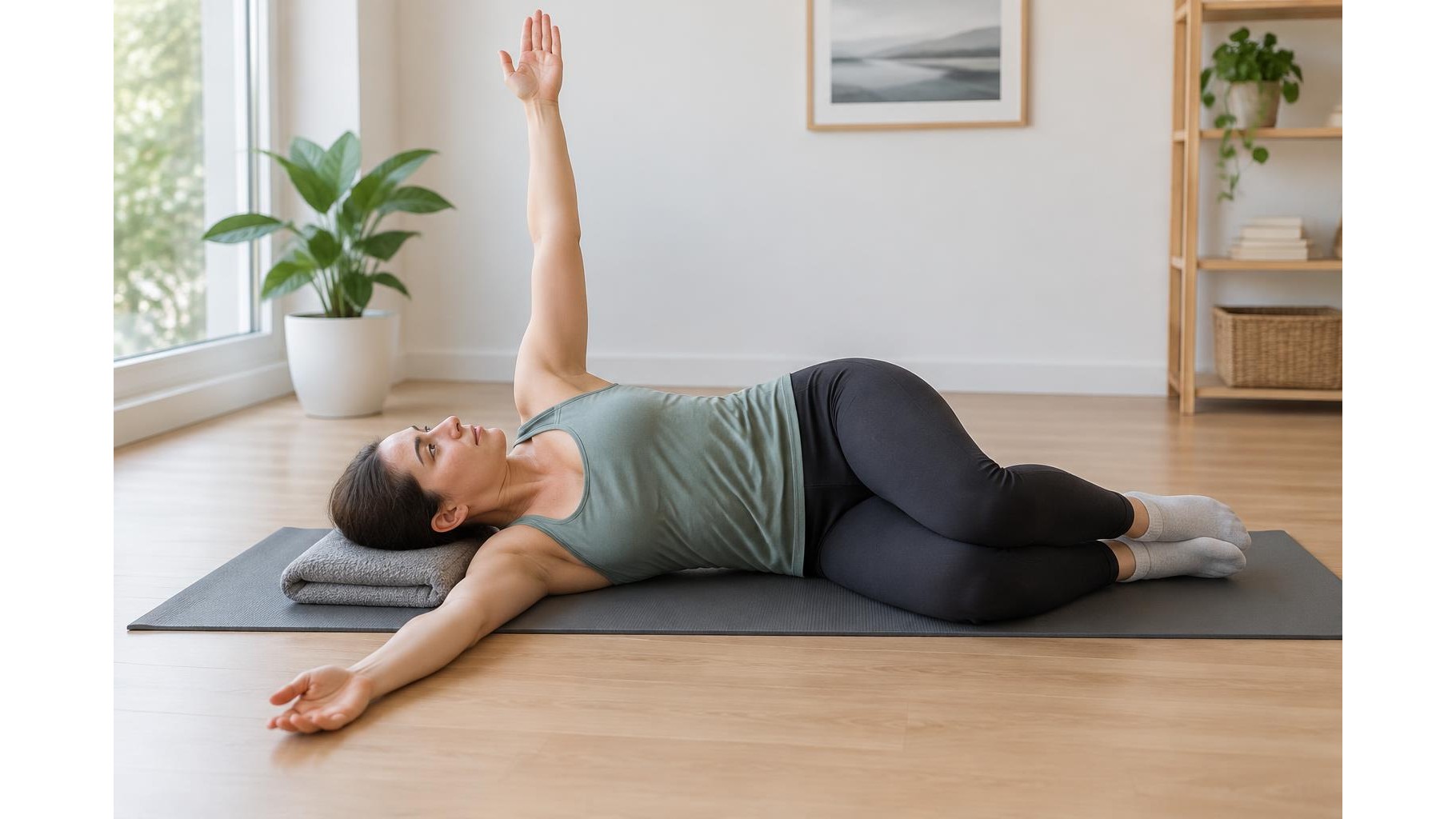
Lie on one side with hips and knees comfortably bent, arms reaching forward and palms together. Keep your knees stacked. Slowly sweep the top arm across your body, turning your chest only as far as feels easy. Let your eyes follow your hand if that is comfortable, and breathe out as you open. Pause for one breath, then return without forcing the shoulder toward the floor. Do four or five repetitions, then switch sides. The movement should feel controlled, not like a test of flexibility.
Add a supported thoracic extension
Sit on a stable chair with feet flat and hands resting lightly behind your head or across your chest. Keep your lower back relaxed and lean your upper back a little over the chair’s backrest, lifting the chest gently as you breathe in. Return upright as you breathe out. Repeat four to six times with a small, smooth motion. Avoid pushing the head back, arching through the lower back or using momentum. If the chair does not support your upper back comfortably, skip this movement.
Finish with a gentle reach
Come onto hands and knees, placing hands beneath shoulders and knees beneath hips. Keeping your arms long, gently sit your hips back a little and reach your hands forward until you feel an easy stretch around the upper back. Breathe into the back and sides of your ribs for three slow breaths, then return to hands and knees. Adjust the distance to suit you; there is no need to reach the floor with your chest or hold a position that feels uncomfortable.
Know when to stop
Finish by sitting or standing comfortably and noticing whether movement feels easier. Repeat this short sequence once, or use it after desk work or training when mild stiffness is present. Stop immediately if you experience sharp or worsening pain, numbness, tingling, weakness, dizziness, chest pain or unusual shortness of breath. Seek prompt medical advice for concerning symptoms, and consult a qualified professional if stiffness persists, repeatedly returns or limits daily activities. Gentle movement should feel reassuring, never forced.
Supported breathing, small rotations and easy extensions can offer a calm way to explore upper-back movement at home. Keep the pace unhurried, stay within a comfortable range and treat symptoms as useful feedback. Consistency matters more than intensity: a few relaxed minutes may be enough to break up a sedentary day, while persistent or concerning discomfort deserves professional assessment.