After a demanding session of push-ups, bench presses or overhead work, shoulders can feel stiff and less comfortable to move. A brief, easy mobility routine may help you explore comfortable movement again, without turning recovery into another workout. The aim is not to force a stretch or fix an injury: keep the effort gentle, breathe normally and stop any drill that causes sharp or increasing pain.
Start with an easy reset
Give yourself five to eight minutes in a clear space, with no equipment required. Stand or sit tall, let your arms rest by your sides and take a few slow breaths. Gently shrug your shoulders toward your ears, then let them settle down; repeat five times without squeezing hard. Follow with small, relaxed shoulder circles, moving forward and then backward. Begin with a range that feels easy and gradually make the circles a little larger only if they remain comfortable. This simple check-in helps you notice how the shoulders feel today rather than assuming they should move like they did before training.
Try a controlled shoulder circle
Stand with feet comfortably apart and place your fingertips lightly on your shoulders. Slowly draw your elbows forward, upward and outward in a smooth circle, then reverse direction. Try four to six circles each way. Keep your ribs relaxed rather than arching your back to make the movement look bigger. If full circles feel awkward, use smaller arcs or move one elbow at a time. The useful range is the one you can control without pinching, sharp pain or a need to brace. This is a mobility drill, not a test of flexibility.
Use a gentle wall slide
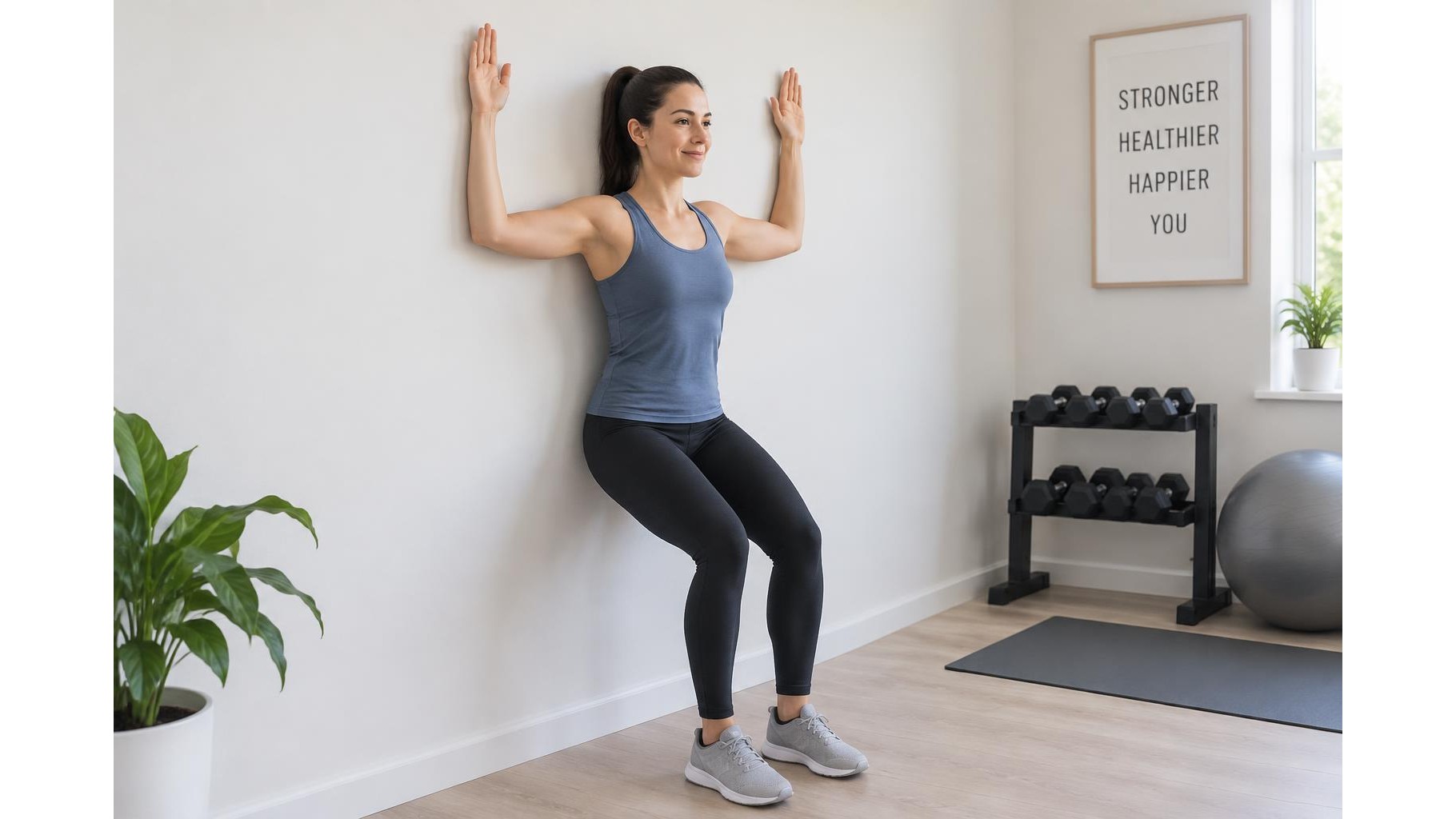
Face a wall and place your forearms against it, elbows bent and hands roughly shoulder-width apart. Apply only light pressure as you slide your arms upward a short distance, then return slowly. Try five to eight repetitions, keeping the movement smooth and your neck relaxed. If your arms cannot reach high without discomfort, stop lower; you can also slide one arm at a time. Avoid leaning heavily into the wall or shrugging forcefully. A comfortable, repeatable range matters more than reaching overhead. No wall available? Practise the same slow upward reach with your hands moving freely in front of you.
Explore a gentle chest opener
Stand beside a doorway and rest one forearm against the frame, with the elbow below shoulder height. Turn your body away slightly until you feel a mild stretch across the front of the chest, not a painful pull in the shoulder. Hold for about 15 to 20 seconds while breathing normally, then release and switch sides. Keep the stretch subtle and avoid twisting or pushing the arm behind you. If this position feels uncomfortable, skip it and repeat easy shoulder circles instead. Stretching should feel manageable; stronger sensations are not a sign of better recovery.
Scale the routine to your response
Use fewer repetitions, smaller movements or just one drill if you are especially tired after pressing. You should finish feeling the same or more comfortable, not more irritated. Ordinary post-training stiffness is often mild and tends to ease with gentle movement and time, but symptoms vary. Stop and seek advice from a qualified health professional if pain is severe, worsening, follows an injury, or comes with marked weakness, numbness, swelling or difficulty using the arm. Persistent symptoms also deserve assessment rather than repeated attempts to stretch through them. This routine cannot diagnose the cause of shoulder discomfort.
Keep the sequence short, calm and adjustable: circles, wall slides and an optional light chest opener are enough for a post-pressing reset. Stay within a comfortable range, leave painful movements out and pay attention to how you feel afterward. Mobility work should support your training, not compete with recovery. If symptoms persist or concern you, get professional guidance before returning to movements that provoke them.