Calves can feel stiff after a long day on your feet or a home workout with steps, squats or brisk walking. A few minutes of gentle movement may help you feel more comfortable, without forcing a deep stretch. Try this low-intensity routine when you are warm and able to move comfortably. It should feel easy, not painful; stop if symptoms worsen.
Start with relaxed ankle movements
Sit on a chair with both feet supported, or lie down with your legs relaxed. Slowly point your toes away, then draw them back towards your shins. Repeat for 8–12 smooth cycles, keeping the movement within a comfortable range. Next, make small ankle circles in each direction, around five times per side. Keep your breathing natural and your shoulders relaxed. These simple ankle mobility exercises are a gentle way to get started after sitting or standing still.
Try a seated calf stretch
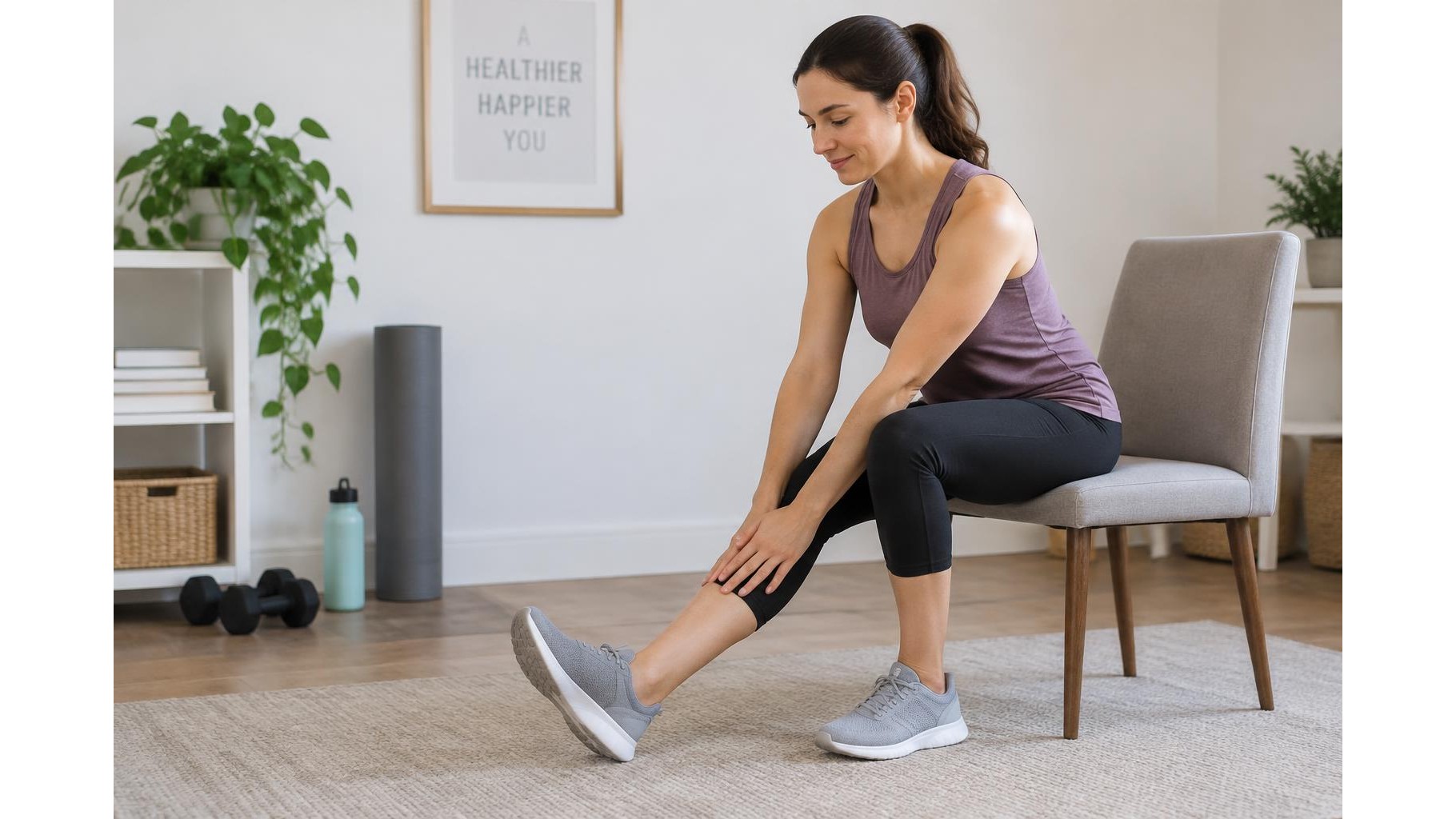
Sit near the front of a chair and extend one leg, resting the heel on the floor with the knee softly bent. Bring your toes gently towards you until you notice a mild stretch in the calf. Keep your back comfortable and avoid pulling hard on the foot. Hold for 15–20 seconds while breathing easily, then release. Repeat once or twice on each side. The sensation should be mild; stretching should not cause sharp pain, tingling or numbness.
Use a supported standing stretch
Stand facing a wall or sturdy counter, with your hands resting lightly for balance. Step one foot back and keep that heel on the floor, with the toes pointing forwards. Bend the front knee slightly and shift your weight forwards until you feel a comfortable stretch in the back calf. Hold for 15–20 seconds, then switch sides. If keeping the heel down feels uncomfortable, shorten your stance or return to the seated version. There is no need to bounce or push into your end range.
Add a brief, easy walk
If walking feels comfortable, take a slow stroll around your home for two or three minutes. Let your steps stay natural and avoid deliberately taking long strides. You can finish with a few more relaxed ankle circles. This is a recovery option, not a test: skip the walk if it increases discomfort, and rest instead. After a workout, allow your breathing and heart rate to settle before stretching. A short, consistent cooldown is more useful than an intense session when your calves already feel tight.
Know when to seek professional advice
Ordinary post-activity stiffness often settles with time and gentle movement, but persistent or recurring pain deserves attention. Arrange an assessment with a healthcare professional if discomfort does not improve, limits walking, repeatedly returns, or follows an injury. Seek urgent medical care for sudden severe pain, marked swelling, warmth or redness, or one calf that becomes noticeably swollen or tender. Chest pain or shortness of breath alongside calf symptoms requires emergency help. Do not use stretching to try to diagnose or treat these warning signs.
For everyday tightness, start with easy ankle movements, add a mild calf stretch and breathe without rushing. Keep the routine comfortable and stop if symptoms worsen. If pain persists, changes or affects your normal activities, get individual advice from a qualified professional rather than pushing through.