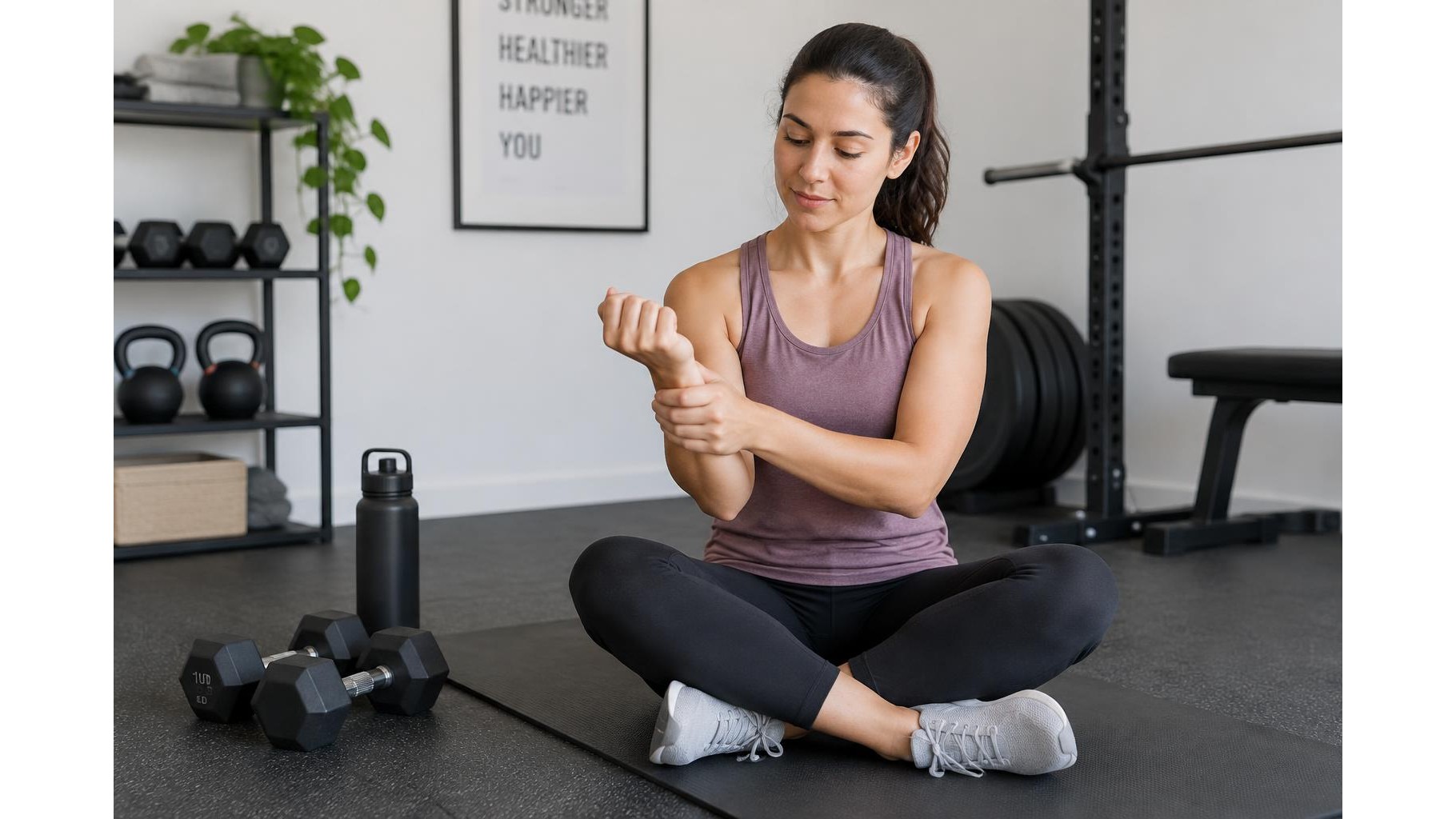
After a home workout, tight forearms can make everyday tasks—opening a jar, typing or holding a phone—feel less comfortable. A brief, easy routine may help you unwind after gripping weights or spending hours at a desk. Keep every movement gentle: this is not a test of flexibility, a strength session or a way to push through pain. Stop if symptoms worsen, and seek professional advice for persistent pain, numbness or weakness.
Start by letting your grip go
Put your weights down safely and sit or stand with your shoulders relaxed. Let your hands rest loosely in your lap for a few breaths. Open your fingers comfortably, then allow them to curl without squeezing into a fist. Repeat five to eight times, taking your time. Keep the effort low and breathe normally; there is no need to force your fingers wide. If your forearms feel more settled, continue. If you notice sharp pain, tingling or increasing discomfort, stop the routine.
Move the wrists through a small range
Rest one forearm on your thigh or a table, with your hand just beyond the edge and your palm facing down. Slowly lift the hand a little, then lower it to a comfortable neutral position. Do five gentle repetitions, then turn the palm upward and repeat. Keep the forearm supported and the movement small. The aim is easy motion, not a deep stretch or a dramatic bend. If a position feels uncomfortable, make the range smaller or leave that movement out.
Add a comfortable forearm stretch
Extend one arm in front of you with the elbow soft rather than locked. With the other hand, guide the fingers gently back until you feel a mild stretch along the forearm. Hold for about 10 to 15 seconds while breathing steadily, then release. Turn the palm down and, if comfortable, lightly guide the hand toward the floor for a gentle stretch on the other side. Use only enough pressure to notice a mild pulling sensation. Never bounce, yank or press through pain.
Scale the routine to how you feel
There is no required number of repetitions or ideal stretch depth. On a tired day, simply relax your hands and perform a few small wrist movements; you can skip the stretches altogether. If everything feels comfortable, repeat the sequence once, keeping the total routine short. For desk-related tightness, a gentle reset between work periods may feel more suitable than adding more stretching after training. Avoid turning this into another workout: do not add weights, forceful gripping or prolonged holds. Comfort during and after movement is your guide.
Know when to stop and seek help
Stop immediately if you develop sharp or escalating pain, new tingling, numbness, unusual swelling or a feeling that your hand is becoming weaker. Do not use stretching to diagnose the cause or to mask symptoms so you can continue lifting. If discomfort keeps returning, persists despite rest, interferes with daily tasks, or includes numbness or weakness, arrange an assessment with a qualified healthcare professional. Sudden or severe symptoms warrant prompt medical attention. A professional can help identify what is going on and advise when and how to return to training.
In summary, a useful post-workout forearm routine is short, relaxed and easy to adapt: release your grip, move your wrists gently and stretch only within a comfortable range. More intensity is not better. Let symptoms guide you, stop when movement aggravates them, and get professional advice for persistent pain, numbness or weakness. These simple movements can be a calming cooldown, but they are not a substitute for an individual assessment when symptoms need attention.