After a home workout, it can take a little while for your breathing and attention to catch up with the fact that the effort is over. A short, comfortable breathing routine can help mark that transition before you shower, eat or return to work. It does not need special equipment or a perfect technique: the aim is simply to pause, notice how you feel and let your breathing settle naturally.
Start with a comfortable pause
When your final set or interval ends, move somewhere safe and give yourself a moment before starting the routine. If you feel steady, stand or sit; if you are light-headed or unusually tired, sit down or lie on your side. Let your shoulders soften and loosen anything restrictive. Begin by noticing your breath as it is, without trying to make it slower or deeper. This brief check-in helps you choose a pace that feels manageable rather than turning recovery into another workout.
Choose a posture that supports you
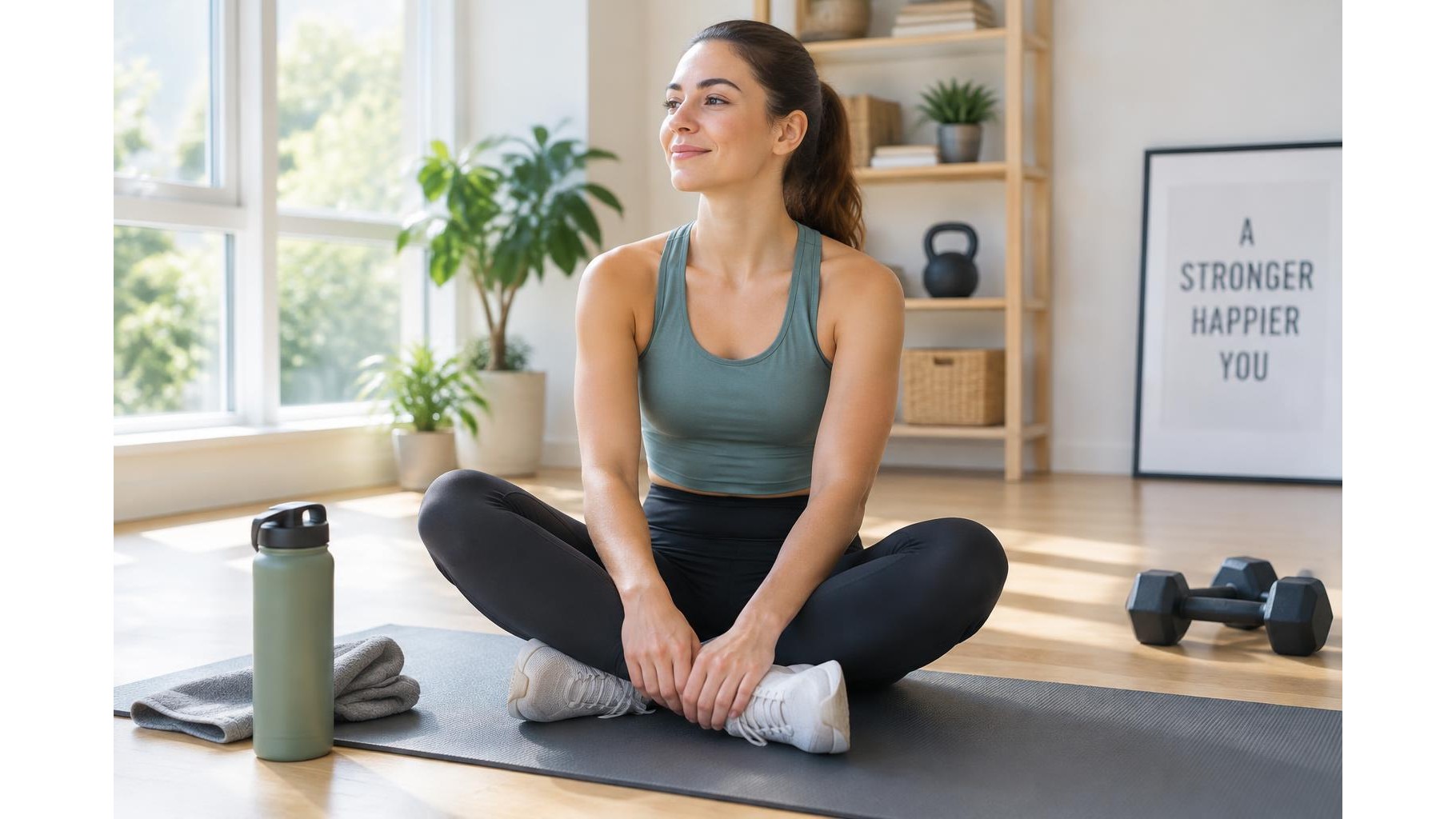
For a seated option, rest both feet on the floor and let your hands settle on your thighs. You can also sit back against a wall or lie comfortably with your knees bent. Keep your jaw and belly relaxed; there is no need to hold a rigid “good posture.” If you prefer to stand, keep your knees soft and use a wall or chair for support. A stable position makes it easier to pay attention to your breathing without straining to maintain balance.
Follow an easy breathing rhythm
Try breathing gently in through your nose if comfortable, then letting the breath leave without pushing. After a few natural breaths, you might allow the exhale to last just a little longer than the inhale—for example, an easy count of three in and four out. Counts are optional: abandon them if they feel awkward. Continue for around one to three minutes, keeping each breath quiet and unforced. The goal is comfortable pacing, not the deepest breath or the longest exhale you can manage.
Adapt the routine to how you feel
Your needs can change from one session to the next. After a gentle strength workout, a minute of calm breathing may be enough; after intervals, take more time to cool down and let your breathing recover before focusing on a pattern. You can shorten the count, return to ordinary breathing or stop altogether. If concentrating on the breath makes you uncomfortable, try noticing your feet on the floor or the sounds around you instead. This is a flexible pause, not a test.
Notice signs to ease off
Stop counting and breathe normally if you feel dizzy, tingly, panicky, short of breath or more uncomfortable. Sit or lie down somewhere safe and allow your breathing to settle without forcing it. Seek urgent medical help for severe or sudden symptoms such as chest pain, fainting or serious difficulty breathing. A breathing exercise is not a substitute for medical advice, diagnosis or treatment. If symptoms persist, recur or concern you, contact a healthcare professional.
Carry the calm into your next activity
Finish by taking a moment to notice whether your body feels ready to move on. Let your breath return to its natural rhythm, then stand slowly if you have been sitting or lying down. Sip water if appropriate and continue with your usual post-training routine. There is no need to feel completely relaxed: even a brief, attentive pause can create a useful boundary between exercise and everyday tasks.
In summary, a gentle post-workout breathing routine can be as simple as finding a supported position, observing your breath and using an easy rhythm for a minute or two. Keep it adaptable, stop if it feels uncomfortable and treat it as a transition—not medical care.