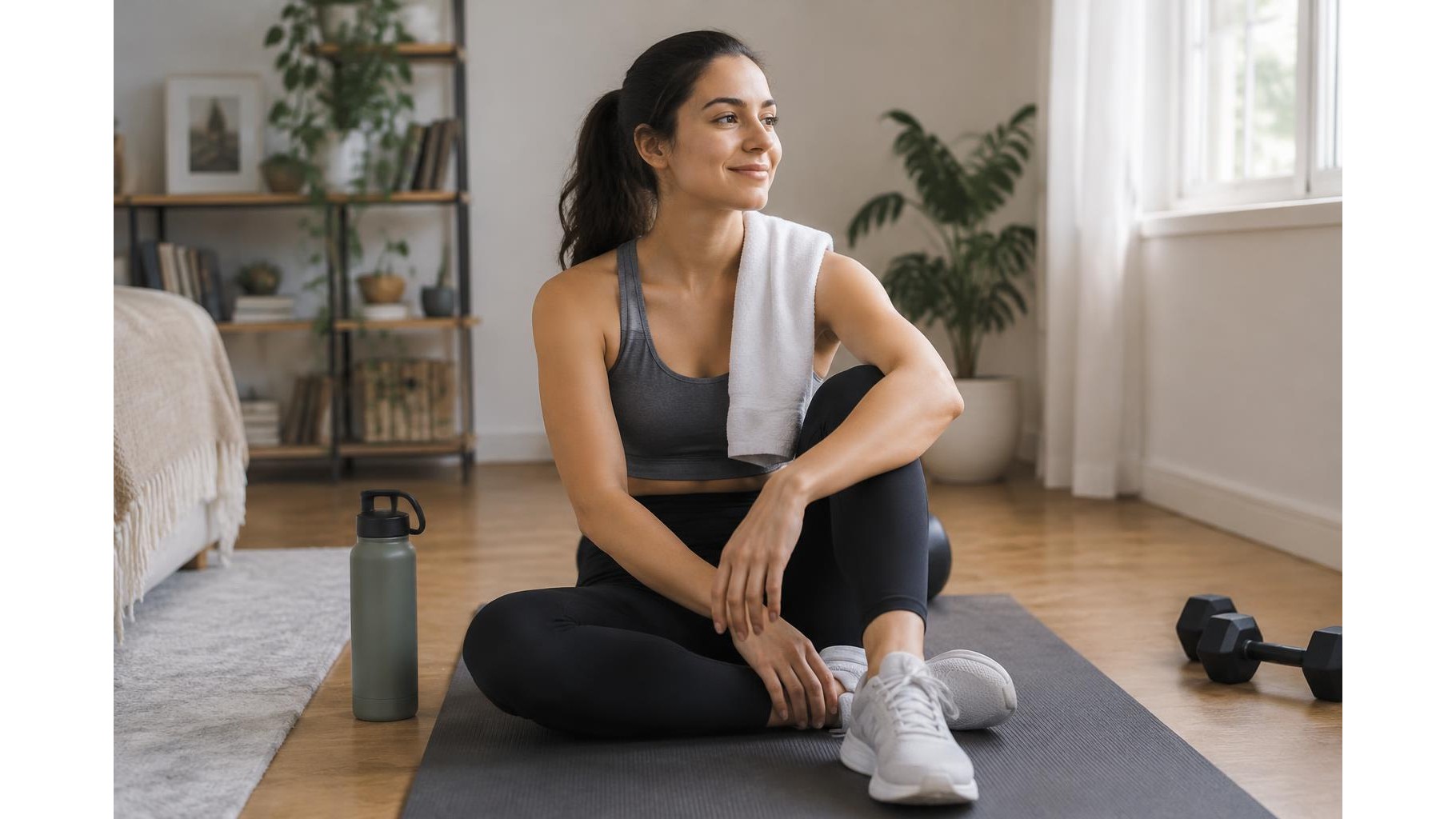
After a demanding workout, it can take a little time for your body and attention to shift back to everyday life. A brief breathing reset may offer a calm transition without adding another challenge to your training. This is not about achieving a perfect rhythm or controlling every breath. Keep the practice comfortable, adapt it to how you feel, and stop if it makes you uncomfortable.
Settle before you begin
Choose a quiet place where you can sit supported or lie down comfortably. Let your shoulders soften and allow your hands to rest. If you have just finished intense exercise, give yourself time to cool down first; walk gently and drink water as appropriate before settling. Notice the natural movement of your breathing without changing it. This first pause helps you check in with your body rather than rushing straight into a technique. There is no special equipment, posture or setting required.
Let the breath stay easy
When you feel ready, breathe in and out through your nose if that feels natural, or use your mouth if more comfortable. Let the breath remain quiet and unforced. You might notice the ribs or abdomen moving, but do not push them outward or try to take unusually deep breaths. A gentle, slightly longer exhale can feel soothing for some people; for others, simply observing the breath is more comfortable. Choose the option that feels ordinary and sustainable.
Try a short, flexible rhythm
If counting feels helpful, try breathing in for a comfortable count of three and out for a count of four. Treat those numbers as a suggestion, not a target: shorten them, ignore them or return to natural breathing whenever you like. Continue for about one to three minutes, checking in after a few cycles. The aim is a comfortable pace, not a particular breathing rate. If counting makes you tense or distracted, let it go and notice the feeling of your feet on the floor instead.
Notice warning signs and adapt
Stop the exercise and return to normal breathing if you feel dizzy, faint, unusually breathless, tingly, anxious or uncomfortable. Sit or lie safely and give yourself time to recover. Do not force deep breaths, strain to slow your breathing, or practise breath holds, especially after strenuous exercise. Seek urgent help for severe or persistent symptoms such as chest pain, fainting or serious difficulty breathing. If you have a health condition or concerns about exercise-related symptoms, ask a qualified healthcare professional for individual advice.
Carry the calm into your evening
Finish by letting your breathing return to its own rhythm. Notice the support beneath you, the temperature of the room and how your body feels after training. You might then change clothes, prepare a meal or begin your usual recovery routine. This practice is optional: a few relaxed breaths can be enough, and skipping it is fine if it does not suit you. Breathing exercises are not medical treatment and should not replace a clinician’s guidance or a sensible post-workout cool-down.
A gentle reset is simply a chance to pause between training and the rest of your day. Keep it brief, adaptable and free of pressure. By staying attentive to comfort and recognising when to stop, home athletes can explore a calmer transition without turning breathing into another performance test.