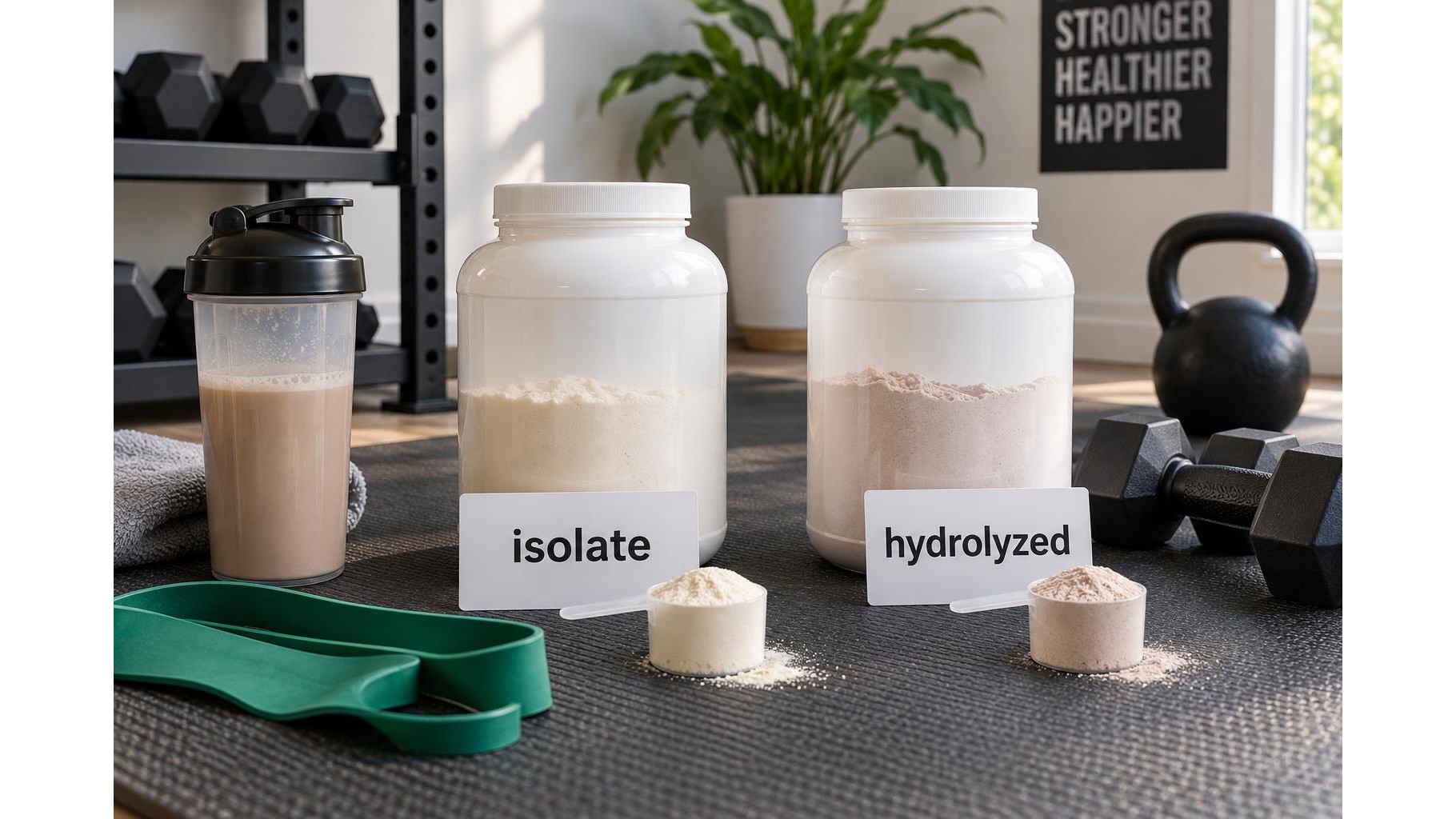
Choosing a protein powder for home training is less about finding a universally “best” formula and more about matching its ingredients, digestion, taste and price to your needs. Whey isolate and hydrolyzed whey are both dairy-derived protein options, but they are processed differently. Neither is automatically necessary for progress: a balanced diet and sufficient daily protein matter more than the label on a tub.
How the processing differs
Whey isolate is filtered to remove much of the lactose, fat and other milk components, producing a powder with a high proportion of protein by weight. The exact filtration process and final composition vary by manufacturer. Hydrolyzed whey has undergone enzymatic hydrolysis, which breaks some proteins into smaller peptides. Hydrolysis describes a processing step, not a guarantee of a particular protein percentage, ingredient list or health benefit. Some products are hydrolyzed isolates; others use different whey sources.
Ingredients and nutrition labels
Compare the nutrition panel per serving and per 100 g rather than relying on front-of-pack claims. Check protein, carbohydrates, sugars, fat and serving size, and inspect the ingredients for sweeteners, flavours, thickeners and added enzymes. If you need to limit lactose, an isolate may contain less than concentrate, but “isolate” does not necessarily mean lactose-free. Hydrolyzed whey may also contain lactose unless the label says otherwise. For an allergy to milk proteins, neither type is suitable.
Digestion, tolerance and evidence
Hydrolysis is sometimes marketed as making protein faster to digest or gentler on the stomach. It can change how proteins are broken down, but that does not establish a meaningful advantage in muscle gain or everyday recovery for everyone. Individual tolerance depends on the complete product, serving size and personal circumstances. If a powder causes discomfort, try a smaller serving, check for lactose and other ingredients, or choose a different protein source. Anyone with a medical condition or significant dietary restriction should seek advice from a qualified professional.
Texture, taste and mixing
Both options can mix well in water or milk, but texture depends on the formula, flavouring and added ingredients as much as on the type of whey. Hydrolyzed powders may taste more bitter because of the smaller peptides, so manufacturers may use stronger flavouring or sweeteners. Isolates are often chosen for a relatively light shake, though this is not guaranteed. Read reviews cautiously and, where possible, try a small pack before committing to a large tub. A powder you enjoy using consistently is often the more practical choice.
Cost and choosing for home training
Hydrolyzed whey often costs more because of additional processing, while isolate can also carry a premium over concentrate. Compare cost per 20–25 g of protein, not just tub price or scoop size. Choose isolate if you want a high-protein powder with typically less lactose and find it suits your budget and tolerance. Consider hydrolyzed whey if you specifically prefer it, tolerate its taste and accept the extra cost; it is not a requirement for home workouts. If neither offers a clear benefit, a less expensive protein food or powder may work just as well for your routine.
In summary, compare labels, serving costs and your own response rather than assuming hydrolyzed whey is superior or isolate is lactose-free. For most home trainees, the best option is a convenient, enjoyable product that fits dietary needs and helps meet overall protein intake. Prioritise consistency in training, meals and recovery over specialised processing claims.