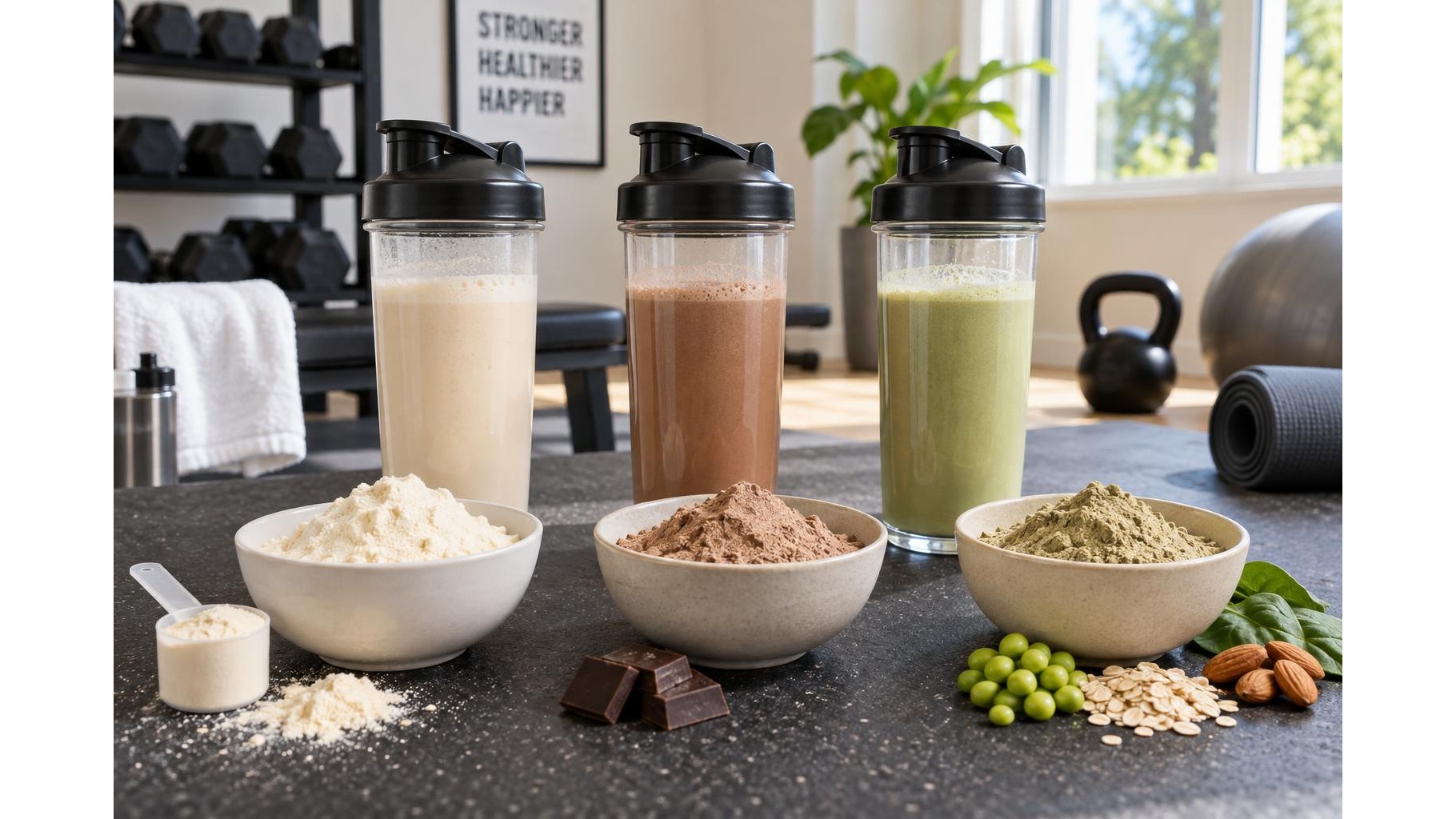
Protein powders can make it easier to add protein to meals around home training, but blends are not automatically better than single-source products. Whey, casein and plant proteins differ in amino-acid profiles, digestion, texture and suitability for different diets. Comparing the label—and your overall diet—matters more than choosing a formula with the longest ingredient list.
What a blend actually contains
A protein blend combines two or more protein ingredients, such as whey concentrate and isolate, whey and casein, or pea and rice proteins. Manufacturers may use blends to balance texture, flavour, cost or nutritional characteristics. Check the ingredient list to see which sources are included and their order: ingredients are generally listed by weight. The word “blend” alone does not tell you the proportions, so look for a disclosed ratio if that information matters to you. Also compare protein per serving with serving size; a larger scoop is not necessarily a more concentrated product.
Whey: complete protein and quick mixing
Whey, derived from milk, is a complete protein containing all nine essential amino acids, including leucine, which contributes to muscle protein synthesis. Whey concentrate typically retains more lactose and other milk components, while isolate is usually more protein-dense and lower in lactose; exact values vary by product. Many people find whey convenient after training because it mixes readily and is often digested relatively quickly. It is not suitable for people with a milk allergy, and lactose-sensitive users should check the product’s nutrition information and their own tolerance.
Casein: milk protein with a different texture
Casein is also a complete milk protein. It tends to form a thicker mixture and is often described as slower-digesting than whey. That difference can suit someone who prefers a more filling shake or wants a protein-rich snack between meals. However, there is no need to take casein at a precise time: total daily protein and a balanced diet are more important than a particular powder schedule. Casein is unsuitable for milk allergy, and people with lactose intolerance should not assume every casein product will be comfortable to use.
Plant-based mixes and amino-acid balance
Plant powders may use pea, soy, rice, hemp or other sources. Their amino-acid profiles vary: soy is a complete protein, while some individual plant proteins are relatively low in particular essential amino acids. Combining sources—for example, pea with rice—can provide a broader amino-acid pattern. Compare the protein amount per serving and, where available, the amino-acid information rather than relying on claims such as “complete” without context. Plant blends can suit vegan diets and people avoiding dairy, but check for allergens, sweeteners and possible cross-contamination statements.
How to compare labels for home training
Use the same checks across products so the comparison is fair:
- Protein per serving: Compare grams of protein, not just scoop size or pack weight.
- Ingredients and allergens: Identify protein sources, milk, soy and other ingredients relevant to you.
- Added ingredients: Review sugars, flavourings, thickeners and any added nutrients.
- Cost: Work out cost per serving or per gram of protein, while accounting for serving size.
- Practicality: Consider taste, texture, mixing and how well the powder fits your routine.
Choosing a blend that fits your routine
A blend may be convenient when you want one powder with a particular taste or texture, or when combined plant sources better suit your diet. It is not essential for progress: protein from ordinary foods can also support training goals. If you have a medical condition, food allergy, are pregnant, or need a specialised diet, seek advice from a qualified healthcare professional. For most home trainees, choose a product you tolerate, can afford and will use consistently, and treat it as a convenient food rather than a substitute for varied meals.
In short, whey offers a complete, readily mixable dairy option; casein is another complete milk protein with a thicker texture; and plant-based blends can combine sources to suit dairy-free diets. Compare protein content, ingredients, allergens and cost, then choose according to preference and overall dietary needs—not marketing claims or timing promises.