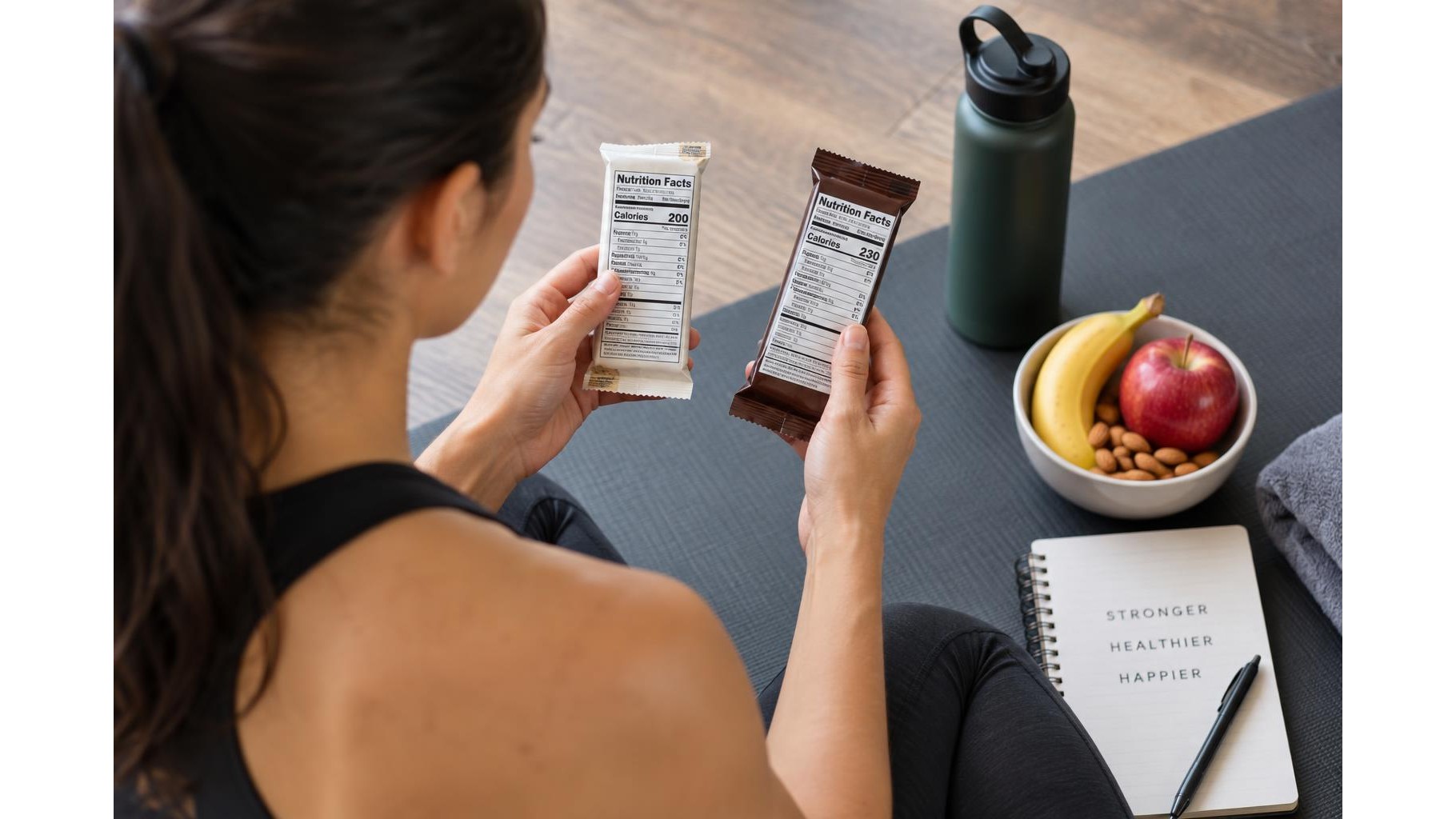
For home athletes, a protein bar can be a handy option when work, training and everyday life leave little time to prepare food. But colourful packaging and big protein claims do not tell the whole story. To compare bars fairly, look beyond the front label: check the serving size, protein source, sugar, fibre, ingredients and price per portion. The best choice depends on your needs, preferences and overall diet—not on a single “fitness” claim.
Start with the serving size
Nutrition figures apply to the stated serving, which may be one bar or only part of a larger pack. Compare products using the figures for the whole bar, and check its weight: a bar providing 20 g of protein at 70 g is not directly equivalent in size to one providing the same amount at 50 g. Also consider energy per serving. A bar may work as a substantial snack, but it can be less suitable if you want something small before a workout. Serving size is the starting point for any meaningful comparison.
Compare protein sources and amounts
Many bars use milk-derived proteins such as whey, milk protein or casein; others use soy, pea, rice or blends of plant proteins. These sources can differ in texture and amino-acid profile, while taste and tolerance vary between people. Check the ingredients list to see what supplies the protein, especially if you avoid dairy or follow a plant-based diet. Rather than assuming that the highest number is automatically best, consider how the bar fits with protein you get from meals. A bar is one possible source, not a requirement for making progress.
Read the sugar and fibre lines
Look at total sugars as well as the ingredient list. Ingredients such as syrups, honey or fruit concentrates can contribute sugars, while some bars use sweeteners or sugar alcohols. These are not interchangeable measures of overall quality: consider your preferences and how the product sits with you. Fibre can add useful variety to a snack, but higher-fibre bars may not feel comfortable for everyone, particularly close to exercise. Compare the grams per whole bar, and use the nutrition panel rather than front-of-pack phrases such as “low sugar” in isolation.
Scan the ingredients and allergen advice
Ingredients are generally listed by weight, so the first items give a useful picture of the recipe. Look for the protein ingredients, sweeteners, fats and any added extras, then check the allergen statement for milk, soy, nuts, gluten or possible cross-contamination warnings. A shorter list is not automatically healthier, and unfamiliar ingredients are not automatically a problem; the practical questions are whether the bar suits your dietary needs and whether you enjoy eating it. If you have an allergy or medical condition, follow appropriate professional advice and label warnings.
Work out value and timing
Compare the cost per bar and, where useful, the cost per 10 g of protein. Multipack prices can change, so calculate from the current price rather than relying on a headline saving. Convenience also matters: a bar that travels well and remains appealing may be more useful than a cheaper option you leave uneaten. Before training, choose foods you know you tolerate; after exercise, a normal meal can provide protein alongside carbohydrates and other nutrients. There is no need to treat a bar as a special recovery product.
Choose the option that fits your routine
Protein bars are most useful as portable, shelf-stable snacks when ordinary food is unavailable or inconvenient. They are not inherently superior to foods such as yoghurt, eggs, beans, nuts or a sandwich, which may offer a different mix of nutrients and better value. Compare labels calmly, keep portion size in view and judge the product by taste, tolerance, dietary fit and cost. A convenient bar can earn a place in a home athlete’s routine, but it is only one tool among many.