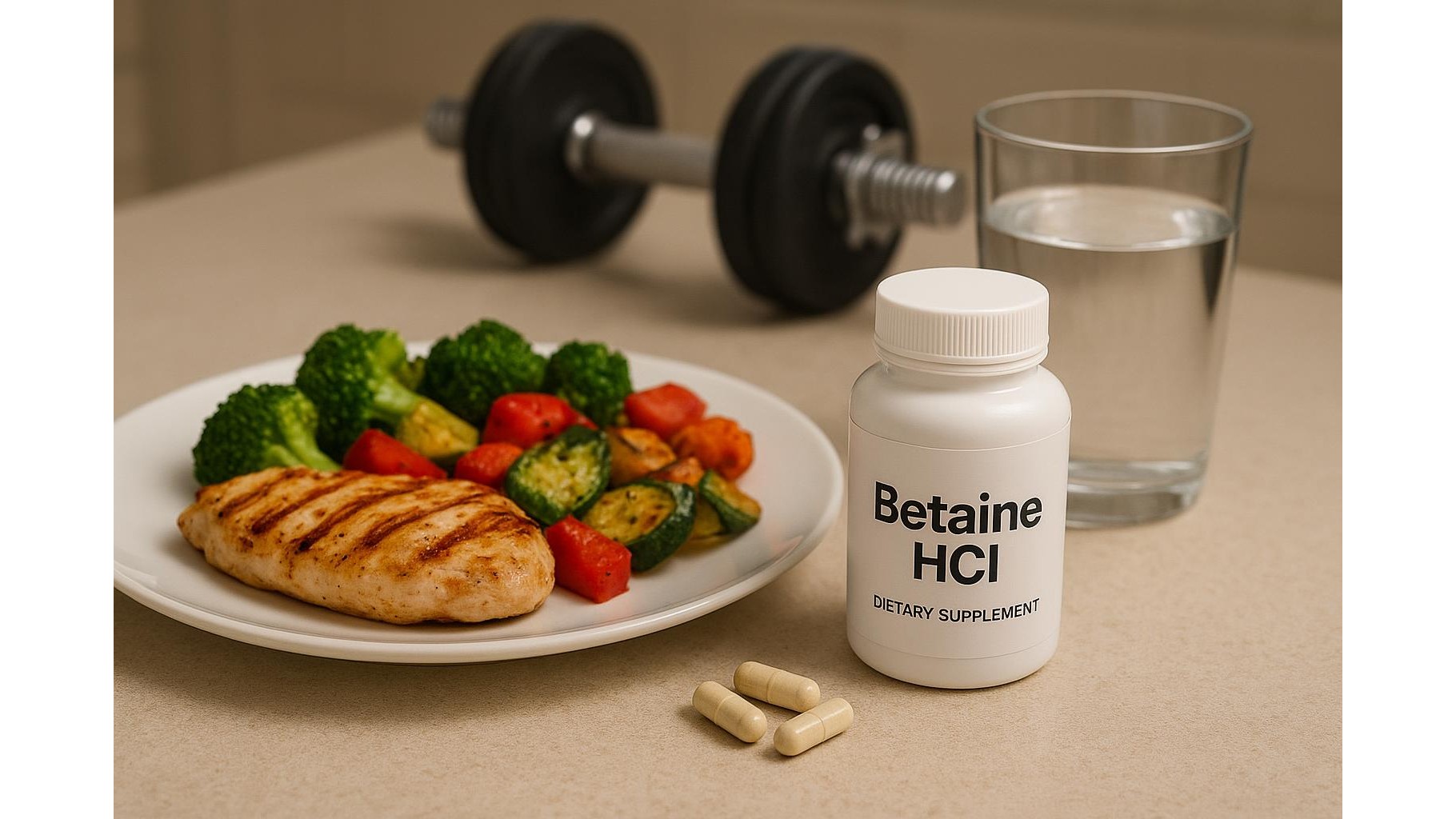
Building a serious home gym often goes hand in hand with a high-protein diet. But not everyone’s digestion keeps up with big servings of chicken, eggs and protein shakes. This is where betaine HCl (betaine hydrochloride) is often used as a supplement to support stomach acid levels and improve comfort after meals. In this guide we’ll look at what it is, when it may help home athletes, how to think about dosing, and important safety rules before you self-experiment.
What is betaine HCl and how does it work?
Betaine HCl is a synthetic compound that combines betaine with hydrochloric acid. It is marketed as a way to temporarily increase stomach acidity, which may help break down protein-rich meals more efficiently. In theory, this can support the digestion of dense foods like steak, whey, casein or mass gainer shakes that many home athletes rely on to hit their protein targets. Unlike digestive enzymes, betaine HCl focuses specifically on mimicking the acidic environment of a healthy stomach, which is crucial for activating pepsin and starting protein breakdown.
When might home athletes consider betaine HCl?
Some lifters following a high-protein, home-based diet report issues such as heaviness after eating, frequent belching, feeling overly full for hours or seeing undigested food in the stool. These signs can be associated with low stomach acid, but they can also be caused by many other issues. For healthy adults, a carefully trialled betaine HCl supplement may be considered around their largest protein meal of the day to see if it supports comfort. The most sensible approach is to first optimise habits: chew thoroughly, avoid eating in a rush, limit very late-night feasts, and control total serving size of protein before adding any supplement.
How to approach dosing for digestion support
There is no universal, clinically agreed betaine HCl dosage for athletes, and products often vary in strength. Many practitioners suggest starting with the lowest dose on the label, usually one capsule with the first bite of a high-protein meal, and then assessing how you feel over several days. If no warmth or burning is felt, some people gradually increase by one capsule at a time, up to the product’s recommended maximum, while monitoring for discomfort. If you ever feel burning, pain, nausea or reflux-like symptoms, you should stop immediately, drink water, and avoid further use. Never exceed the manufacturer’s suggested serving or use it on an empty stomach.
Key safety considerations and who should avoid it
Despite being widely available, betaine HCl is not risk-free. Anyone with a history of ulcers, gastritis, reflux disease (GERD), inflammatory bowel disease, previous stomach surgery or unexplained abdominal pain should avoid betaine HCl unless directly supervised by a doctor. If you take NSAIDs (like ibuprofen), corticosteroids, blood thinners or medications for heartburn or acid reflux, you must talk to your healthcare provider first because altering stomach acidity can interact with these drugs. Pregnant or breastfeeding women, and adolescents, should generally avoid betaine HCl supplements. If in doubt, treat it as a medicine, not a casual vitamin.
Practical tips for home use and alternative strategies
Before relying on betaine HCl, consider practical digestion-friendly strategies: spread your protein targets across 3–5 meals instead of loading everything into one giant post-workout feast; combine protein with some carbs and fats to slow and stabilise digestion; and stay well hydrated throughout the day. For some home athletes, gentler options like digestive enzymes, ginger, or simply reducing serving size may be enough. Keep a simple food and symptom log when you change anything in your routine. If you decide to trial betaine HCl, run it for a limited period, monitor your response carefully and take any new or severe symptoms as a signal to stop and seek professional advice.
In summary, betaine HCl can be a targeted tool for some home athletes who struggle with heavy, high-protein meals, but it is not a magic fix and it is not suitable for everyone. Focus first on smart meal structure, portion control and eating habits, then consider betaine HCl only if you are a healthy adult and ideally after discussing it with a healthcare professional. Respect conservative dosing, stay alert to side effects and remember that consistent nutrition and training fundamentals matter far more for your home gym progress than any single supplement.