Designing a home gym in a small or irregular room can feel like playing Tetris with barbells and plates. Awkward corners, sloping ceilings and strange wall angles often leave dead zones that collect clutter instead of contributing to your training. With the right space‑saving corner racks, wall shelves and hooks, you can turn those unused areas into efficient storage for bars, plates and accessories, freeing up floor space for lifting and movement.
Plan your corners before you buy any rack
Before adding any corner rack, take five minutes to map your room. Identify tight corners, alcoves and short wall sections near doors or windows. Measure wall width, ceiling height and the clearance you need for your main lifts. A common mistake is buying a full‑size rack that blocks door swing or eats up a prime training zone. Instead, think of corners as vertical storage zones: plates, barbells, dumbbells and accessories can all go on the walls, leaving the centre free. Sketch where a compact vertical rack, a wall‑mounted barbell holder or a set of hooks could fit without interfering with squats, deadlifts or your adjustable bench path.
Use vertical plate trees to fill dead corner space
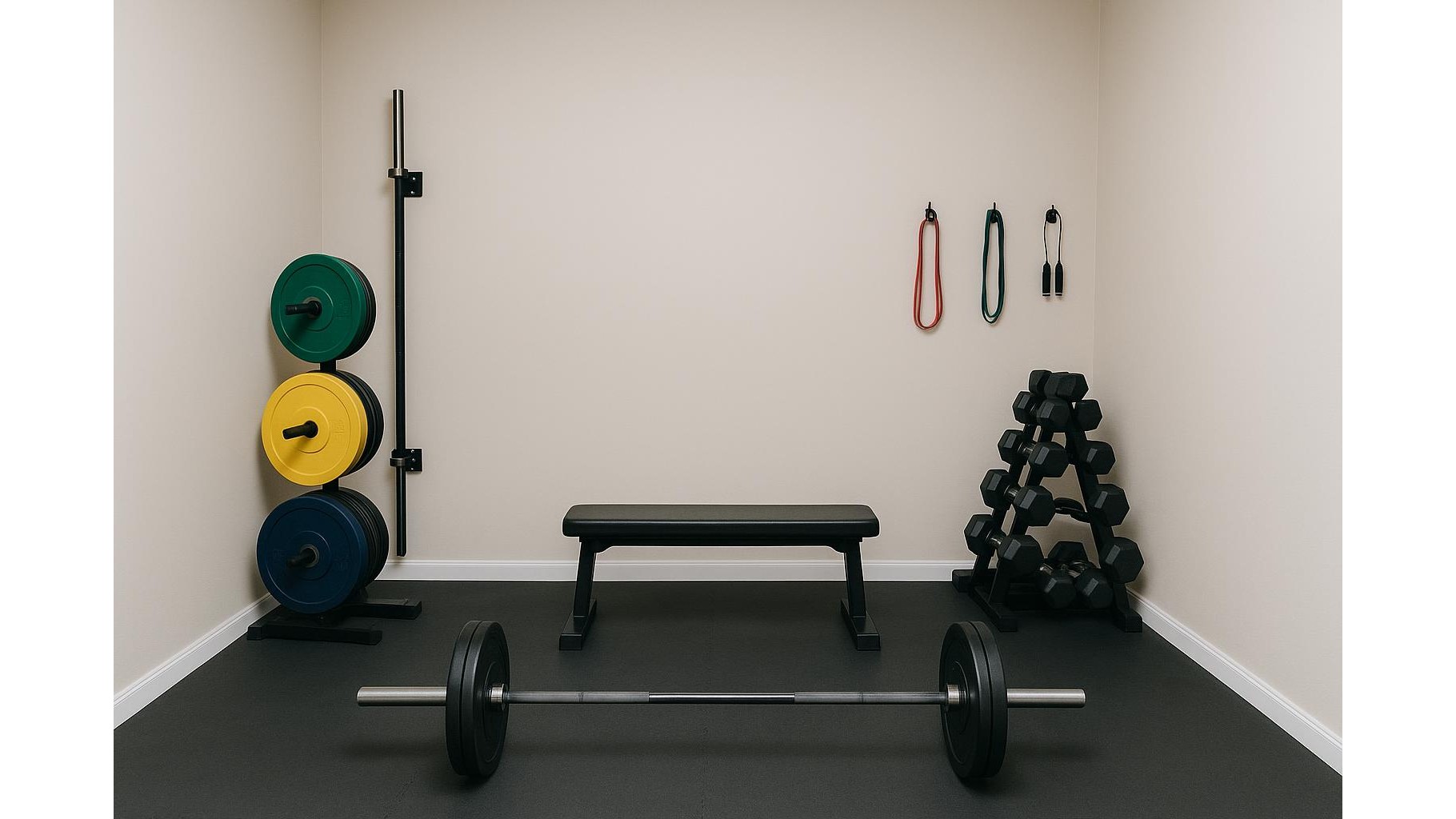
Weight plates are heavy, bulky and usually dumped on the floor against the nearest wall. In an odd‑shaped room, this quickly kills usable space. A compact, vertical plate tree lets you park plates safely in a tight corner while keeping them easy to grab. Look for a small footprint, multiple posts for different plate sizes and a stable, wide base so it won’t rock on uneven floors. Position the rack in a corner you rarely walk through, ideally beside or behind your main power rack. Plates then travel in a short line from storage to bar, and you avoid clutter in your main movement lane. If your ceiling is low, choose a shorter model and store the heaviest plates on the lowest posts for both safety and stability.
Mount barbells on the wall instead of the floor
Barbells rolling around the floor or leaning in a corner are a trip hazard, especially in narrow or angled rooms. A wall‑mounted barbell rack solves this by storing bars vertically or horizontally on an unused wall section. When buying, check that the rack has protective liners (or add your own tape) to avoid scratching the knurling, and verify load rating if you store multiple specialty bars. Install it on solid brick or stud walls using the correct fixings, ideally above plate storage so your “bar and plates” zone is consolidated in one corner. In very shallow spaces, vertical bar holders are ideal: they only project a few centimetres from the wall and fit neatly beside doors, under sloping ceilings or between windows without blocking movement.
Corner dumbbell racks and shelves for tight footprints
If you own a small dumbbell set, a full commercial rack is usually overkill. In a cramped or L‑shaped room, opt for a compact corner dumbbell rack or robust wall shelves. Triangular or V‑shaped racks are designed to sit flush in a corner, using depth rather than width. For heavier dumbbells, choose steel construction with a clear max load rating and non‑slip feet so the rack stays put on rubber flooring. If you go with wall shelves, mount them at a height that lets you pick up and re‑rack dumbbells without rounding your back, and never overload a single bracket. Placing these in a “dead” back corner keeps your main lifting platform uncluttered while still giving quick access for supersets and circuits.
Hooks and rails for bands, belts and small accessories
Resistance bands, lifting belts, skipping ropes and suspension trainers are light but create visual chaos when left on the floor. A row of sturdy wall hooks or a rail system is one of the easiest ways to transform an awkward wall angle into useful storage. Install them high enough that accessories hang freely but low enough to reach quickly between sets. In very narrow corners, stagger hooks vertically: heavier items like belts at the bottom, lighter items like bands above. This keeps the corner visually clean and prevents tangles. If you train early or late, keeping these items organised on the wall also reduces noise from rummaging through boxes or bags on the floor.
Layer storage zones for maximum efficiency
The real magic in an awkward home gym layout is how you layer storage. Think in vertical zones: floor, waist, shoulder and overhead. Heavy items like plates sit low, medium items like dumbbells around waist height, and light accessories go higher on hooks or shelves. In a challenging corner, you might combine a low plate tree, mid‑height dumbbell shelf and high accessory rail all on the same wall section, as long as access remains clear. Keep a clear strip of floor in front so you can step in safely. By deliberately stacking storage in this way, even a tiny or oddly angled room can feel organised, safe and surprisingly spacious, leaving you more mental and physical room to focus on training.
With a bit of planning and the right space‑saving racks, shelves and hooks, even the strangest room can become an efficient home gym. Map your corners, store heavy items low, mount light gear on the walls and keep your central floor clear for movement. Thoughtful corner storage not only protects your equipment and reduces clutter, it makes your training space feel more professional and inviting—encouraging you to use it more often and train more effectively.