Inflatable balance beams bring gymnastics-style balance training into the home without needing a full-size wooden beam. Light, portable and easy to store, they are ideal for ankle rehab, core stability work and hip strengthening drills in a home gym. Choosing the right model, however, is essential if you want a stable surface that supports safe strength and stability training rather than a wobbly, frustrating experience.
Key features of a stable inflatable balance beam
When you choose an inflatable balance beam for home training, focus on stability first. A good model should have a wide enough base to resist rolling and enough length to allow small walking patterns, lunges and balance drills. Look for durable, thick PVC or drop-stitch construction that stays rigid under pressure without bending in the middle. Reinforced seams and non-slip surfaces reduce the risk of sudden deflation or slipping. For home use, a beam around 2–3 metres long is usually sufficient, giving you room to practice while still fitting in living areas or a garage gym. Prioritise models that specify a maximum user weight and recommended PSI, as this is a sign of better engineering and safety focus.
Size, thickness and surface texture for home workouts
Beam size and thickness have a direct effect on both comfort and difficulty. A thicker beam (around 10 cm or more in height) provides better shock absorption for jumps and step-downs, protecting ankles and knees during strength training. Width is also important: narrower beams challenge your balance and ankle stability more, while slightly wider beams are better for beginners and rehab work. Surface texture should be grippy but not abrasive, allowing barefoot use without skin irritation. A lightly textured or matte top layer helps your feet “lock in” during single-leg holds and hip stability drills, making the beam feel more secure even when inflated to higher pressure levels.
Finding the right pressure level for stability and comfort
Inflatable balance beams allow you to fine-tune air pressure to match your skill level and training goals. Higher pressure creates a firmer, more beam-like feel that suits strength and power work such as step-ups, split squats and controlled landings. Lower pressure adds more wobble, which is useful for challenging ankle stability and improving proprioception. Start by inflating towards the manufacturer’s recommended PSI, then adjust gradually: if your foot sinks too deeply and the beam collapses sideways, add air; if the surface feels like a hard plank, slightly reduce pressure to introduce a safe level of instability. For shared home use, mark preferred pressure levels for each person so that settings can be quickly reproduced.
Exercise ideas for ankle, core and hip stability
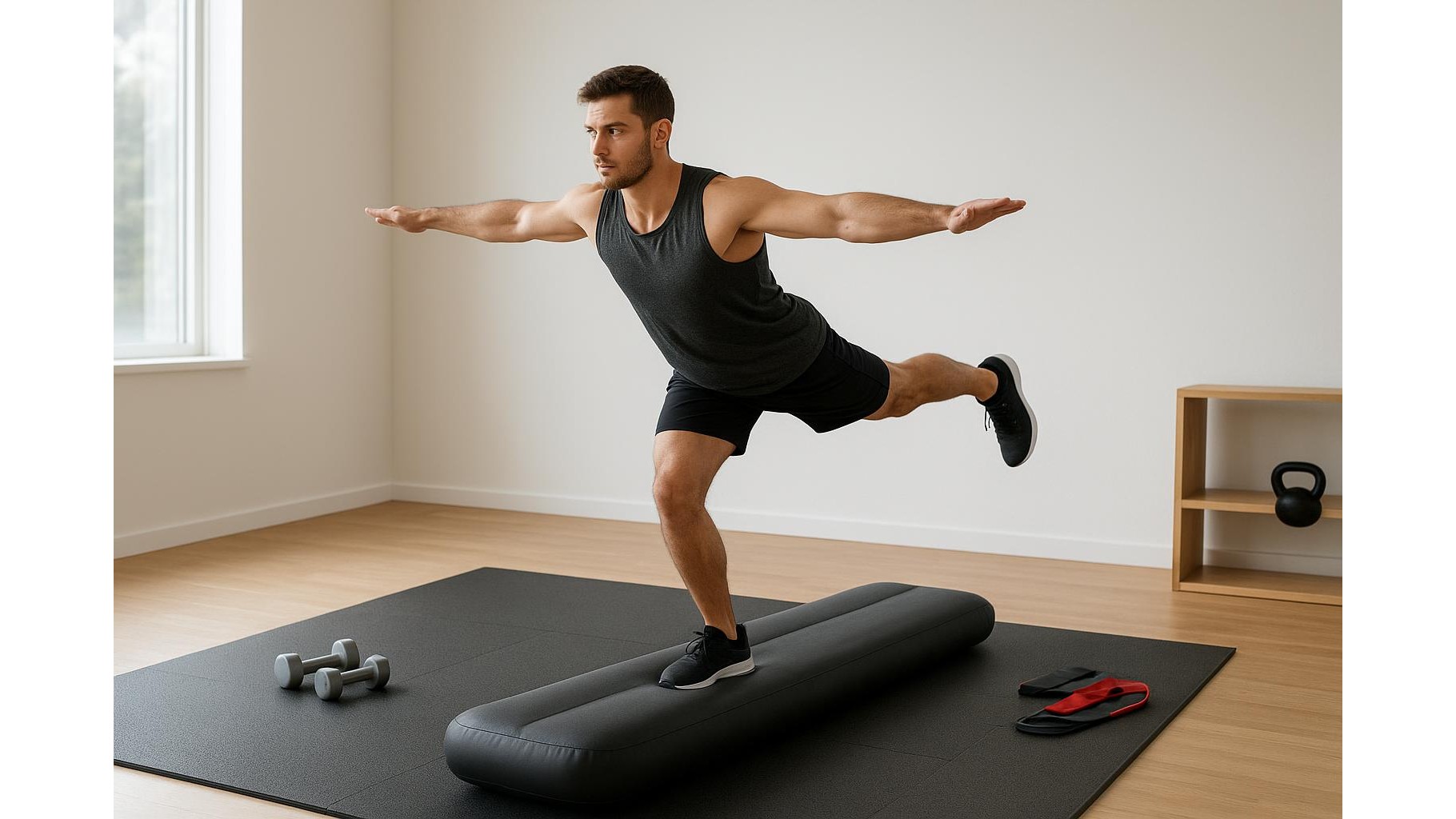
Once you have a stable beam, build a simple routine focused on ankle, core and hip stability. For ankles, use barefoot single-leg stands, slow heel-to-toe walks and small step-downs from the beam to the floor. To challenge the core, add half-kneeling holds, tall kneeling rotations and plank variations with hands or feet on the beam. For the hips, try lateral step-overs, split squats with the front foot on the beam, and single-leg Romanian deadlift patterns, moving slowly to maintain control. Keep reps low at first, focusing on posture and alignment rather than fatigue. Over time, you can add light dumbbells or resistance bands to turn the beam into a platform for integrated strength and stability training.
Safety tips and practical setup in a home gym
To use inflatable balance beams safely at home, always train over a clear, non-slip floor with enough space around you. Place the beam on a rubber gym mat or carpet rather than slick tiles or polished wood. Check inflation and seams before each session, and avoid using sharp shoes or weights with rough edges on the surface. Beginners should stay close to a wall or sturdy support they can lightly touch if they lose balance. Introduce new movements gradually, progressing from two-leg to single-leg tasks only when control is consistent. Deflate the beam slightly for younger or less confident users, and store it dry and away from direct sunlight to preserve material integrity. With these precautions, an inflatable balance beam becomes a safe, versatile tool for daily balance and stability work.
Inflatable balance beams are a compact, flexible solution for bringing balance, core and hip stability training into any home gym. By choosing a model with solid construction, appropriate size and a grippy surface, then fine-tuning pressure levels and following sensible safety guidelines, you can create a highly effective platform for both rehab and performance work. Consistent practice on a well-chosen beam will improve ankle strength, postural control and whole-body coordination, supporting everything from everyday movement to more advanced strength training programmes.