Building a home gym is exciting, until you realise every deadlift drop, treadmill stride and burpee is travelling straight through the floor into your neighbour’s living room. The good news is that you don’t need a full renovation to fix it. With the right combination of soundproof gym flooring, cheap materials and a few smart hacks, you can dramatically cut both noise and vibration so you can lift, jump and sprint without becoming “that neighbour”.
Understand what causes home gym noise
Before you start buying gym mats, it helps to understand why your setup is loud. There are two main issues: impact noise (the bang when a barbell or your feet hit the floor) and structure‑borne vibration (the low rumble that travels through joists and walls). Traditional thin yoga mats barely help with either. To truly soundproof a home gym floor in a flat or upstairs room, you need materials that are thick, dense and slightly soft, so they absorb energy instead of passing it on. That’s why solid platforms, rubber tiles and specialist equipment mats are the cornerstone of a quiet setup.
Build a layered lifting platform that absorbs impact
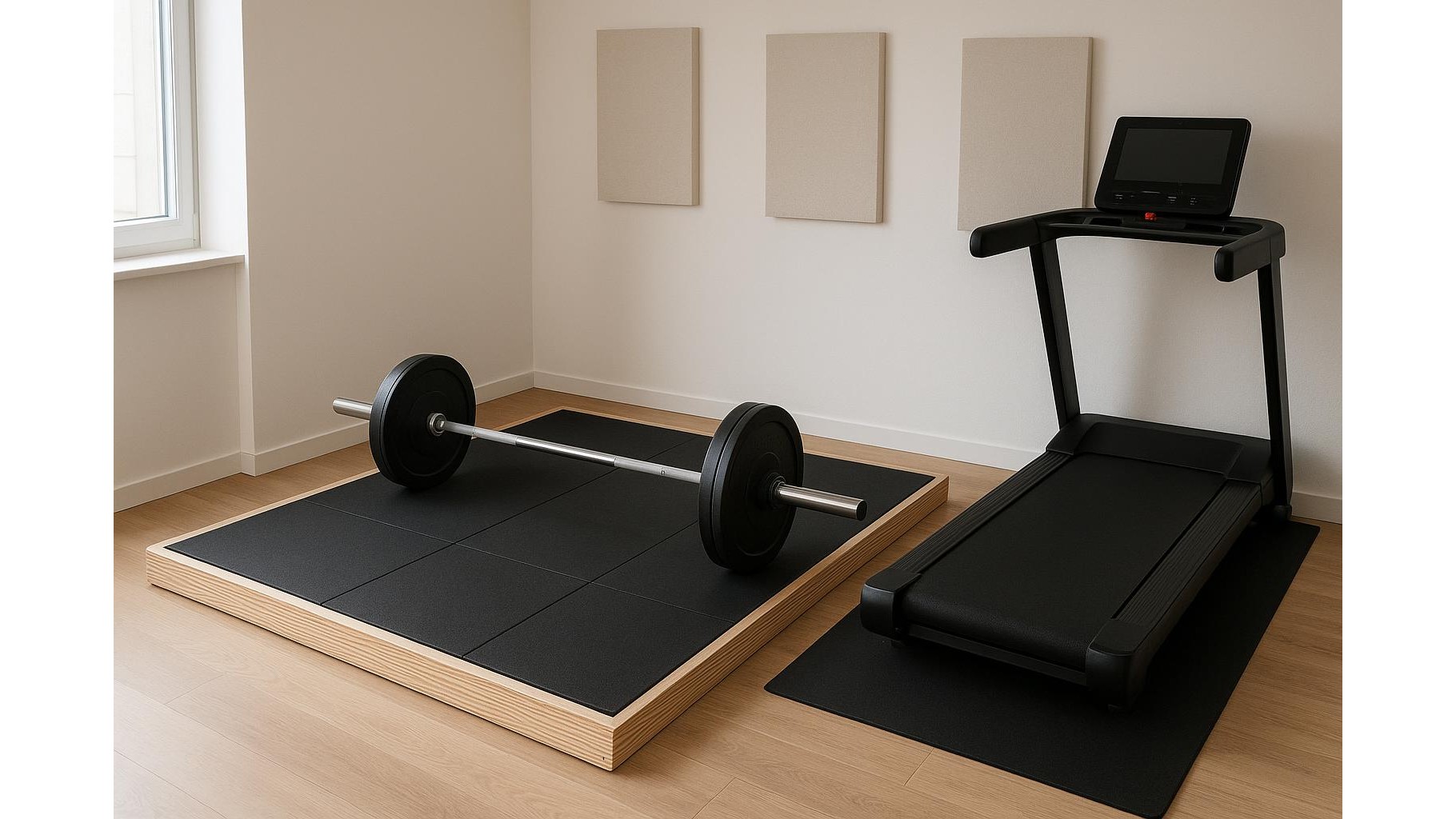
One of the most effective ways to reduce barbell noise is to create a DIY lifting platform that layers rigid boards and softer materials. Start with a base of plywood or OSB that spreads the load over a wider area, then add dense rubber gym tiles on top to cushion the weight. For heavy deadlifts, you can place simple “crash pads” under each plate: think thick foam pads or stacks of rubber tiles where the plates land. This layered system decouples the barbell from the structural floor, so the impact is soaked up rather than transmitted. It also protects your flooring and gives you a consistent lifting surface that feels solid underfoot while still being neighbour‑friendly.
Use thick rubber mats under cardio machines
Cardio kit like treadmills, rowers and air bikes create a constant buzz that can drive people below you crazy. The fix is to put them on a thick, dense vibration‑damping equipment mat. Look for mats that are at least 6–8 mm thick and designed specifically for cardio machines, not flimsy yoga mats. A good mat spreads the weight of the machine, grips the floor so it doesn’t “walk”, and crucially absorbs the small but relentless vibrations from the motor and your footsteps. For extra soundproofing in an upstairs home gym, you can place a second layer of interlocking rubber gym tiles under the main mat to create a double barrier between the machine and the structural floor.
Control bounce and clatter from weights
Aside from direct impact, a lot of noise comes from plates clattering on the floor or each other, and from overly bouncy setups. If you’re lifting in an apartment, consider using rubber bumper plates instead of metal ones; they’re designed to absorb more impact and produce a duller thud rather than a sharp clang. Store your plates on a rack instead of piled on the floor, and put a piece of rubber matting or leftover tile under the rack’s feet to stop vibrations transferring. For dumbbells and kettlebells, designate a specific “landing zone” made from your thickest mats or tiles so that any unintentional drops are cushioned as much as possible.
Simple low‑cost hacks to reduce vibrations
You don’t need a huge budget to make a noticeable difference. Everyday items can act as basic vibration isolators. Place small pieces of dense rubber, old mouse pads or cut‑up stall mats under the legs of benches, squat racks and storage units. Create a cheap deadlift pad by sandwiching scrap carpet between two layers of rubber tile. Even moving your heaviest setup away from shared walls and above internal walls (rather than above a neighbour’s bedroom) can significantly cut the perceived noise. Combine these hacks with a strict “no intentional dropping” rule and you’ll keep your training intense while keeping household tension low.
Train hard without disturbing the peace
With a bit of planning, it’s absolutely possible to run a serious home gym in a flat or upstairs room without annoying anyone. Focus on layering dense, shock‑absorbing materials, isolating noisy equipment from the structural floor, and using smarter weight choices like rubber bumper plates. Add in a few low‑cost hacks and sensible training habits and you can lift heavy, push your conditioning and enjoy your space without constant worry about every rep. Soundproofing your gym isn’t just about being polite to neighbours – it also makes your training area feel more solid, professional and enjoyable to use.