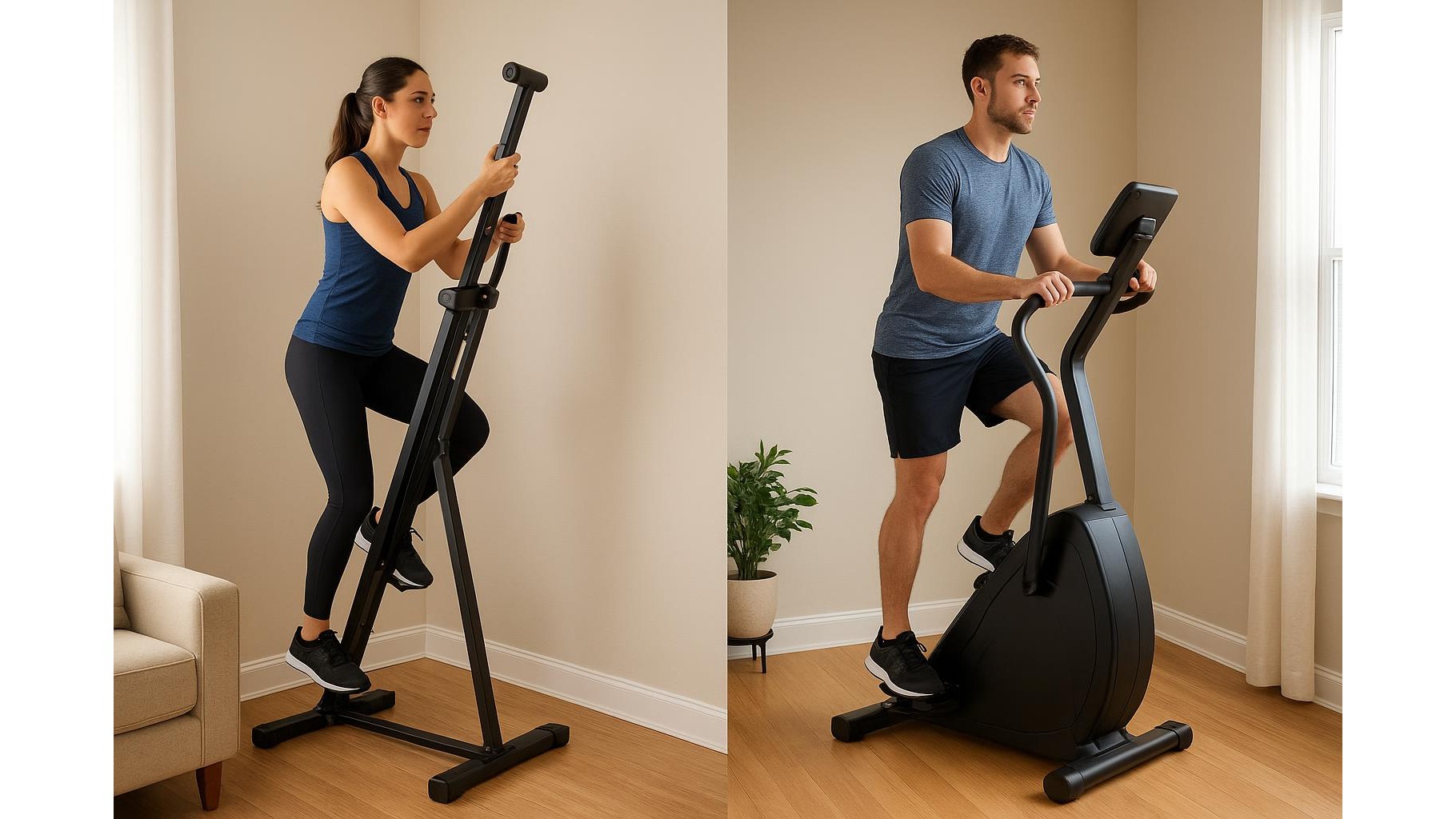
Choosing between a vertical climber and a compact stairmill for your home gym comes down to space, joint comfort and how intense you want your workouts to be. Both offer effective low‑impact cardio, but they feel and behave very differently once they are in your living room. This guide compares footprint, noise, impact on knees and back, workout intensity and key buying features so you can pick the right home cardio climber for your needs.
Footprint and storage in a real home, not a showroom
Vertical climbers are designed to go up rather than out. Most models take up roughly the floor area of a dining chair, with a tall frame that reaches close to the ceiling. Many fold partially to slide against a wall or into a corner, making them ideal for studio flats or multipurpose rooms. In contrast, compact stairmills (sometimes called mini stair steppers or compact stair climbers) sit lower and are often shorter than a treadmill, but they usually cannot fold flat. You’ll need a permanent parking spot and enough clearance behind and above for safe stepping. If you live in a small apartment, the vertical climber usually wins on pure space efficiency, while a compact stairmill suits a dedicated workout corner.
Joint impact, comfort and who each machine suits
Both categories are marketed as low‑impact cardio, but they load your joints in slightly different ways. A vertical climber mimics climbing a ladder, with your arms and legs moving together in a smooth pattern. Because your feet stay on the pedals, impact through the knees and ankles is minimal, though the steep climbing motion can stress the hips and lower back if your core is weak or you rush the movement. Compact stairmills feel closer to a gym stepmill: you step up and down continuously, which can be friendlier for beginners and those with back sensitivity, but may aggravate very sore knees if the step height is too big or if resistance is set too high. For sensitive joints, look for models with adjustable resistance and a clearly stated low‑impact design, and always start with short, easy sessions.
Workout intensity, calories and training goals
A key strength of the vertical climber is its ability to deliver full‑body, high‑intensity workouts in very little time. Because you are pulling with your arms while driving with your legs, heart rate climbs quickly and even short 10–15 minute intervals can rival a longer jog. This makes vertical climbers a strong choice if your priority is maximum calorie burn per minute and time‑efficient sessions. Compact stairmills can also be very intense, particularly models with heavier resistance and deeper steps, but they tend to emphasise the glutes, hamstrings and calves more than the upper body. They shine for people aiming to build leg endurance, improve hill‑running strength or add a steady‑state cardio option that feels safer than sprinting. If you want fast, sweaty intervals, a vertical climber has the edge; for longer, rhythmical climbs, the compact stairmill feels more natural.
Noise levels and neighbour‑friendly training
Noise is critical in flats or shared homes. Most vertical climbers use a simple mechanical rail system with minimal friction, which tends to be very quiet: you mainly hear the swish of the handles and your own breathing. However, a wobbly frame or poor assembly can introduce creaks, so check for a sturdy steel construction and user reviews that mention stability. Compact stairmills vary more: basic hydraulic steppers can be almost silent, while motorised models with moving stairs or heavy fans are louder and can transmit vibration through the floor. Placing any machine on a protective rubber mat helps dampen noise and protect your flooring. If you train early in the morning or late at night and worry about neighbours below, a manual vertical climber or manual hydraulic stairmill is usually the safest bet.
Key features to compare before you buy
Before choosing any home cardio climber, check practical details beyond the marketing claims. Look at the maximum user weight and adjustable height range to ensure the machine suits your body. Consider whether you prefer manual resistance or motorised programs, and whether you want a simple time‑and‑steps display or a more advanced console with interval profiles and heart‑rate tracking. Transport wheels, foldable frames and clear setup instructions make a bigger difference than you might think in small spaces. Also, read verified user feedback on assembly, build quality and after‑sales support, as these strongly influence how long the machine will actually last in your home gym.
Both vertical climbers and compact stairmills can be excellent additions to a home gym if matched to your space, joints and training style. Vertical climbers deliver intense, full‑body workouts in the smallest footprint, while compact stairmills offer a more familiar stepping motion that many beginners find easier to control. By weighing footprint, noise, joint comfort, desired intensity and the key features outlined above, you can choose the climber that keeps you training consistently—and that fits both your living space and your long‑term fitness goals.