A compact barbell can make progressive strength training possible without giving over an entire room to gym equipment. The best choice depends on more than overall length: shaft diameter, sleeve dimensions, weight capacity and storage all affect how well a bar fits your exercises and existing plates. Use the checks below to balance training goals with the space you have, and verify every specification with the manufacturer before buying.
Choose a length that fits your room and lifts
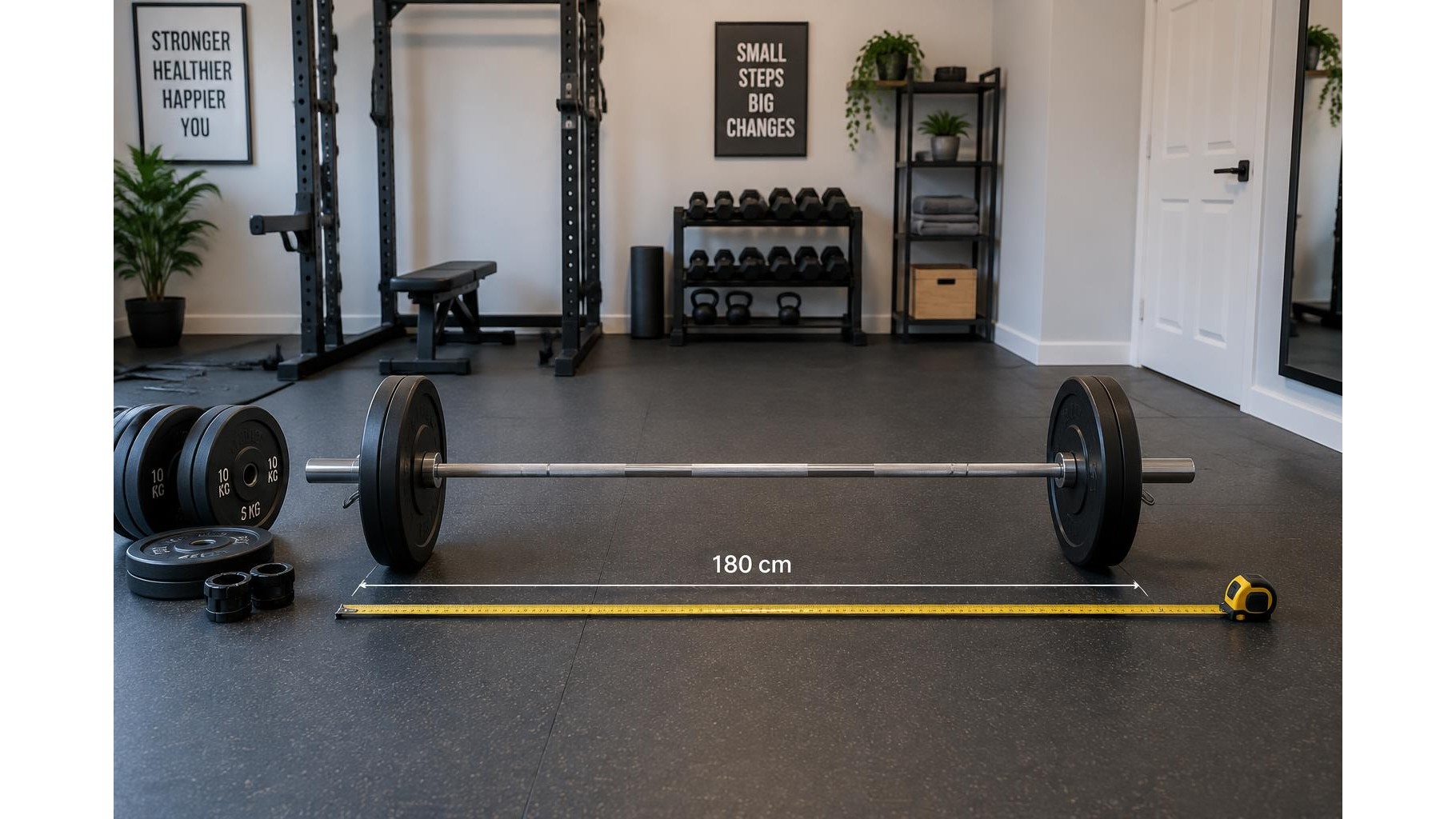
Measure the space where you will train, including room for your hands and plates at either end. A shorter bar is easier to manoeuvre and store, but can restrict grip width and may not sit securely on standard-width racks. Many full-size Olympic bars are around 7 feet long; shorter bars are often roughly 5 or 6 feet, though dimensions vary. For rack-based squats and bench presses, check the bar’s total length and the distance between the rack supports. For floor-based movements in a tight space, a compact model may be more practical. Allow clearance around the bar, not just enough room for it to fit on the floor.
Match shaft diameter to grip and plates
The shaft diameter affects both how the bar feels in your hands and which plates fit its sleeves. A standard bar commonly uses sleeves around 1 inch (25 mm), while Olympic-style bars use sleeves around 2 inches (50 mm). These systems are not interchangeable without suitable adapters, and collars must match the sleeve. Shaft diameter itself is a separate measurement: many Olympic bars have a shaft around 28–29 mm, while some compact bars are thinner. A thinner shaft can feel easier to hold for smaller hands, but the feel and stiffness depend on the bar’s design. Check the manufacturer’s measurements rather than relying on terms such as “standard” or “Olympic” alone.
Check weight capacity against your progression
Look for the stated maximum load capacity, and distinguish it from the bar’s own weight. Capacity claims may be tested or presented differently between manufacturers, so treat them as a limit rather than a target. Choose a bar with a suitable margin above the loads you expect to lift, especially if you plan to progress with squats, deadlifts or presses. Also consider the bar’s construction and intended use: a lightweight training bar may be convenient but unsuitable for heavy loading. If the specifications are unclear, contact the seller before purchasing. Never exceed the stated limit, and use collars to keep plates secured during a set.
Understand sleeve type and rotation
Sleeves hold the plates, and their construction influences loading, compatibility and maintenance. Threaded sleeves typically use spin-lock collars; smooth sleeves may take spring collars or other compatible clips. Some bars have rotating sleeves with bushings or bearings, which can help plates turn during dynamic lifts. For controlled home strength work, smooth rotation may be less important than secure collars and robust construction. Confirm the sleeve diameter, usable sleeve length and collar type together. Usable length determines how many plates can fit, while the sleeve diameter determines whether your existing plates will slide on. Do not assume that a bar described as compact uses a particular sleeve standard.
Evaluate grip, finish and safe storage
Knurling provides grip, but its depth and pattern vary. If possible, inspect the bar in person or check detailed specifications and user feedback for comments on comfort. A centre knurl can help keep the bar positioned for squats, although it may feel rough against the skin. Consider the finish too: coatings can affect feel and corrosion resistance, and any bar benefits from being kept dry. For a small gym, plan storage before buying. A wall-mounted holder or stable horizontal rack can keep the bar off walkways; store it where it cannot roll, fall, or be reached by children. Use only storage hardware rated for the bar’s loaded or unloaded weight as appropriate.
In short, choose a bar that fits your rack and training area, matches your plates and collars, and has a clearly stated capacity suited to your progression. Compare length, shaft diameter, sleeve type, grip and storage as one package—not as isolated features. A well-matched compact bar can support a versatile home routine while keeping your training space organised and safe.