Choosing between a recumbent bike and an upright exercise bike for home use is not only a matter of taste. Your posture, joint history, available space and training goals all play a huge role in which style will actually work for your body and keep you consistent. Understanding how each design loads your muscles and joints helps you avoid buyer’s remorse and build a home cardio setup you will genuinely use.
Posture and comfort: how each bike feels to ride
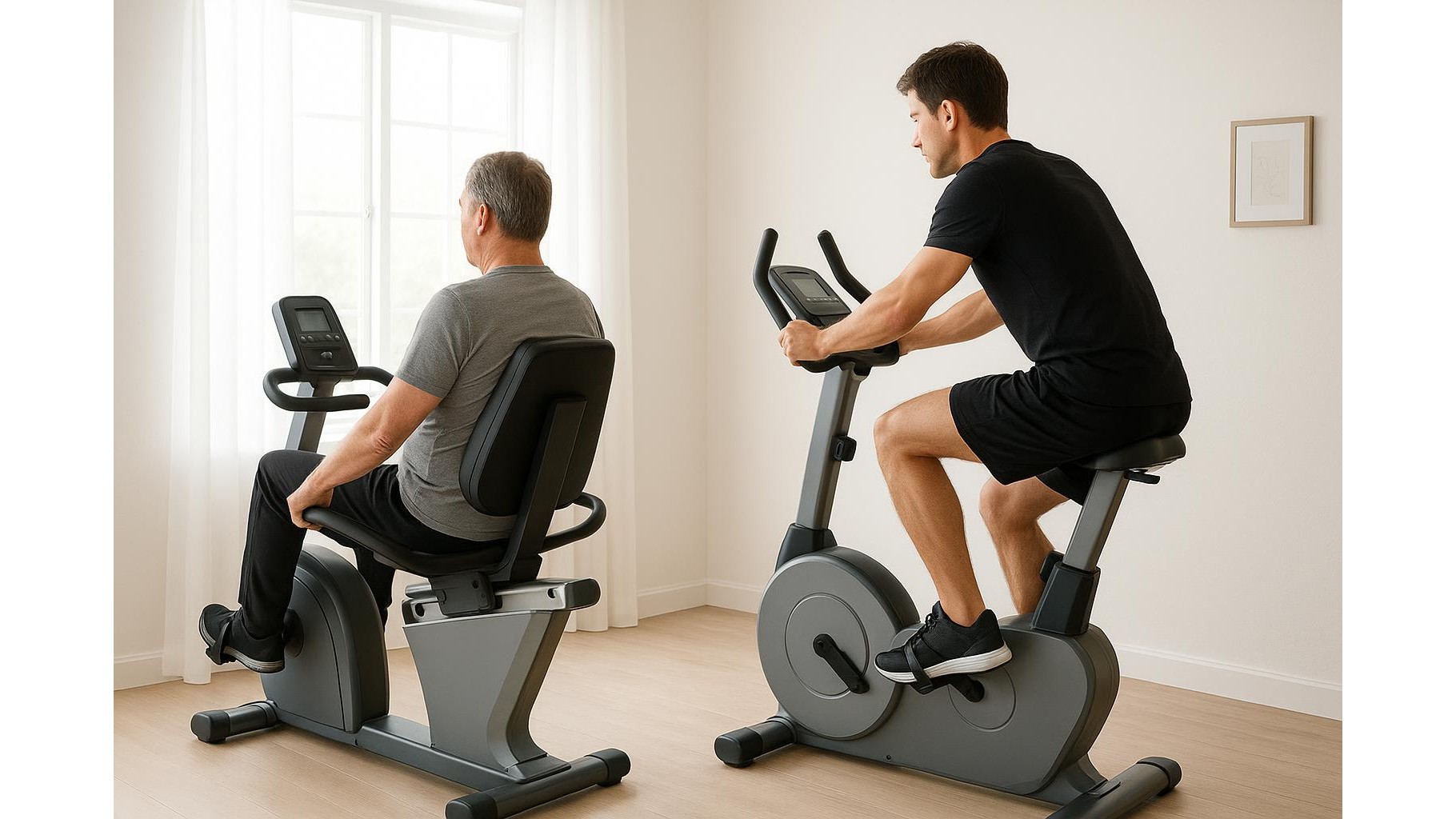
A recumbent bike places you in a reclined position, with a wider seat and a supportive backrest. This spreads your weight across a larger surface, reducing pressure on the sit bones and lower back. Many users with chronic lumbar pain find this position far more sustainable for longer rides. By contrast, an upright bike mimics outdoor cycling: you sit on a smaller saddle with your torso leaning slightly forward to reach the handlebars. This can engage your core more, but it may also increase pressure on the wrists, neck and perineal area, especially if the bike is poorly adjusted or you are not used to a traditional cycling posture.
Joint stress and injury history: protecting knees, hips and back
If you have a history of knee, hip or lower-back issues, the geometry of the bike matters. Recumbent models keep your feet forward and your back supported, which can help reduce spinal compression and make it easier to maintain a neutral lumbar curve. The pedalling motion is smoother for some people with knee pain, provided the seat distance is correctly set so you avoid overextending the joint. Upright bikes can be perfectly safe too, but they load the knees and hips in a more vertical alignment, closer to outdoor cycling. For riders with tight hip flexors or patellofemoral pain, this position can feel more demanding. The key advantage of recumbent designs is often psychological as well: they feel less intimidating, which encourages beginners or older users to ride longer with less discomfort.
Space, footprint and noise in a real home environment
When you bring cardio equipment into a flat or small house, footprint and storage are crucial. Recumbent bikes are typically longer due to the extended frame that supports the reclined seat; even compact designs can claim more floor space and are not usually foldable. They are, however, very stable and sit low, which can feel safer for users with balance concerns. Upright bikes generally have a much smaller footprint and many home models are built to be foldable or easy to wheel into a corner after use. If you need to keep your living room clear between workouts, an upright bike usually fits better. Noise levels depend more on the resistance system (magnetic systems are quieter than friction), but in practice both types can be near-silent if you choose a magnetic resistance home model.
Type of workout: gentle endurance vs intense intervals
Think about your primary fitness goals. Recumbent bikes excel at low-impact, steady-state cardio: longer sessions at moderate intensity where comfort and joint friendliness matter most. They are ideal for weight management, active recovery days, and for users returning to exercise after a layoff or injury. Upright bikes tend to be better suited to high-intensity interval training (HIIT), cadence drills and more performance-oriented sessions because you can easily increase cadence, rise slightly off the saddle, and recruit more of the posterior chain. If you already enjoy outdoor cycling or spin classes, an upright bike will feel more familiar and transfer better to road or gravel riding. Both styles can improve cardiovascular health, but they deliver a different training “flavour” that you should match to your personal objectives.
Who should choose which: matching bike style to your profile
For beginners, seniors, people with obesity or anyone dealing with back or joint sensitivity, a recumbent exercise bike is often the smarter starting point. The accessible step-through frame and supportive seat reduce barriers to entry and make it easier to accumulate more minutes of movement. For relatively healthy, active users with limited space who want more intense, athletic-style sessions, an upright bike is usually the better fit. Also consider who else will use the bike: if multiple family members with different heights and fitness levels will ride, an upright model with quick-adjust seat and handlebar posts may be more convenient. In the end, the “best” style is the one that matches your body, your living space and the type of riding you are realistically excited to do several times per week.
Choosing between a recumbent and an upright bike for home use is less about which design is superior and more about alignment with your needs. Recumbent bikes prioritise comfort, support and joint friendliness, making them ideal for gentle, longer cardio sessions. Upright bikes favour a compact footprint and a more athletic riding position, perfect for intense intervals and performance-oriented training. Evaluate your posture tolerance, injury history, available space and motivation style: the right choice is the bike that lets you train consistently, comfortably and safely in your home gym.