A practical route to indoor cardio
A compact step machine can make it easier to build a regular cardio habit without needing a large workout area. Its repeated stepping action is generally low impact compared with running, though the effort can still rise quickly. Start at a pace that lets you speak in short sentences, then progress gradually by changing one training variable at a time. A steady routine matters more than an exhausting first session.
Set up a safe, workable space
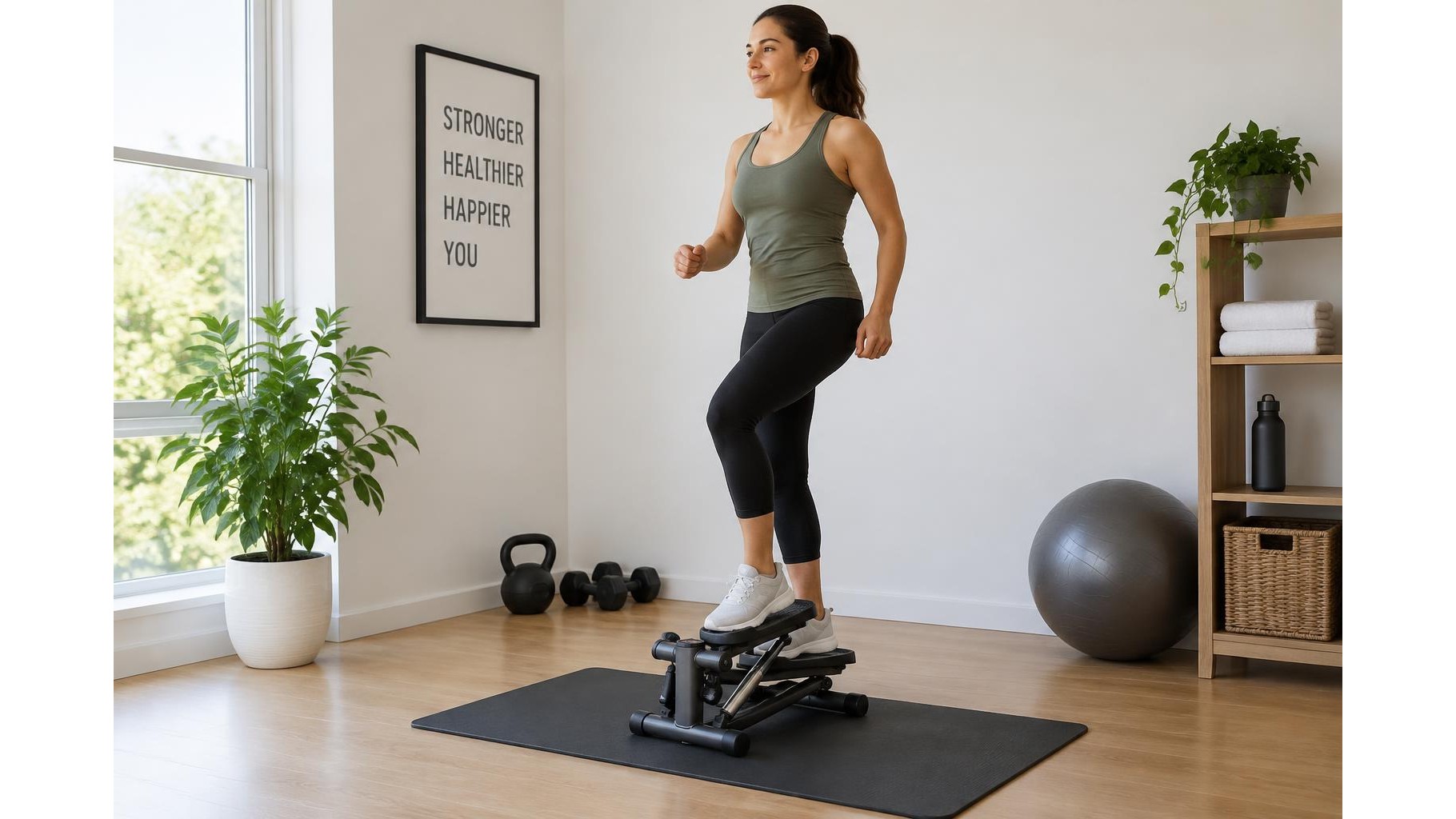
Place the machine on a firm, level, non-slip surface and leave enough clearance around it to step off safely. Check the manufacturer’s instructions, including any weight limits and guidance on use. Wear supportive shoes and keep water within reach. If the machine has resistance settings or support handles, use them as directed; avoid leaning heavily on handles, which can change your posture and reduce the work done by your legs.
Build a beginner starting point
If you are new to exercise, begin with a short warm-up: march gently in place for three to five minutes, then step at an easy pace for about five minutes. Step off and rest if needed. Repeat once only if you feel comfortable. Aim for two or three sessions in the first week, with a rest day between sessions. A useful effort guide is the talk test: you should be able to speak, even if singing would feel difficult.
Progress duration before speed
When the initial sessions feel manageable and you recover well, add a few minutes to one or more workouts. For example, build from 5–10 minutes of stepping to 12–15 minutes over several weeks. Keep the same comfortable cadence while duration increases. Later, extend toward 20–25 minutes if that suits your fitness and schedule. Progress is individual: repeat a week or reduce the time if fatigue, soreness or breathlessness makes the plan hard to sustain.
Use cadence and effort with care
Once you can complete your target duration comfortably, experiment with small changes in cadence. Try one minute at a slightly brisker rhythm followed by two minutes easy, repeated a few times. Keep the faster intervals controlled rather than all-out. Use a perceived-effort scale from 1 to 10: most beginner work can stay around 3–5, with brief moderate intervals around 5–6. Change either cadence or interval count in a session, not both at once.
Maintain posture and consistency
Stand tall, look forward and keep your shoulders relaxed. Place each foot securely on the pedals and use a smooth, even rhythm instead of bouncing or locking your knees. Keep steps within a comfortable range and stop if you feel pain, dizziness or unusual shortness of breath. To make the plan fit a small home, schedule brief sessions, store the machine where it will not obstruct walkways, and track minutes and effort in a simple log.
Make gradual progress your goal
A progressive home cardio plan does not need complicated equipment or long workouts. Start with easy, repeatable sessions, add duration first, then introduce modest cadence changes while keeping effort controlled. Combine good posture, safe setup and recovery days to make your compact step-machine routine manageable over time. If you have a health condition or are unsure how to begin, seek guidance from a qualified healthcare professional.