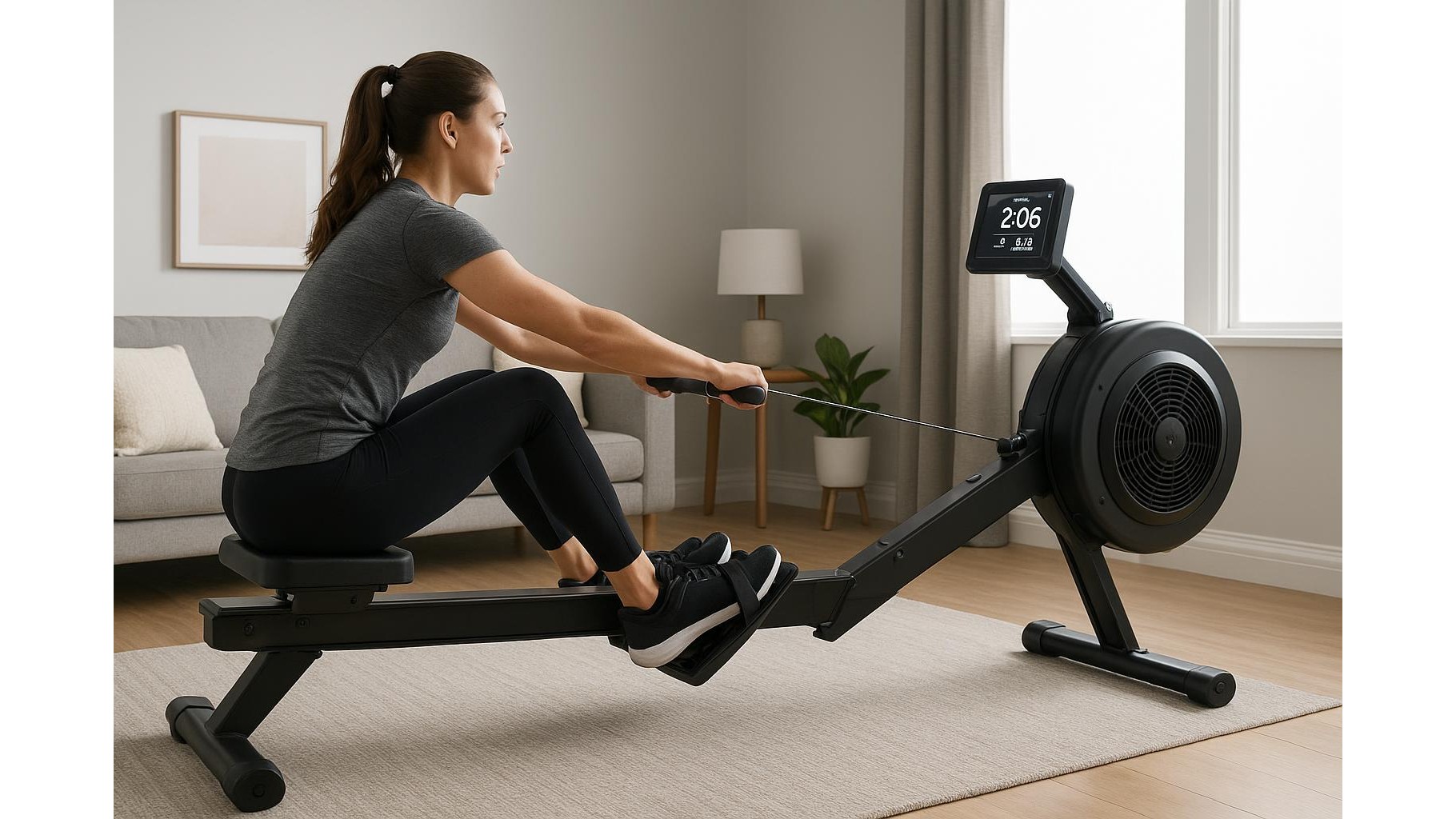
Compact air rowers are perfect if you love short, intense sprint intervals but don’t have room for a full commercial setup. The right machine can deliver powerful resistance, smooth drive and accurate data while still folding or sliding neatly against a wall. This guide explains how to pick an air rower that’s truly sprint‑ready in a small home, focusing on flywheel design, damper settings, frame length, noise control and console features that really matter.
Why air rowers suit home sprint training
For high‑intensity interval training (HIIT) at home, air rowers are a strong choice because their resistance automatically scales with your effort: the harder you pull, the more drag the flywheel generates. This makes it easy to perform short, all‑out efforts followed by light recovery rows without touching any settings. Compact air rowers also tend to have a smaller footprint than long water or magnetic rowers, so they’re easier to fit in spare rooms or studio flats. When choosing, look for a robust frame and a chain or strong strap drive that can tolerate repeated max‑effort sprints without loosening or flexing.
Flywheel design and damper settings in tight spaces
The flywheel and damper are the heart of any air rower, especially for all‑out sprints. A well‑designed flywheel should spin freely and respond instantly to power, with a housing that doesn’t rattle when you accelerate hard. Even on compact models, a multi‑level damper lets you adjust how heavy each stroke feels: lower settings mimic rowing on water and suit longer efforts, while higher settings feel heavier and are better for short bursts. In small rooms, you may be closer to the flywheel, so check that the housing has decent ventilation and that airflow isn’t blowing straight into a wall, which can increase noise and turbulence.
Frame length, footprint and storage for small homes
When space is limited, frame length and storage options are critical. Look for a compact air rower with a slightly shorter rail that still supports a full leg drive if you are of average height, or a folding design that hinges at the middle so the footprint shrinks dramatically between sessions. Some rowers stand vertically, using floor wheels to roll into a corner or behind a door. Check the usable user height range rather than only total dimensions: a too‑short rail can restrict hip and knee extension during maximal sprints, compromising both performance and comfort. Anti‑slip rubber feet are another plus, preventing the machine from creeping forward during aggressive intervals.
Noise control and drive feel during all‑out efforts
Air rowers are naturally louder than pure magnetic machines, which matters in flats and shared homes. For home sprint sessions, choose a rower with a well‑balanced flywheel and good bearings, as these reduce vibration and the harsh “whine” you might get at high stroke rates. A chain or high‑quality belt drive should feel smooth under load, without jerky feedback when you explode off the catch. To keep noise manageable, place the rower on a thick fitness mat to dampen resonance through hard floors, and avoid boxing the fan into a tight alcove where sound can echo. Some compact air rowers combine air and magnetic resistance, letting you dial in tension while keeping fan speed – and noise – a bit lower.
Console features that matter for interval training
For sprint intervals, the console is more than decoration: it’s your performance dashboard. Prioritise a monitor that shows pace, stroke rate, distance, power (watts) and calories in real time so you can repeat efforts consistently. Interval presets or custom work/rest programming save time, letting you build 20:10 or 30:30 protocols without constant button‑pressing. In smaller spaces, a clear, high‑contrast display is vital because you may be slightly closer to the screen. Bluetooth connectivity is a bonus if you want to sync workouts with fitness apps or a heart‑rate strap, but don’t get distracted by unnecessary extras: for compact home setups, reliability, responsiveness and easy‑to‑read metrics matter more than large, power‑hungry screens.
Putting it all together for a powerful, compact setup
Choosing the right compact air rower for home sprints comes down to balancing power, size and usability. Focus on a responsive flywheel and useful damper range, a frame that fits your body while folding away cleanly, noise‑friendly design and a console built for intervals rather than gimmicks. Combine your rower with a basic mat and a simple timer, and you can run demanding sprint sessions in even the smallest apartment. With smart selection and layout, you won’t need to sacrifice intensity just because you’re short on space.