Support should suit the session, not just the label
Choosing a workout top for a larger bust is about more than finding a size that fits. The right design should limit uncomfortable movement while letting you breathe, reach and move freely. At home, you may switch from strength work to intervals or floor-based mobility in one session, so consider the activities you actually do. Think about bounce control, coverage, strap comfort and fabric together, then test how the top behaves in motion. A size label is only a starting point: fit and support can vary between styles and brands.
Match support level to your workout
For walking, stretching and gentle mobility, a comfortable low- or medium-support top may be enough. Strength sessions often involve bending, pressing and overhead reaches, so look for a secure fit that stays in place without restricting your breathing. Running, jumping and fast circuits usually call for high-impact support and stronger bounce control. If your routine includes several types of exercise, choose for its most vigorous movements, or use a separate top for high-impact training. Support should feel steady, not painfully tight.
Check straps, band and adjustability
Wide straps can spread pressure more comfortably than narrow ones, particularly during longer sessions. Adjustable straps make it easier to fine-tune the fit, while a racerback or cross-back design may help keep straps from slipping during reaches and presses. Check that straps do not dig into your shoulders or slide off when you move. The underband should sit level around your torso and feel secure without pinching, rolling or making it hard to take a full breath. If the style has a back closure, make sure it stays comfortable when you lie on the floor.
Choose coverage and construction thoughtfully
Coverage is personal, but a stable neckline and enough fabric at the sides can help you feel secure through bends, twists and overhead movements. A shaped or encapsulated design supports each breast separately; compression styles hold the bust closer to the chest. Some tops combine both approaches. Seams, panels and inner linings can add structure, but they should not rub or press uncomfortably. Look closely at the edges around the neckline and underarm: gaping, spillage or chafing during ordinary movement can signal that a different cut may work better.
Look for breathable, resilient fabric
Workout fabrics should feel comfortable against the skin and recover their shape after stretching. Moisture-wicking, quick-drying material can be useful for sweaty cardio, while a soft, flexible fabric may feel better for mobility or longer strength sessions. Fabric thickness and lining influence coverage, but thicker does not automatically mean more supportive. Check care instructions and avoid relying on a top that has become stretched, loose or less secure after repeated washing. If possible, try it on and move around before removing tags, following the retailer’s return terms.
Test fit through real movement
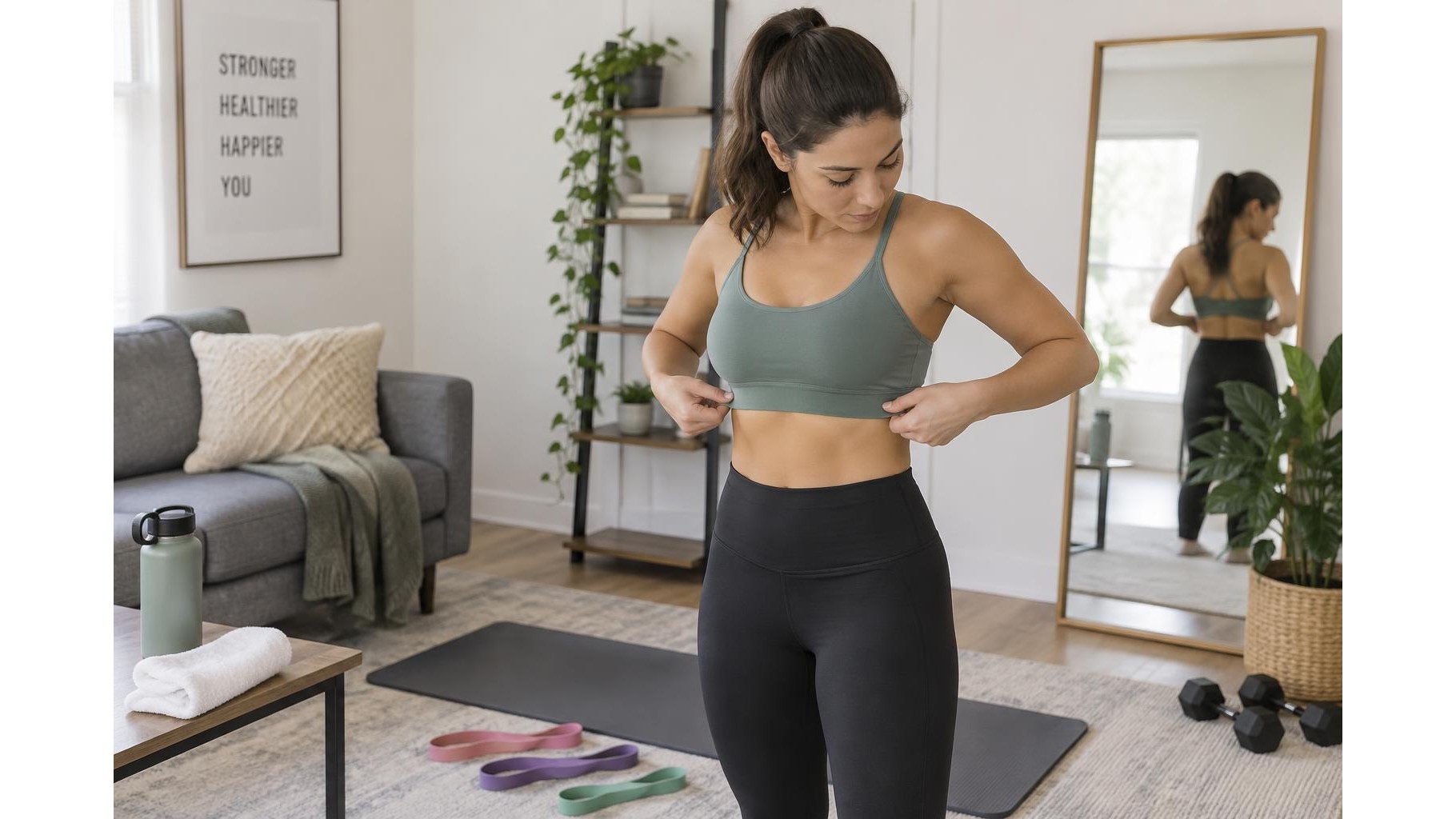
Before a workout, try a few gentle hops, arm circles, forward folds, overhead reaches and a plank. Notice whether the bust feels controlled and whether the band, straps or neckline shift. There should be no sharp pressure, rubbing or need to keep adjusting the top. Take a deep breath and rotate your torso to check that support does not restrict movement. A mirror can help you spot gaps or rolling, but comfort and stability matter most. Reassess during a longer session, since heat and repeated movement can change how a top feels.
Make comfort your final measure
The best supportive top is the one that fits your body and your training, rather than the one with the most impressive label. Match support to impact, look for secure straps and a stable band, and choose coverage and fabric that feel good through your full range of motion. Test the fit with movements from your real routine and replace a top when its support wears out. A thoughtful fit check can make home workouts feel more comfortable, confident and focused.