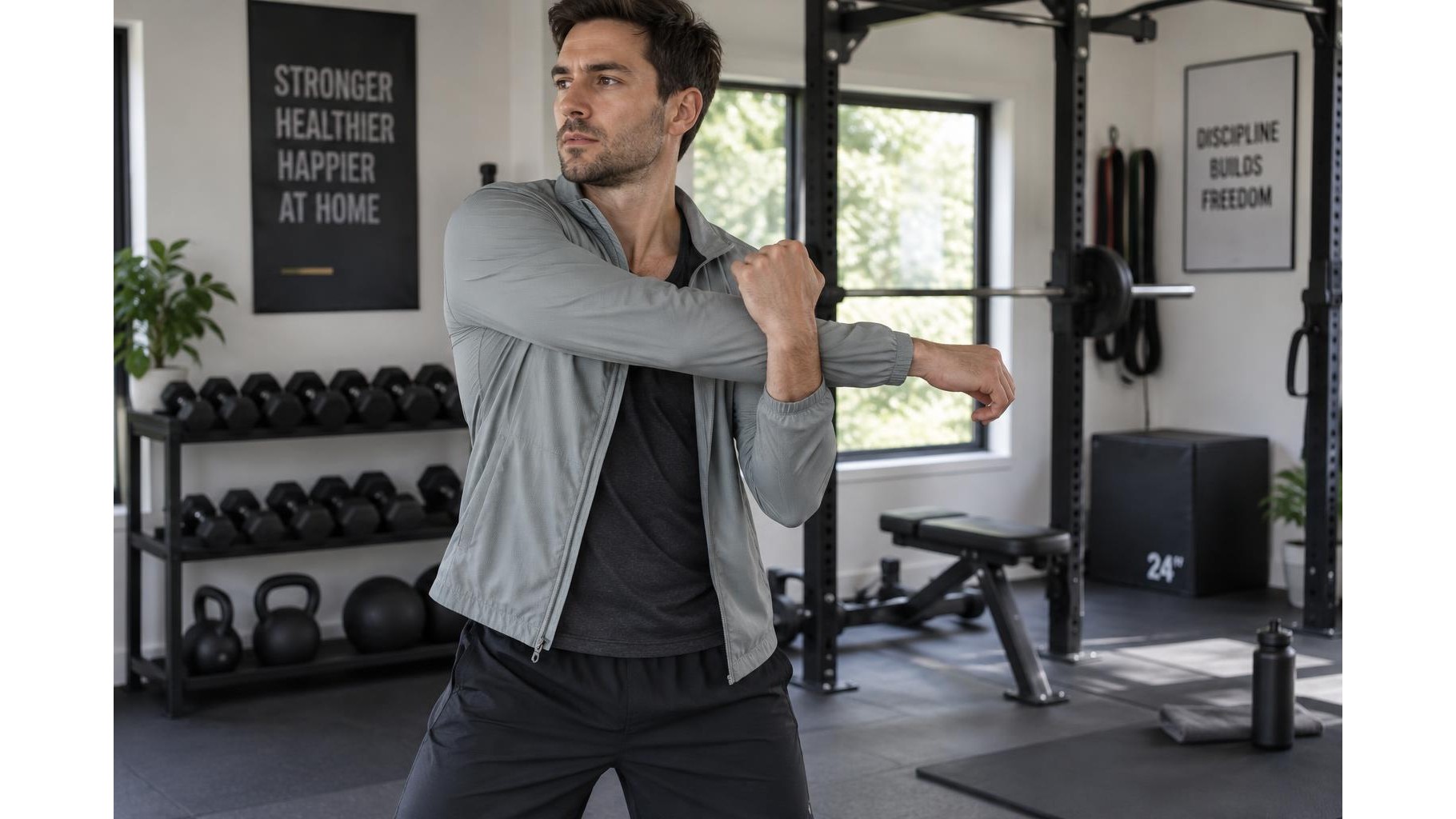
A workout jacket can make warm-ups more comfortable and help you stay warm in a chilly home gym. The right layer should not feel like a heavy outdoor coat: it needs to move with you, let excess heat escape and come off easily when your session gets demanding. Focus on fabric weight, ventilation, fit, useful details and care rather than choosing by appearance alone.
Choose a light, breathable fabric
For indoor training, look for a lightweight technical fabric that feels comfortable over a T-shirt and dries reasonably quickly. Polyester and nylon blends are common because they are light and can wick moisture away from the skin; a small amount of stretch can improve comfort during dynamic movements. A thin knit or light woven fabric is generally more versatile than a thick, insulated jacket. If your gym is especially cold, a slightly warmer mid-layer may help during warm-ups, but it should not trap so much heat that you overheat once you start working. Consider the room temperature and how quickly you tend to warm up before choosing fabric weight.
Look for practical ventilation
Heat builds quickly during intervals, circuits and strength sessions, so breathability matters as much as warmth. Mesh panels, vented zones or a breathable back can help release heat, while a full-length front zip makes it easy to adjust coverage between exercises. A two-way zip or a zip that opens smoothly can be useful when you want to cool down without taking the jacket off completely. Avoid relying on a water-resistant coating for indoor use unless you have a particular reason: coatings may reduce airflow. The aim is a layer that feels comfortable at the start and does not become clammy as effort rises.
Check the fit through every movement
A good training fit leaves room for a base layer without hanging loosely or catching on equipment. Raise your arms overhead, reach across your body and perform a squat or lunge when trying a jacket on. The hem should stay in place, sleeves should not pull tight at the shoulders, and cuffs should not slide over your hands. A slightly shaped cut can reduce excess fabric, but it should never restrict breathing or shoulder movement. If you train in more than one layer, check the fit over the clothing you normally wear. A comfortable jacket should support movement rather than remind you that it is there.
Prioritise useful pockets and simple details
Pockets are handy for a locker key or a small phone, but they should sit securely and avoid bouncing during cardio. Choose zipped pockets if you plan to move briskly, and check that the zip pull does not rub against your hands or equipment. A chin guard at the top of the main zip can prevent irritation, while flat seams may feel more comfortable during repeated arm movements. Reflective details are less important for indoor sessions, but can be useful if you also walk or run outdoors. Keep the design simple: extra features add value only when they suit your routine.
Wash it carefully and assess versatility
Follow the care label to preserve stretch, shape and moisture management. In general, wash technical clothing with similar fabrics, use a mild detergent and avoid fabric softener if the garment instructions advise against it, as residue can affect performance. Air-drying is often gentler than high heat. Before buying, consider whether the jacket will also work for travel to the gym, outdoor warm-ups or relaxed everyday wear; a versatile layer is more likely to earn regular use. Check the return policy and sizing information, since fit can vary between cuts and manufacturers.
In short, choose a light, breathable workout jacket with enough stretch for unrestricted movement, ventilation you can adjust and pockets that suit your session. Match warmth to your gym’s temperature, test the fit through real movements and follow the care instructions. The best indoor training layer is one you can wear comfortably for warm-ups and remove or vent easily as your effort increases.