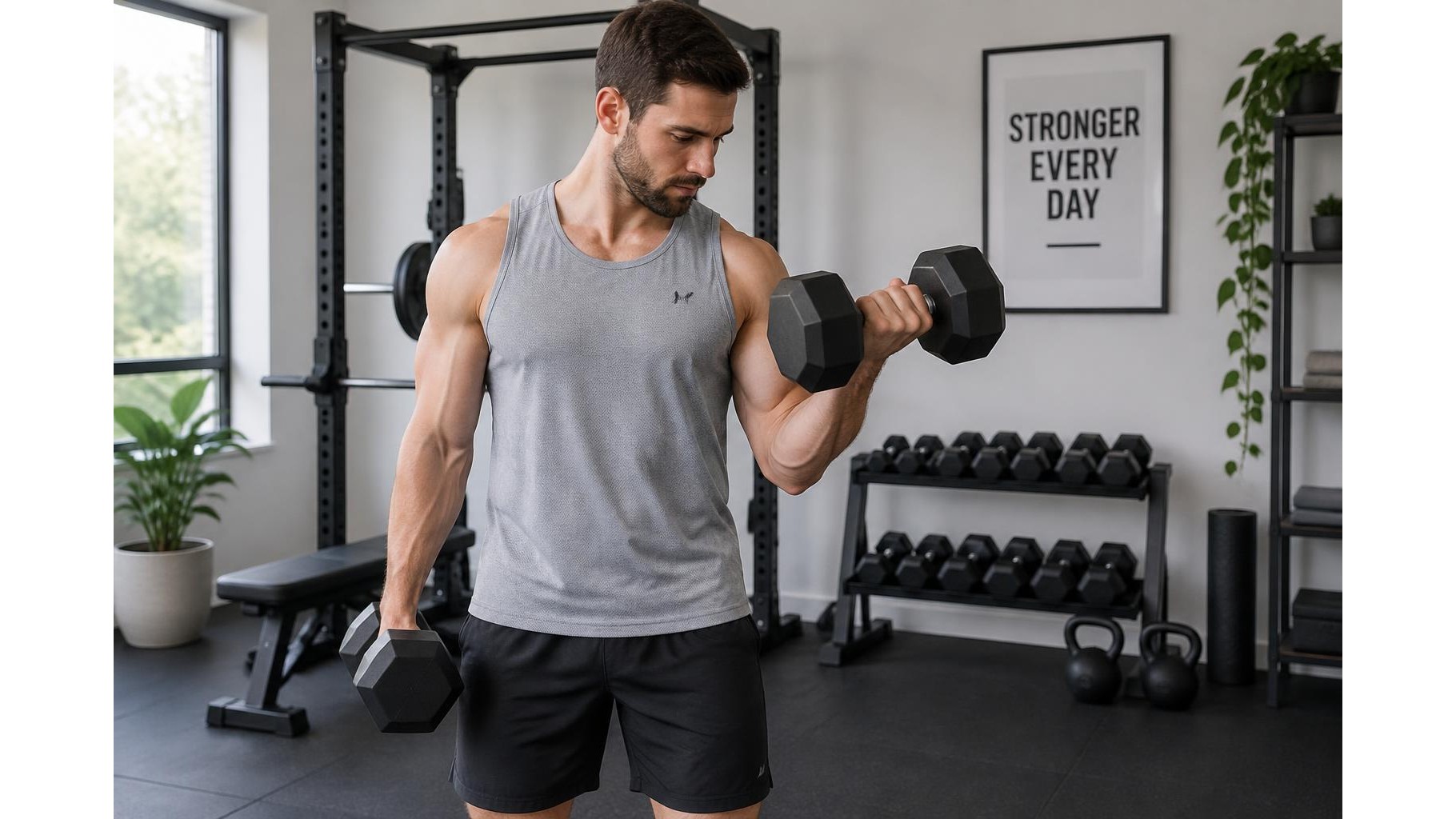
A technical workout vest should feel almost unnoticeable while you lift, reach and move through circuits. The right choice depends on more than appearance: fit, stretch, ventilation, pocket placement and fabric durability all affect comfort and freedom of movement. Use this checklist to assess how a vest is likely to perform during your home strength sessions, whether you are working with dumbbells, resistance bands or bodyweight exercises.
Check the fit in key positions
Start with a fit that follows your body without clinging tightly or restricting your breathing. The shoulder seams should sit near the edge of your shoulders, while the armholes should allow you to raise your arms without the fabric pulling across your chest. A neckline that feels comfortable during a standing check may rub or gape when you bend, press or lie on a mat, so test those positions too. Avoid excess fabric around the waist: it can bunch under a lifting belt or get in the way during floor work. If you are between sizes, compare the garment’s measurements with a vest you already find comfortable rather than relying on the size label alone.
Look for useful stretch and recovery
Stretch helps a vest move with you during overhead presses, rows and fast transitions. Check whether the fabric has comfortable give across the chest and back, and whether seams stay flat as you extend your arms. A little elasticity can improve mobility, but the material should return to shape rather than sagging after repeated wear. Consider the exercise mix: a close, stable fit may suit controlled lifting, while dynamic circuits call for easy movement through the shoulders and torso. Try a few repetitions of your usual movements when assessing fit, and notice any pulling, riding up or twisting.
Assess ventilation for your workout space
Home gyms vary from cool spare rooms to warm, poorly ventilated spaces. Lightweight, moisture-managing fabric and breathable panels can help reduce the clammy feeling that builds during circuits. Look for mesh or open-knit zones where you tend to heat up, such as the upper back or sides, but check that these panels do not compromise coverage or feel rough against the skin. Fabric that dries quickly is useful if you train often or wash your kit between sessions. Remember that “breathable” does not guarantee comfort in every room: consider your temperature, workout intensity and how long you typically train.
Make pocket placement work for movement
Pockets can be useful for a key, card or small training accessory, but they should not dictate how the vest moves. For lifting and floor exercises, bulky or low-hanging pockets may bounce, press into your body or catch on equipment. Check that pocket openings stay secure when you bend, twist and reach, and that any contents do not swing during circuits. If you use a phone while training, a pocket that holds it firmly may be practical for music or timers, but avoid carrying hard items during exercises where they could press against you. For many sessions, a simple vest with minimal storage is the less distracting option.
Judge fabric durability and construction
Repeated workouts and regular laundering can expose weak fabric, loose stitching and stretched-out necklines. Inspect the seams around the shoulders and armholes, where movement creates frequent tension, and check that hems lie flat without scratchy edges. A denser knit may offer greater resilience, while a lighter fabric can feel cooler; the best balance depends on your training and care habits. Follow the washing instructions, and avoid assuming that a technical finish will last indefinitely. If you train several times a week, consider whether the vest’s construction feels robust enough for frequent washing and whether the fabric seems likely to retain its shape.
Before choosing, run through a simple checklist: comfortable fit, unrestricted stretch, suitable ventilation, unobtrusive pockets and dependable construction. Test the vest in the positions you actually train in, not just while standing still. The best technical workout vest is the one that stays comfortable and out of the way throughout your strength session, with fabric and features suited to your room, routine and washing frequency.