Introduction
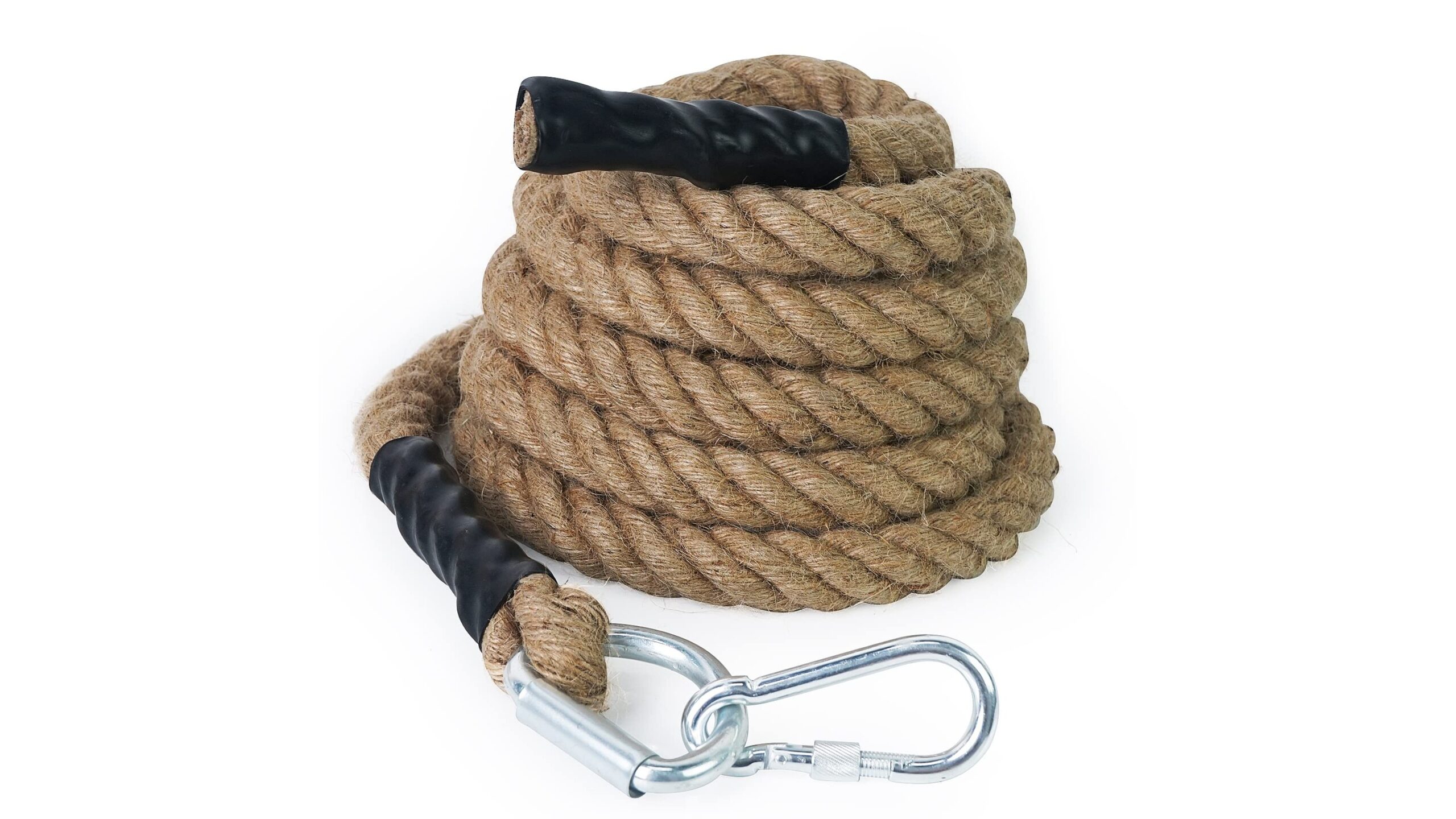
A climbing rope can add demanding grip, pulling and core work to a home gym, but choosing one is about more than finding a rope that looks sturdy. Length, diameter, construction and attachment all affect how it performs—and whether it suits your space. Most importantly, a rope sold for fitness is not automatically suitable for climbing or supporting a person’s full body weight. Match the rope and installation to the intended exercise, follow the manufacturer’s instructions and make safety checks part of every session.
Choose a length that fits your space
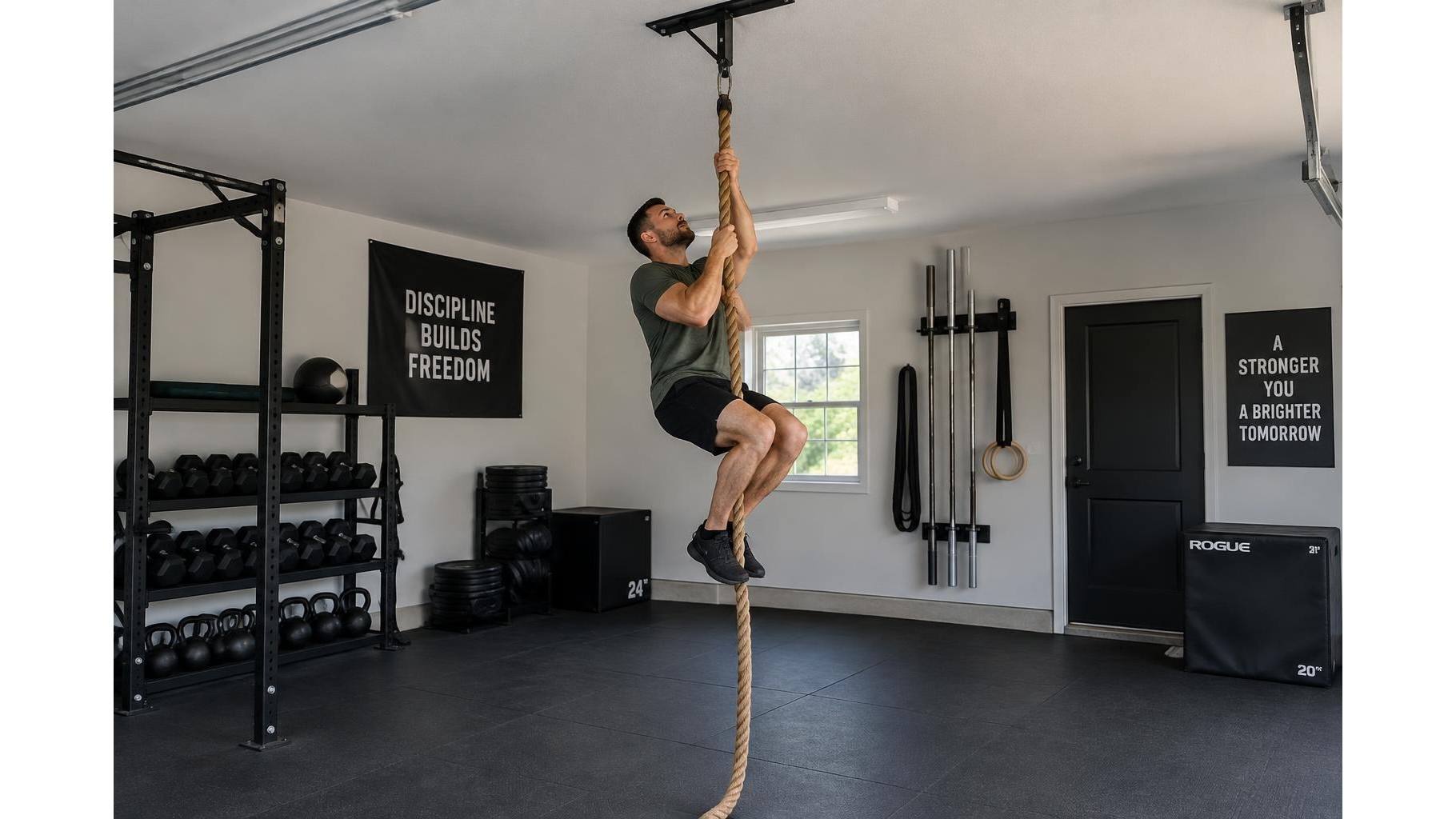
Measure from the planned anchor point to the floor, then allow extra length for the chosen termination and for the rope to sit safely above the ground. A rope that is too short can limit exercises; excessive spare length can bunch underfoot or create trip hazards. For rope climbs, consider the height you can reach and whether you have enough clear floor space to mount and dismount. For seated pulls or waves, a shorter rope may be easier to control. Do not guess: measure the full route, including any attachment hardware, and check the rope’s specified usable length before buying.
Pick a manageable diameter
Diameter changes grip difficulty and comfort. Thicker ropes demand more hand strength and may be challenging for beginners or people with smaller hands. A slimmer rope can feel easier to hold, but may become uncomfortable under high loads or repeated friction. If possible, compare the rope in person or check the manufacturer’s grip and intended-use guidance. Progress by changing one factor at a time: begin with controlled holds or low-volume pulls, then gradually increase repetitions, time or difficulty. Avoid adding weight or attempting fast climbs before you can maintain a secure grip and controlled descent.
Understand material and construction
Fitness ropes are commonly made from synthetic fibres, natural fibres or mixed constructions. Synthetic materials may resist moisture and wear differently from natural-fibre options, while natural fibres can offer a familiar, textured grip. Neither material is universally best: check the product’s stated use, indoor or outdoor suitability, abrasion resistance and cleaning instructions. Inspect the rope’s weave or cover for loose strands, cuts, flattened areas and signs of heat or chemical damage. Avoid using a general-purpose workout rope for climbing unless its maker explicitly approves that use and provides relevant load and installation information.
Plan a suitable attachment
The anchor and building structure matter as much as the rope. A ceiling hook, beam or pull-up station must be rated for the expected forces and installed exactly as its manufacturer specifies. Dynamic movement can create forces beyond a person’s static body weight. Never attach a rope to an unverified fixture, a door, a weak ceiling fitting or equipment that is not designed for the load. Use compatible connectors and protect the rope from sharp edges. If you cannot confirm the structure and hardware are appropriate, consult a qualified installer and choose ground-based rope exercises until the setup is verified.
Scale training and check safety
Start with low-risk drills such as seated hand-over-hand pulls, short grip holds or controlled rope waves, using a clear, non-slip floor. Keep the first sessions brief and stop if your hands, shoulders or elbows lose control. Before each workout, check the rope, anchor, connectors and surrounding space. Look for fraying, cuts, loosened stitching, corrosion, movement at the anchor and obstacles below. Ensure the landing area is clear, keep others away from the training zone and follow the maker’s inspection and retirement guidance. Do not use damaged equipment, and do not train alone on a rope climb if you are inexperienced.
Final checklist
Choose a rope whose length and diameter suit your room, grip and planned exercises; select material and construction for the stated use; and verify every part of the attachment system. Build strength gradually with controlled movements, and inspect the complete setup before every session. When any element is uncertain, do not climb: use a safer ground-based variation and get the installation checked. A careful setup makes progressive training more practical while helping reduce avoidable risk.