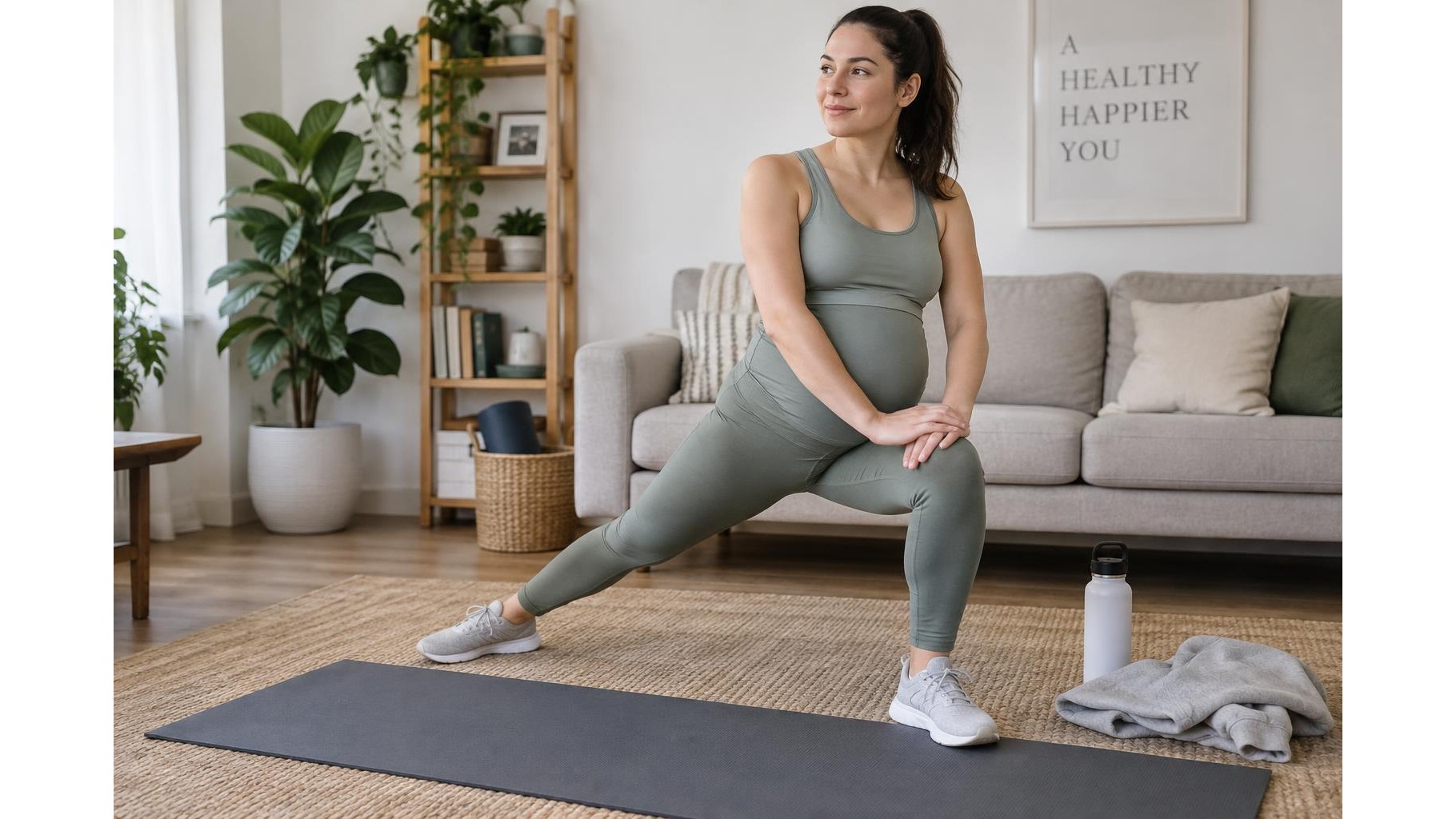
Pregnancy can change how workout clothes feel from one week to the next. A waistband that once stayed in place may begin to dig in, while familiar fabrics can feel warmer or less comfortable during movement. Choosing what to wear for exercise at home need not mean buying a whole new wardrobe. Focus on breathability, flexibility and adjustability, and let comfort guide your choices. This is a non-prescriptive guide: follow your own clinician’s advice about activity and any clothing considerations that apply to you.
Look for breathable, comfortable fabrics
Temperature and comfort can vary during pregnancy, so consider fabrics that feel light and allow airflow. Moisture-wicking materials may help manage sweat during a home workout, while soft cotton or cotton blends can feel pleasant for gentle sessions and everyday movement. Fabric names alone do not guarantee comfort: the weight, stretch, seams and finish all matter. If possible, check how a garment feels against your skin and whether it becomes clingy or restrictive as you move. A breathable top with a relaxed fit can be easier to wear than a heavy, close-fitting layer, especially in a warm room.
[iol_placeholder type=”cta” id=”telegram”/>
Choose a waistband that adapts
Waistbands are often the first feature to reassess as your body changes. Some people prefer a soft, high-rise panel that can sit over the bump; others find a lower-rise cut or a foldable waistband more comfortable. There is no single right option. Look for gentle stretch and a construction that stays put without pinching, rolling or creating pressure. If a waistband leaves marks, feels restrictive when seated, or distracts you while moving, try a different cut or size. Adjustable drawstrings can help fine-tune fit, provided they do not pull tightly across the abdomen.
Prioritise fit over the label size
Clothing sizes are not consistent between brands, and pregnancy can make an old size chart less useful. Use current measurements and the seller’s fit guidance as a starting point, then consider how much room you want through the hips, thighs and abdomen. Stretch can accommodate movement, but a garment should not need to feel compressive to stay in place. Check the fit in several positions you might use at home, such as standing, sitting and reaching. If you are between sizes, compare the garment’s cut and fabric rather than assuming that sizing up or down is always best.
Build easy-to-adjust layers
Layers make it easier to respond to changes in temperature before, during or after a session. A light, open-front cardigan, zip top or loose overshirt can be added or removed without much effort. Choose pieces that do not catch or restrict your range of motion, and consider tops with enough length to stay comfortable as your shape changes. A breathable base layer paired with a removable outer layer is often more adaptable than one heavy garment. Keep a dry top nearby if you tend to sweat, so you can change comfortably after exercising.
Check seams, support and movement
Small construction details can make a noticeable difference during repeated movement. Flat or smooth seams may reduce rubbing, while soft edges and labels that can be removed may help if skin feels more sensitive. Consider the support you personally prefer in a sports bra, accounting for fit and comfort rather than choosing the most compressive option. Test clothes with gentle movements before a workout: walk, bend or raise your arms and notice whether fabric slips, pulls or chafes. Stop using anything that causes discomfort, and remember that clothing choices do not determine whether an exercise is suitable for you.
In short, comfortable pregnancy workout clothes are the ones that feel breathable, move with you and can be adjusted as your needs change. Explore soft fabrics, forgiving waistbands and removable layers, and reassess fit regularly rather than relying on a fixed size or style. Most importantly, use your own comfort as a guide and follow individual clinical advice about exercise during pregnancy.